

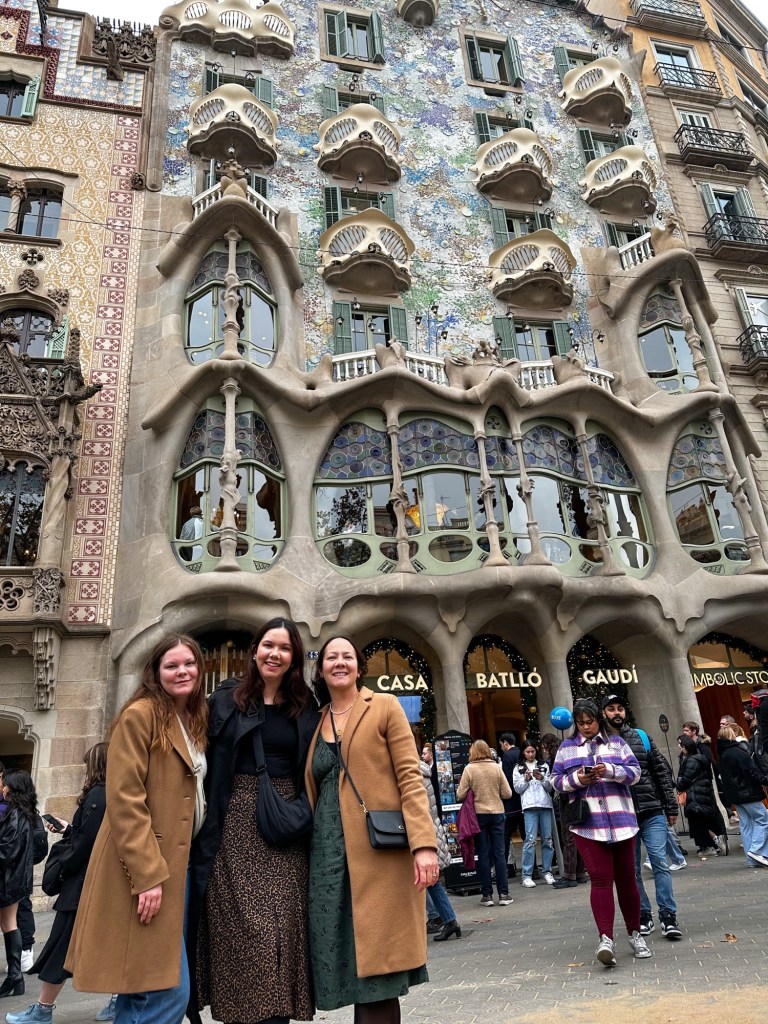
Barcelona, the capital of the region of Catalonia, is an old city steeped in culture with literally centuries of history. While there are variances in the story of how and when the city was first founded, tradition speaks of a city called Barcino which in 2 BC was part of the Roman Empire. Over the next several centuries, this city would be occupied by the Visigoths, Moors, and Franks until the 10th century. There is much more to the history of Barcelona; the Gothic Quarter is home to medieval architecture and is the oldest part of the city. Skipping over a few centuries, the 19th and 20th centuries brought a period of revival in art and architecture. Many of the buildings we saw while exploring the city were in the modernisme, or Catalan art nouveau style.

Following our being burgled in the Barcelona El Prat Airport, we ended up spending some extra time in Barcelona. We had been staying in Girona, about an hour-and-a-half away, however, we had to make an extra trip to retrieve my stolen bag and then another to file for our emergency passports. The silver lining to these clouds was that we had the opportunity to explore more and see more of the sights. We were able to walk around the city and see the interesting architecture and take in the bustle of Barcelona at Christmastime. One point of interest was Casa Batlló, a UNESCO World Heritage site and work of art designed by famed Catalan architect, Antoni Gaudí. The building features a colorful mosaic facade, arched windows on the ground floor, and architectural details reminiscent of bones. It is over-the-top ornate, and made a nice background for photos, though there were many who had the same idea.
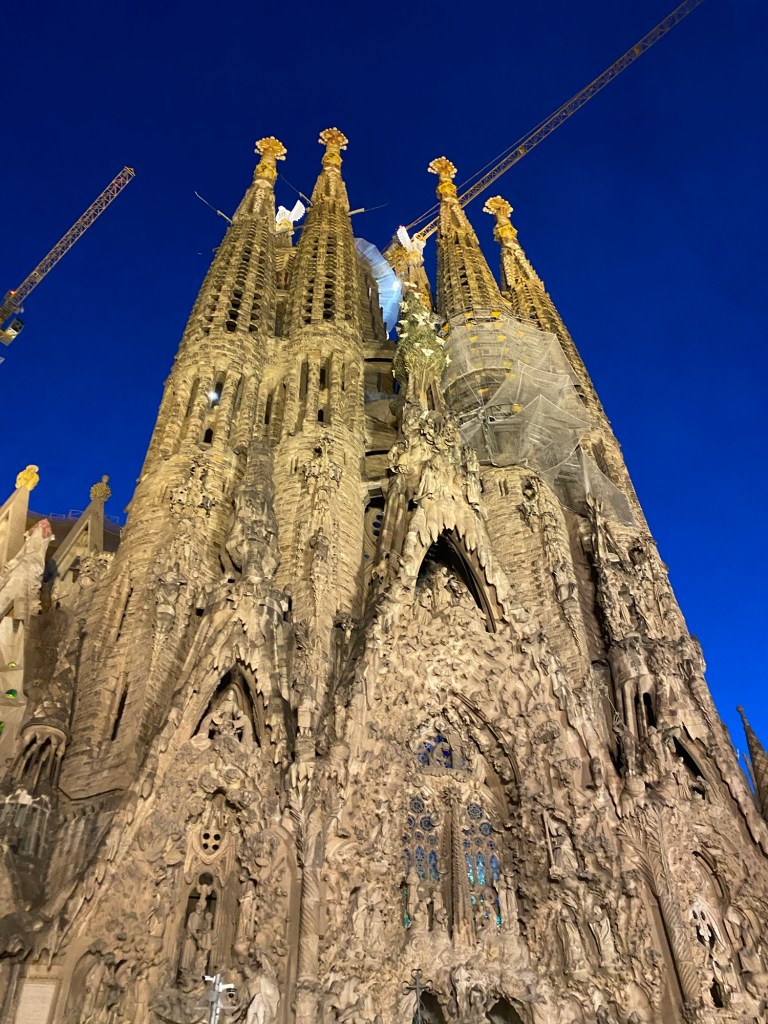
While on our self-guided by Google walking tour, we visited another Gaudí structure: the famed- and at time of writing- unfinished Sagrada Familila. After over 140 years from the laying of the cornerstone, and 98 years after Antoni Gaudí’s death, the basilica is still being worked on. The monumental project hit delays due to the Spanish civil war, funding and permitting issues, and a global pandemic. It is said that the project is supposed to finally be completed in 2026. From the look of it in December 2023, project completion might be closer to the 2040 estimates I’ve seen online. Nevertheless, it is a spectacular building. While I am not a huge fan of the opulence of this art nouveau style, I am also not one to question genius. It is extraordinarily detailed, and is an impressive structure.
The basilica was consecrated in 2010 by Pope Benedict XVI. Morning mass is held on Sundays at 9 am, and evening mass is held at 8 pm on Saturdays. Tours are also available on the Sagrada Familia website. Prices vary depending on group size and level of service. Like the Casa Batlló, the Sagrada Familia was designated a UNESCO World Heritage Site in 2005.
There is much to see and do in Barcelona. The city is beautiful and rich in culture. In addition to the interesting architecture, there are many opportunities for gastronomic adventures. Like learning to make a new dish.
A Paella Party Date Day
When asked by the kids what I want for Christmas, I typically give an answer in the vein of “good kids.” The older children like to respond with “be realistic.” So since ‘good kids’ is off the table, I ask for time. After all, I can purchase things that may or may not last, but I really can’t buy time. So for Christmas 2023, Jacob and Emily pooled together their funds to book a date day for me and their dad as a combined gift. This was a paella and sangria making class at the Gastronomic Arts Barcelona Gab Lab.
After spending part of the afternoon sightseeing around the city and getting a treat at a local bakery, Michael and I parted ways with the kids and walked over the the Gab Lab. The kids were going to explore the city and do some shopping as well as pick up our emergency passports, we would be learning how to make some paella.
The cooking class was done in a small group of about 10. Our particular class was lead by Chef Hugo, who was of French and Spanish descent, and was comprised mostly of Americans from different states on their last couple days of vacation. We also met a couple from Latvia who were on holiday, and the diversity of the group made for interesting conversations. Included in the package were tapas, a sangria-making lesson, the paella class, and a trip to the La Boqueria Market to choose the best fresh seafood.
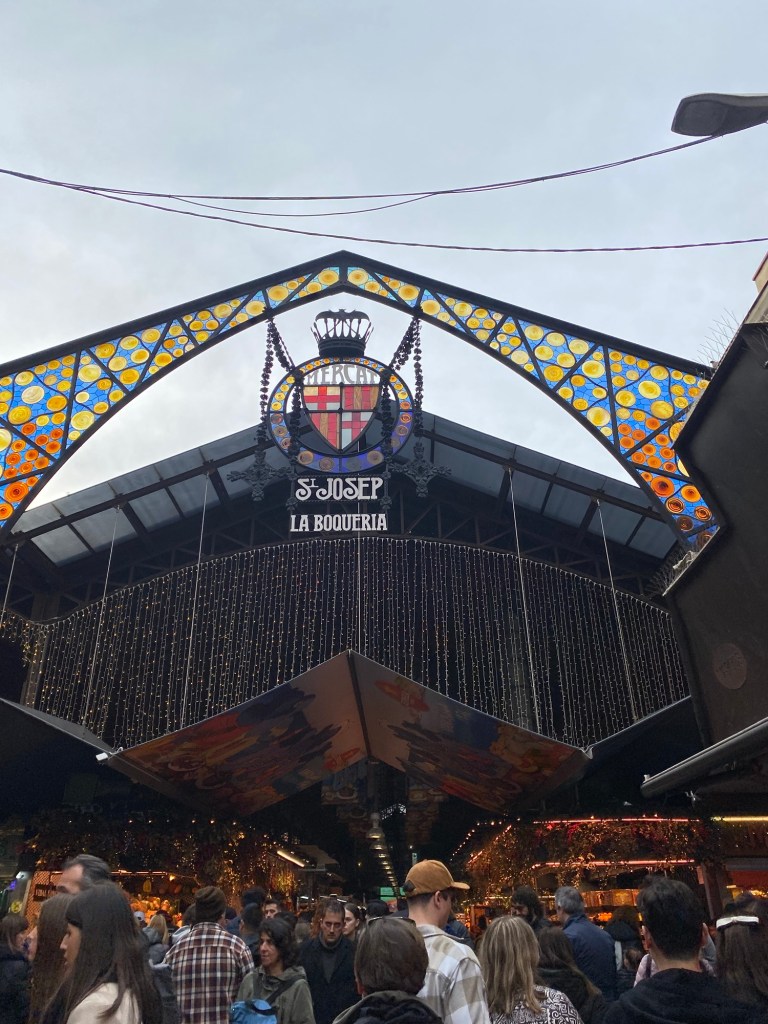
La Boqueria opened on St. Joseph’s Day in 1840 and is said to be the oldest market in Barcelona. The market today is huge and has vendors selling fresh meat, seafood, and produce, as well as prepared items like sweets and street food. Three days after the Christmas holiday, the decorations were still up, and the market was very busy with locals as well as tourists. Because of the labyrinth of stalls, and risk of getting lost or pickpocketed, we followed the instructions to stay with our group and be alert to our surroundings. I could understand how easy it would be to get lost in the maze without a map or a guide.

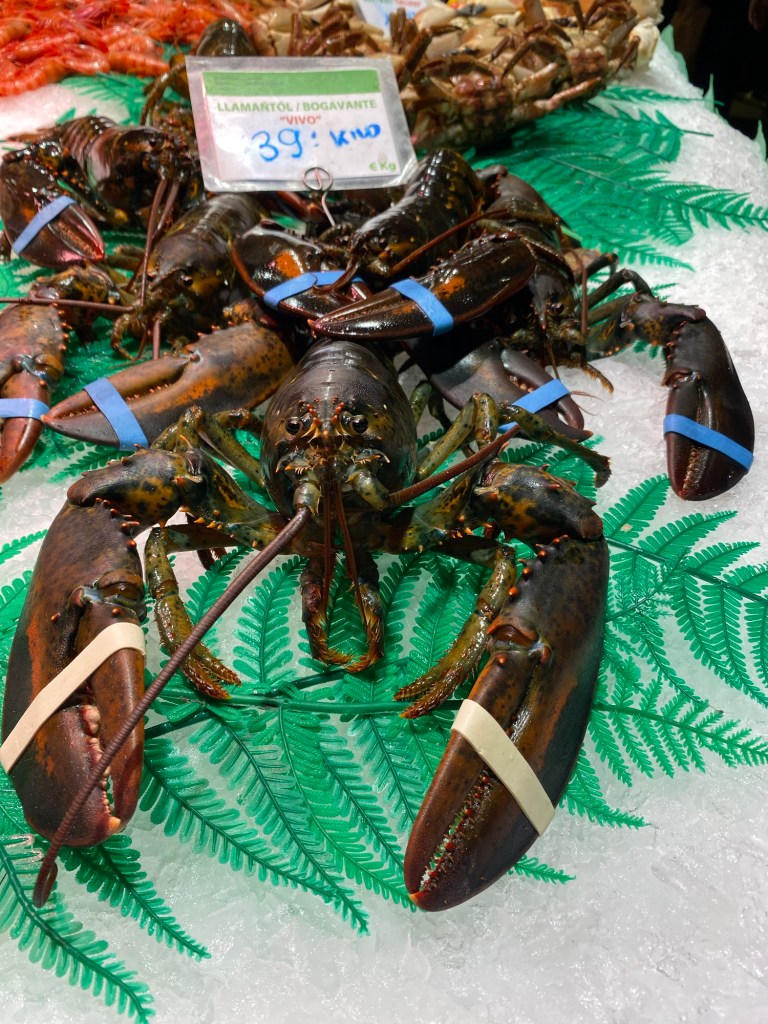
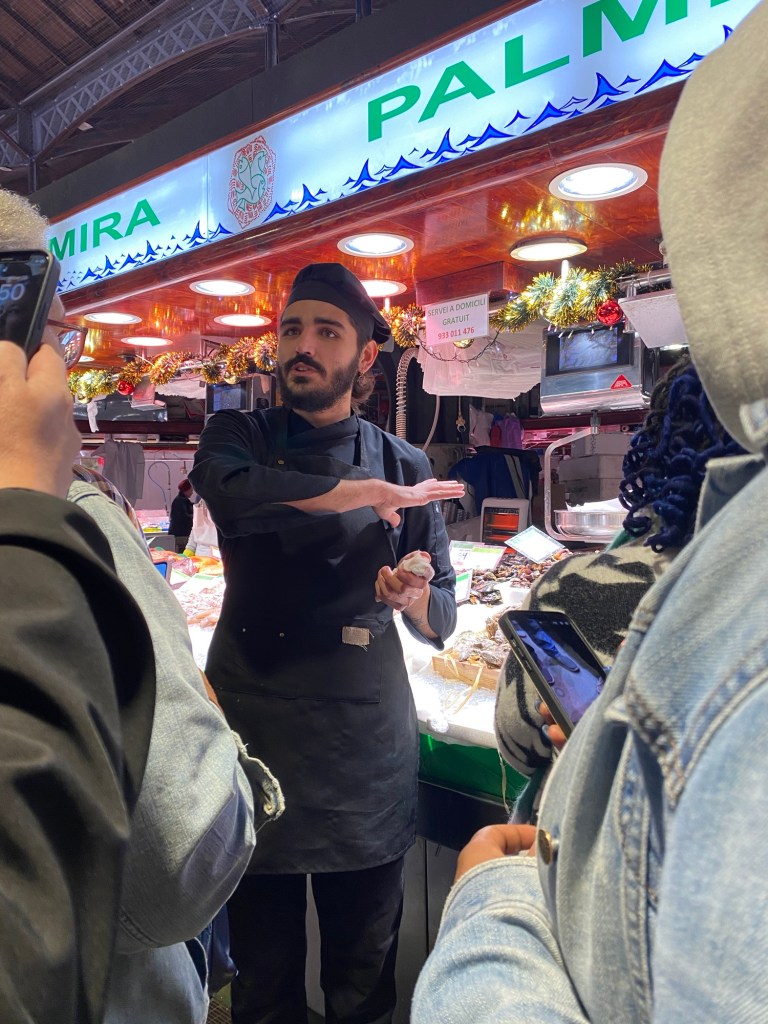
After selecting the requisite amount of fresh seafood for our group, minus the four of us who opted for the vegetarian paella, we walked back to the kitchen to begin the class portion of our experience. We first learned how to mix sangria using a combination of Spanish red wine, fruit juice, fresh cut fruit, and a splash of rum. This was enjoyed with a selection of tapas. We then moved onto learning to make paella.
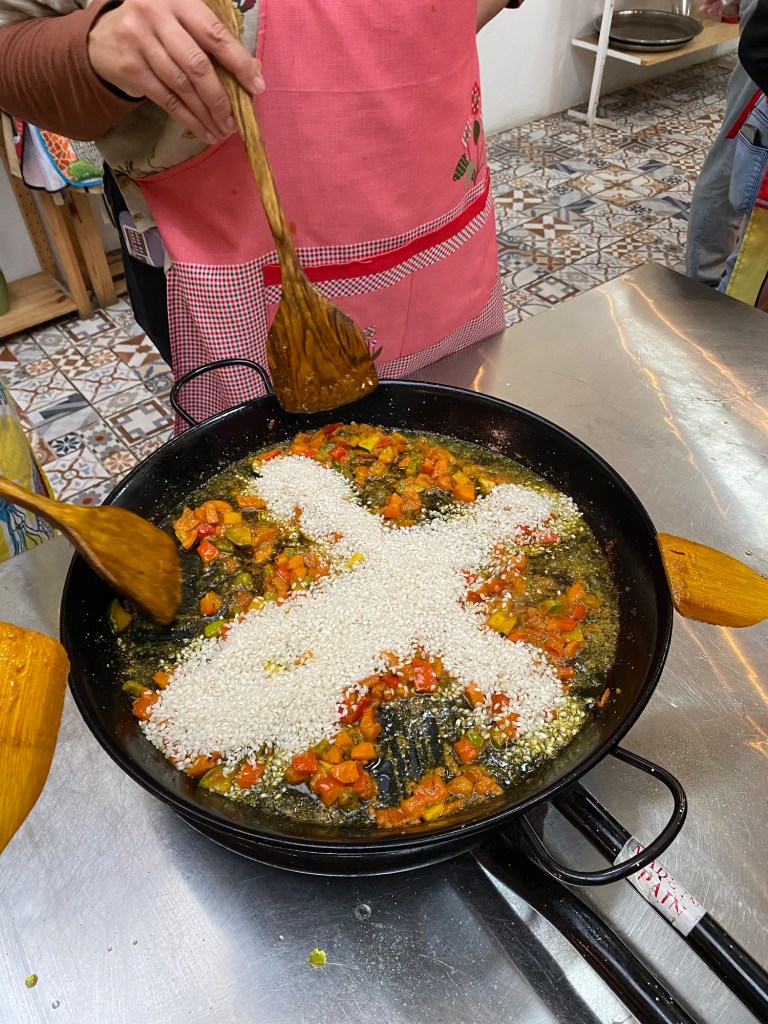
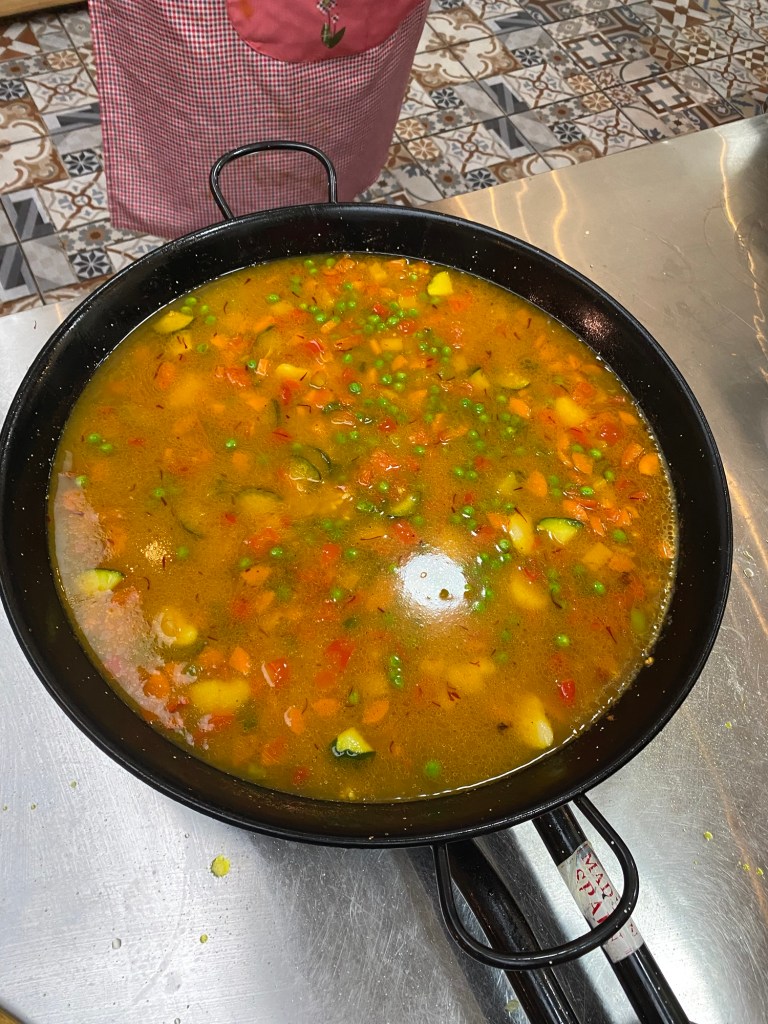
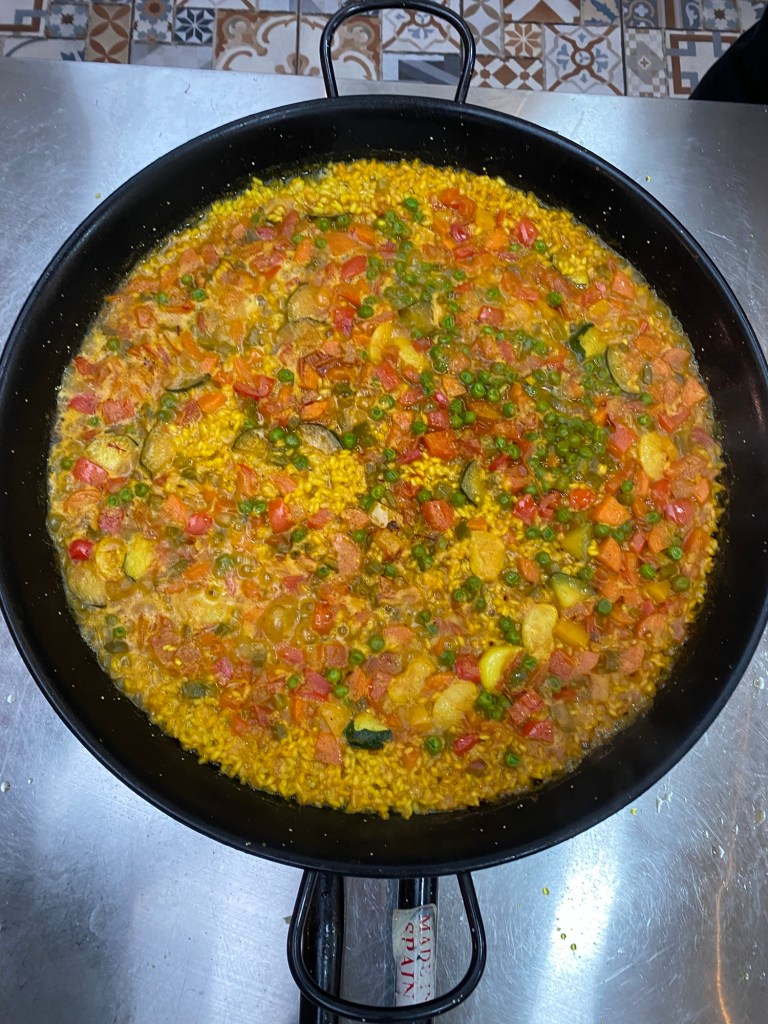
We split up into two groups: one for the vegetarians/allergic to shellfish and those who would be making the more traditional version with seafood. After getting into our groups, we set about chopping vegetables: peppers, tomatoes, carrots, and zucchini. I was surprised to find out that paella is traditionally not supposed to have onion; in recipes I’ve followed for paella-like dishes, I’ve used onions. Still it was pretty good without the onion. As for the class, the atmosphere was relaxed and the experience was fun. And as we had a small meal as a result between lunch and dinner, it was the perfect evening to meet up with the kids again for some tapas. Salut!
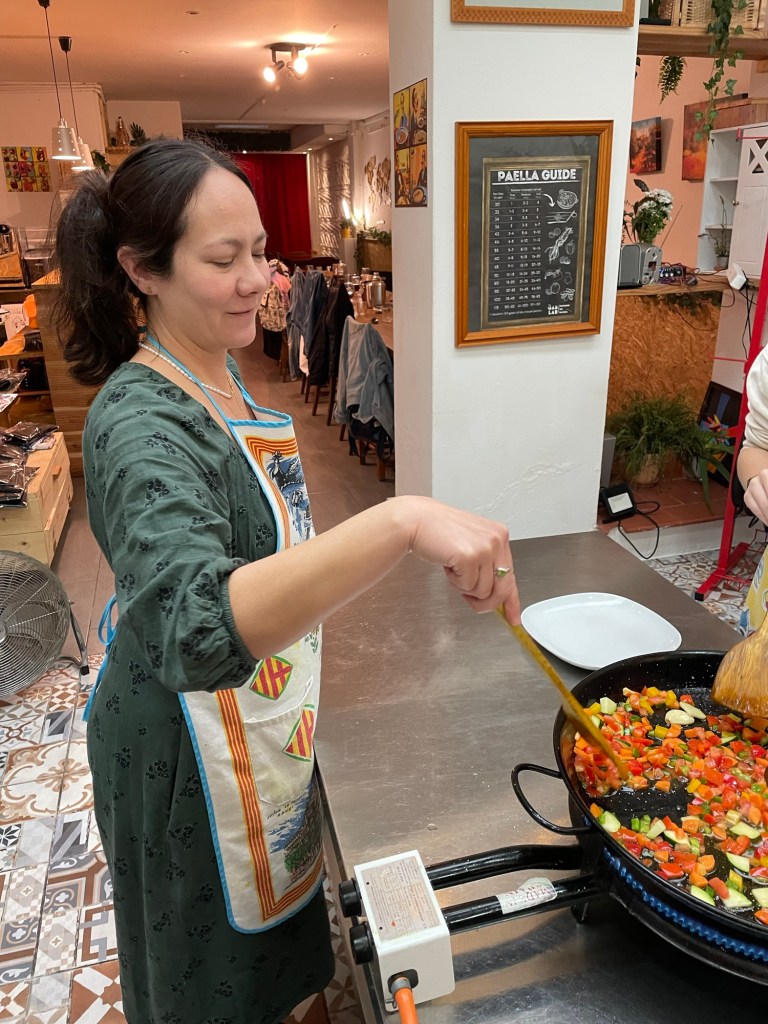
There are many more places to explore Barcelona’s rich history, as well as its food scene. Tours, cooking classes, and other experiences can be found online. Every class offers a slightly different experience and at different price points, many starting at about 75 euros. For our same experience, you may visit Gastronomic Arts Barcelona. While a bit more pricey than our typical activities, this was a fun experience and worth the time. And I learned a rather more authentic way of making paella.

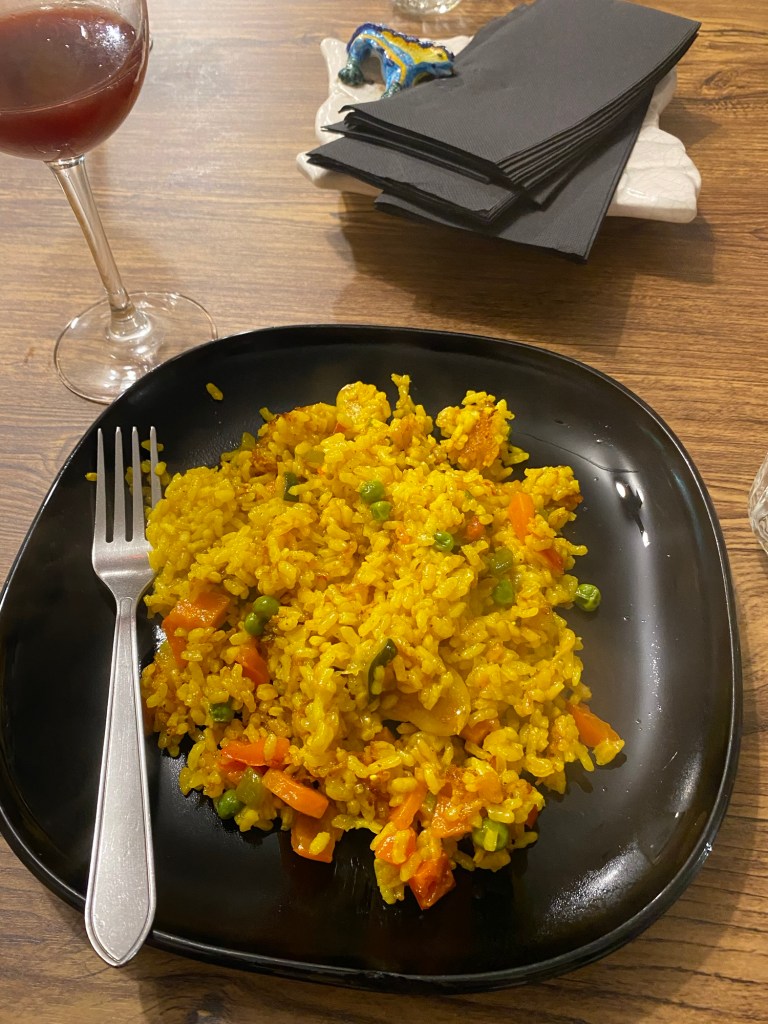
Bonus: Veggie Paella, with apologies to Barcelona
This is a modified paella recipe based on our class, the internet, and experience. Saffron is what really makes the dish and is probably the most expensive ingredient. Our local Costco sells saffron certain times of the year. It can also be found at international markets as well as on Amazon and other online retailers. Also, it is best to use bomba rice, which is a short grain rice traditionally used in paella. This can be found at Sur la Table or Amazon. A medium grain rice, such as Calrose, can be substituted by reducing the amount of broth, however longer grain rice would not be a good sub, as it will get mushy. This is a great one-pan dish that involves some prep, but is not as intimidating as it sounds. And with apologies to Spain, it can be modified to use your favorite vegetables- like onions.
Ingredients:
1 green bell pepper
1 red or yellow bell pepper
1 medium onion
1 carrot, peeled
4 oz mushrooms
¼ cup green peas (frozen is fine)
1 large tomato
1 zucchini
1-2 cloves garlic
2/3 cup olive oil
¾ cup dry white wine
32 oz vegetable broth
1 ¾ cup rice
1 tsp paprika
1 tbsp turmeric
1 pinch of saffron pistils
Salt and black pepper to taste
Chopped parsley
- Dice the bell peppers, onions, tomato, carrot, zucchini, and garlic cloves. Slice the mushrooms.
- Heat a paella pan or large skillet over medium-high heat. Add olive oil and cover the surface. Add a pinch of salt, then add the garlic and onion. Sauté for about a minute. Add bell peppers and tomato and cook for about 4-5 minutes or until softened. Stir in carrot and zucchini.
- Create a hole in the center and add the wine. Add spices and mix. Break saffron and add into the spice mix. Add rice and mix in, spreading it across the surface of the pan.
- Add vegetable broth and increase heat until the broth bubbles for about two minutes. Then reduce to low heat. Give the pan a little shake a couple times while cooking, however, don’t stir the rice mixture.
- Add mushrooms and peas. Cook for another 10-15 minutes or until most of the liquid is absorbed.
- To check if the paella is ready, scrape the bottom of the pan. There should be a nice crust at the bottom called a socorrat.
- Turn off the heat. Add parsley and cover the pan. Allow the paella to rest for 5 minutes. Enjoy with sangria or your favorite beverage!
References:
“History of Barcelona – Visit Barcelona.” Of Barcelona – Visit Barcelona, http://www.barcelonaturisme.com/wv3/en/page/43/history-of-barcelona.html#:~:text=The%20first%20human%20settlements%20in,seen%20in%20the%20old%20town. Accessed 12 Feb. 2024.
History of the Temple – Sagrada Família – Sagrada Familia, sagradafamilia.org/en/history-of-the-temple. Accessed 12 Feb. 2024.
“Boqueria Market.” Visit Barcelona, http://www.barcelonaturisme.com/wv3/en/page/3267/boqueria-market.html. Accessed 12 Feb. 2024.


 The Cranky Camper