
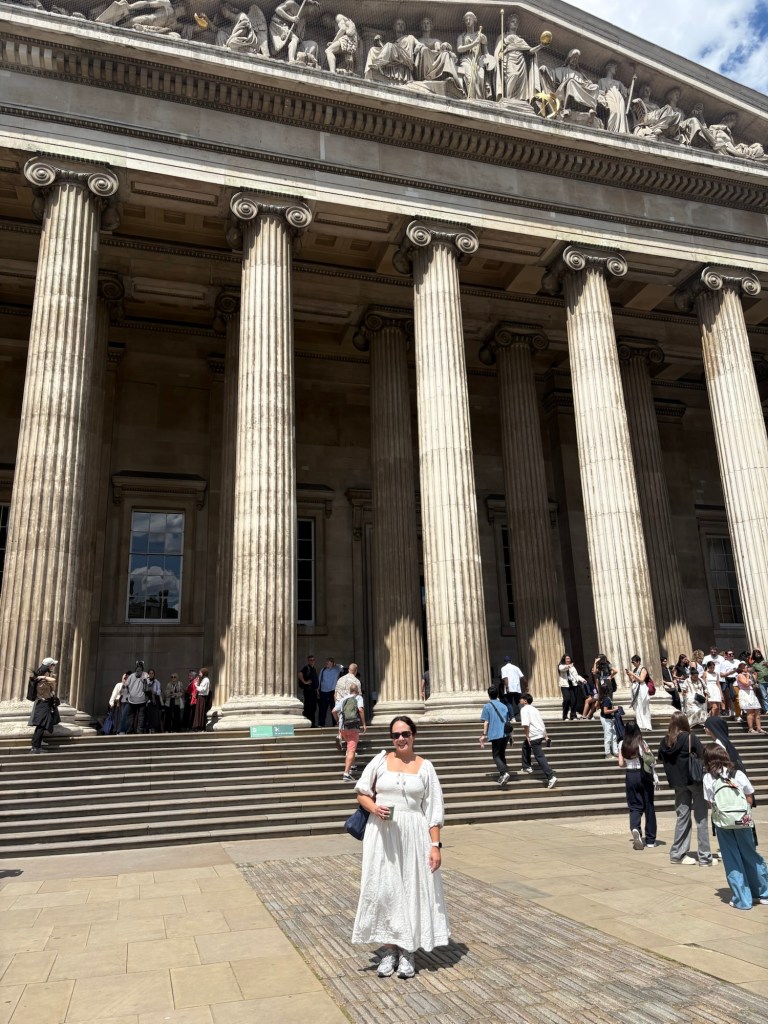
The British Museum is a publicly funded museum that is free to visit and showcases vast collections dedicated to human history, art, and culture. There are over 60 galleries that are open to the public. The galleries span almost the entirety of human history, from ancient civilizations to the modern era. There are an estimated 8 million objects housed within the museum, with over 80000 of these on display at any given time.
We first visited the British Museum in 2019; it was one of the fun and free museums we explored on our Great British Adventure over Thanksgiving break. The British Museum is still free, though we did have to secure our free tickets in advance during this busy summer 2025 season. And while the exhibits were familiar to us, especially those in the Egyptian rooms, we did get to see more of the museum. Though we still didn’t make it to the Japanese exhibits on the upper floors. There is really much to see at this immense, and sometimes controversial museum.

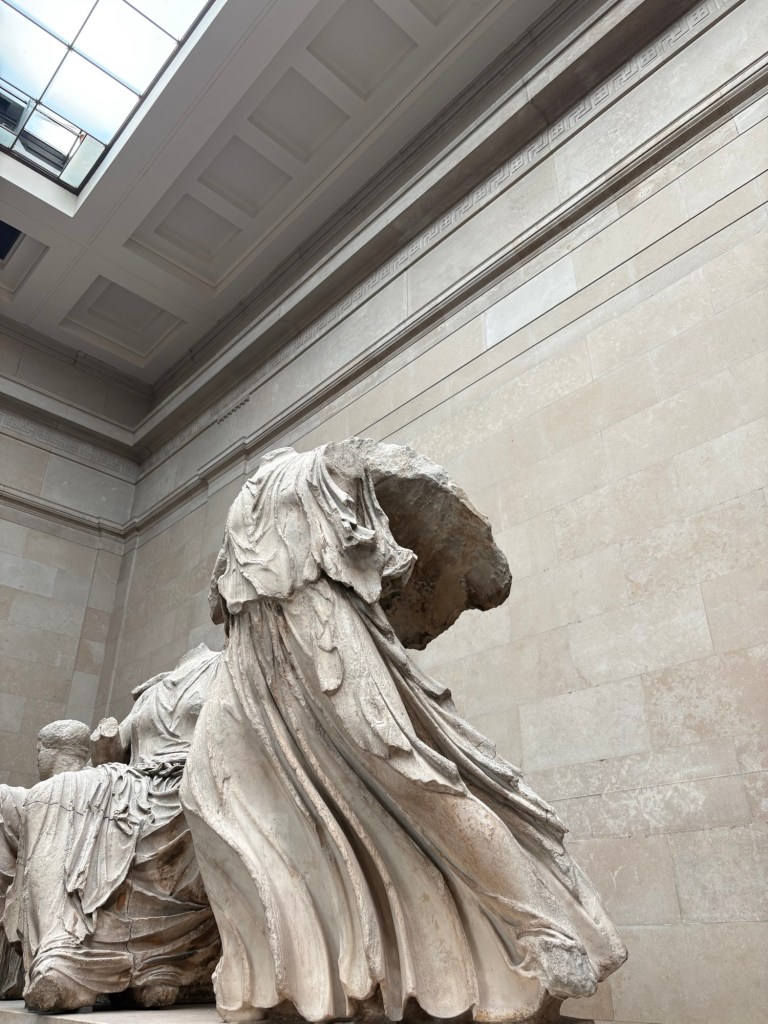
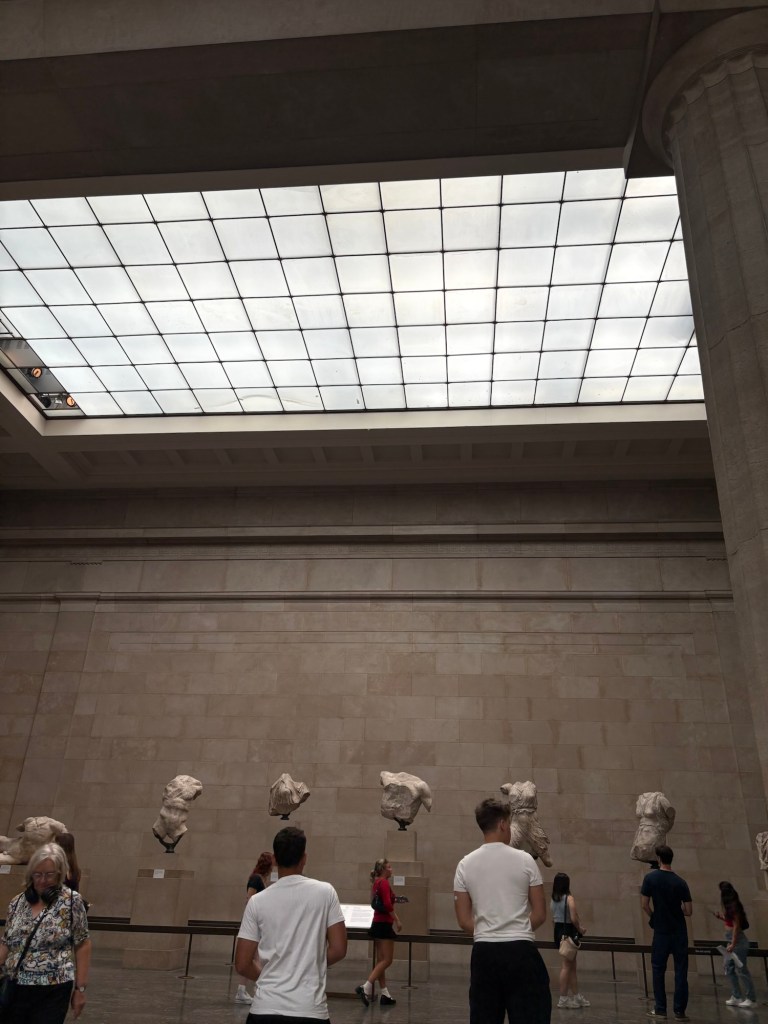
On entry to the museum, we were given the museum guide, along with a pamphlet regarding the Parthenon sculptures. The sculptures, also known as the Parthenon Marbles are sourced from the ancient Parthenon in Athens, Greece. The temple was built in about 5 BC, in honor of the goddess Athena. The structure has survived the centuries, having been converted to a Christian church then a mosque, and then a gunpowder store. This left it with significant damage during the siege of Athens in the seventeenth century. Adding to the damage, arguably, was the taking of reliefs and statues by British ambassador to the Ottoman Empire, Lord Elgin, between the years 1801 and 1805. It is thought that he intended the marbles to be used as decor in his own estate, however, in 1816, the sculptures were purchased by the British government for display in the museum. The debate as to whether the sculptures should be returned to Athens is not new; for nearly two centuries, since gaining its independence from the Ottoman Empire, Greece has called for the return of the sculptures. According to the internet, about half of the sculptures remain in Athens, with the other half housed in the British Museum. There are legitimate arguments on both sides. Questions of whether Lord Elgin removed the marbles legally, or if the sculptures are better preserved where they are currently have some merit. I am not here to debate what should be done. I can understand the controversy. That said, there are many artifacts that were sourced during the explorations by the British Empire, with some of these items’ returns being requested by their respective governments- including the Benin Bronzes from Nigeria, the Hoa Hakananai’a from Easter Island, and famously, Egypt’s Rosetta Stone.
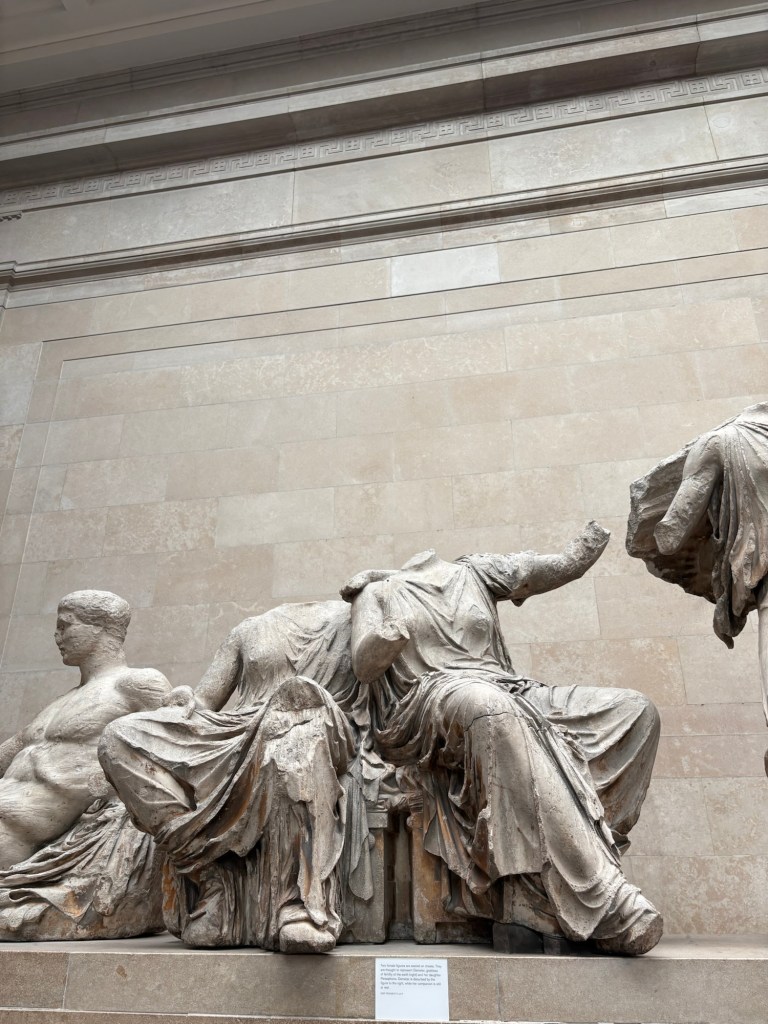
What will happen to these historic and priceless antiquities remains to be seen. Meanwhile, in 2025 at time of writing, the Parthenon Sculptures, along with the other contested items are housed in the British Museum, with many on display to the public. Regardless of where they are located, these artifacts bear cultural significance to their country of origin, as well as their place in the history of art and humanity. I was thankful to be able to view the Parthenon sculptures and many more displays that showcase human history across the globe.
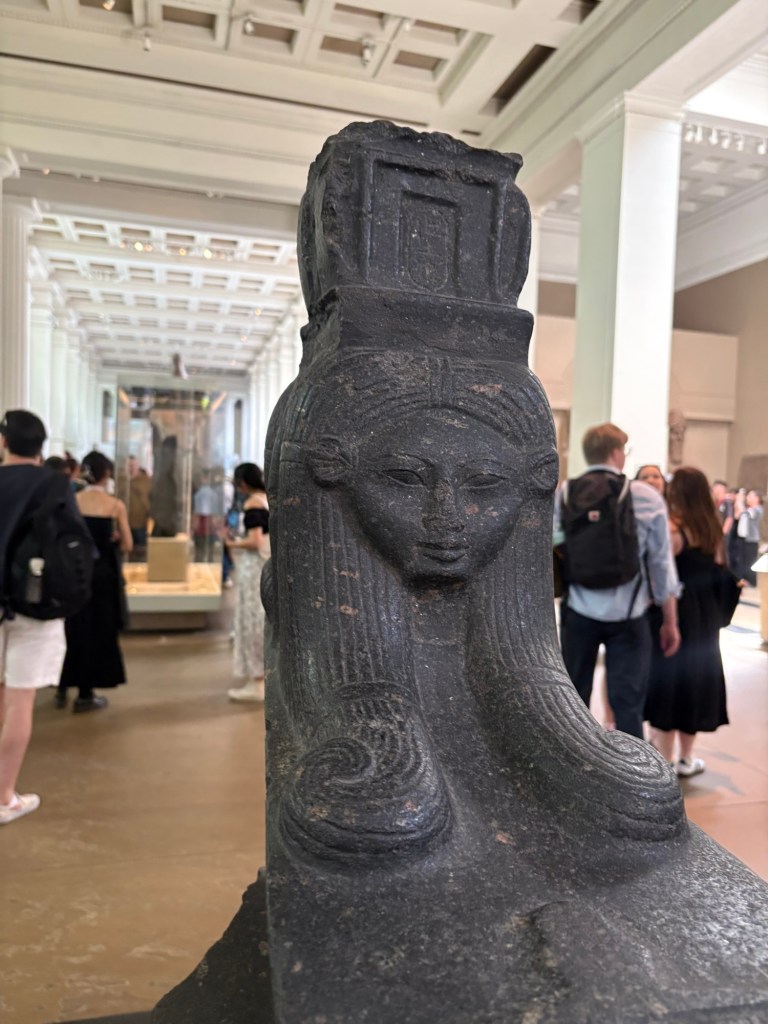
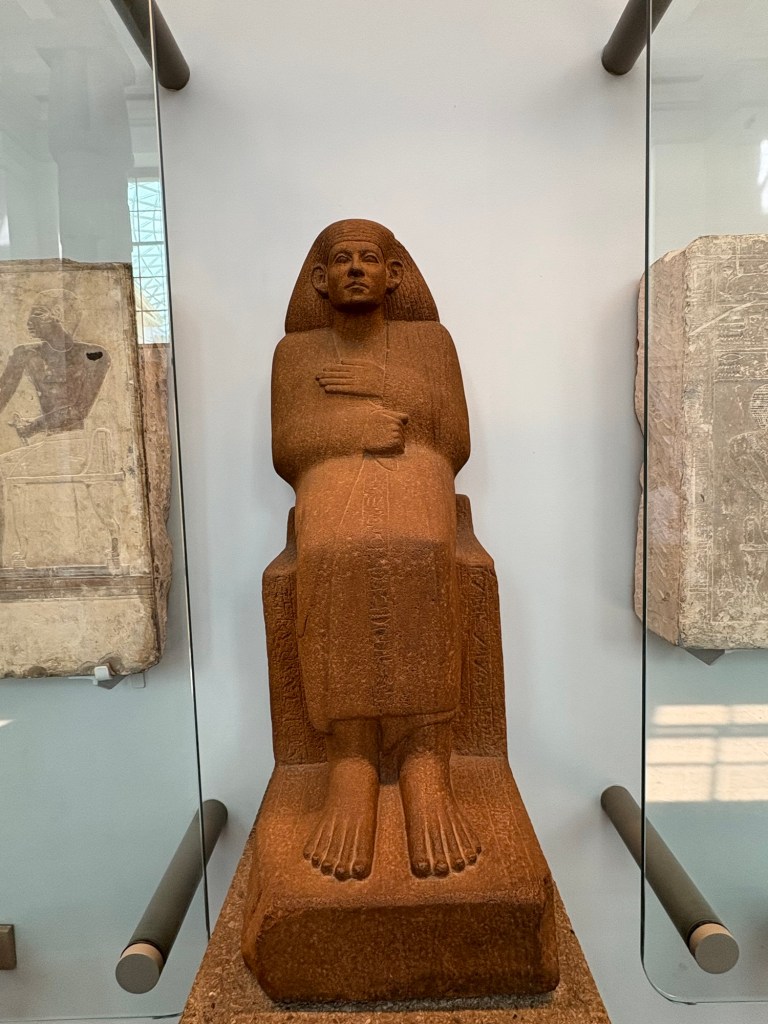
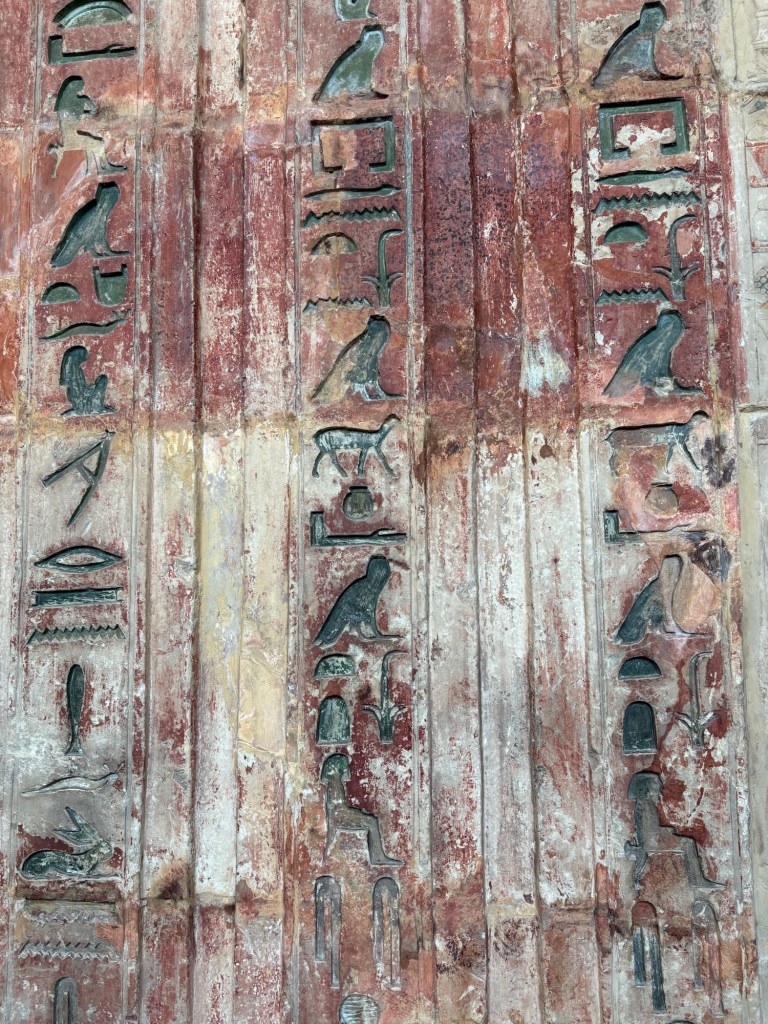
Ancient Egypt:



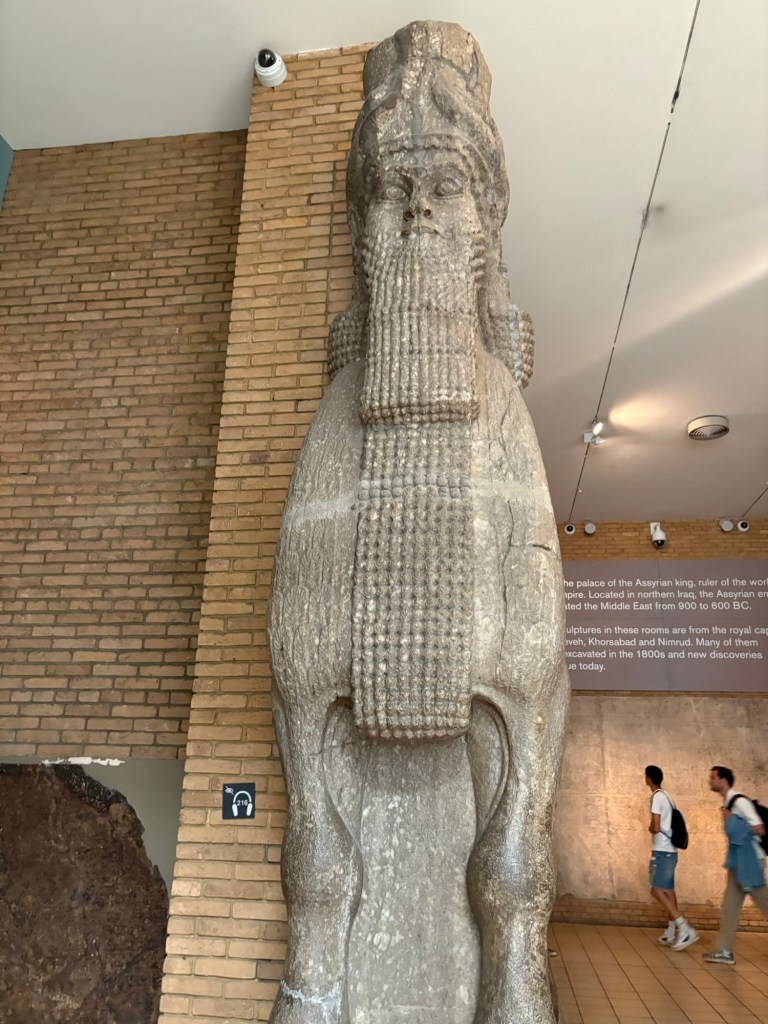
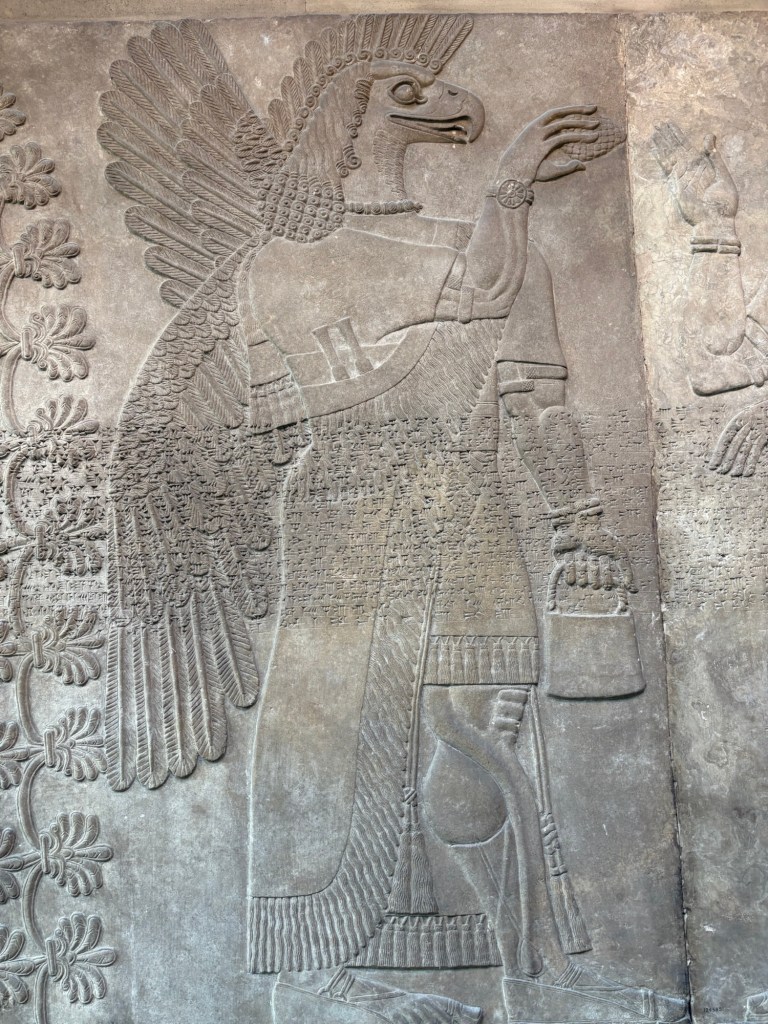
Assyrian Sculptures:
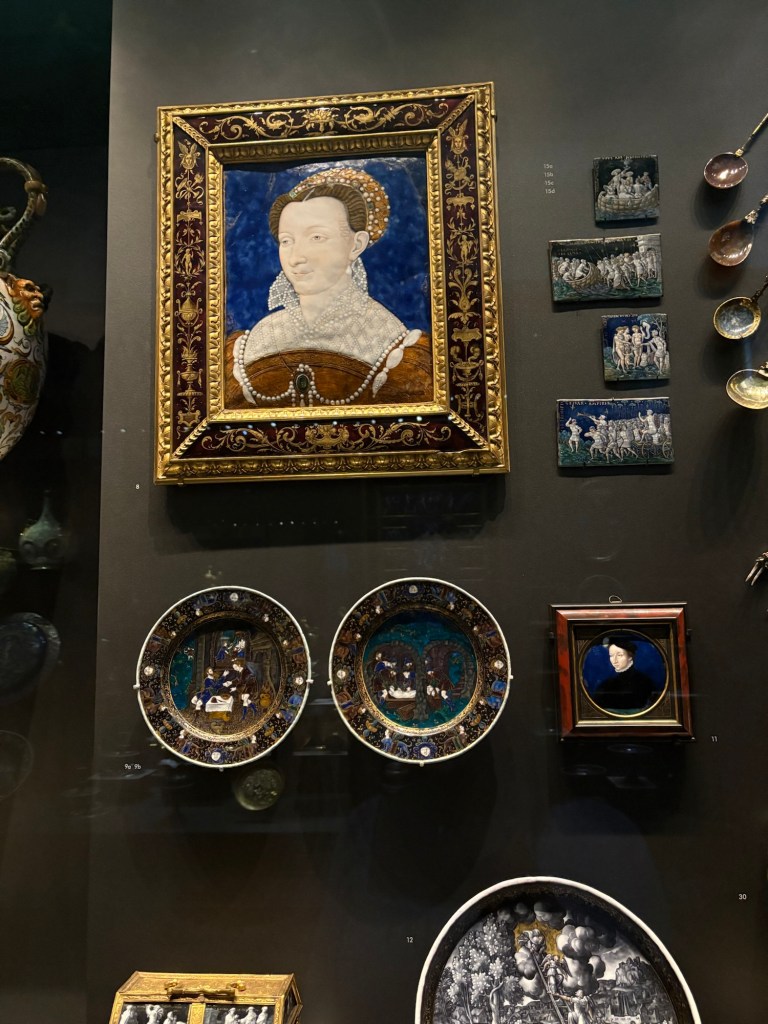
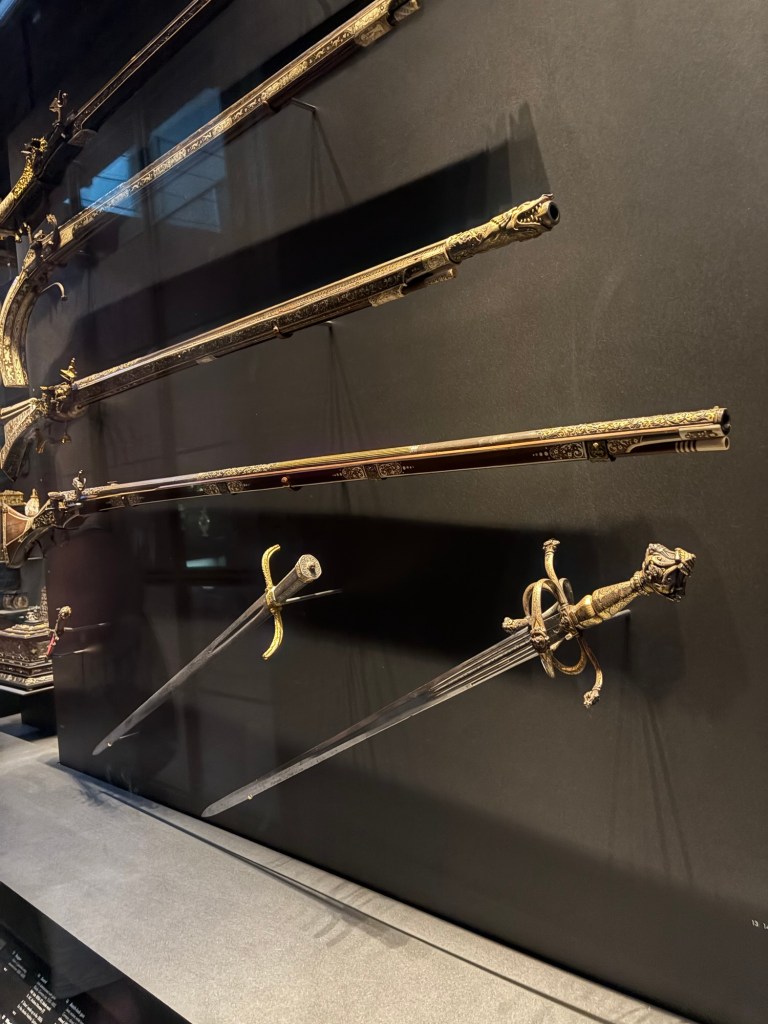
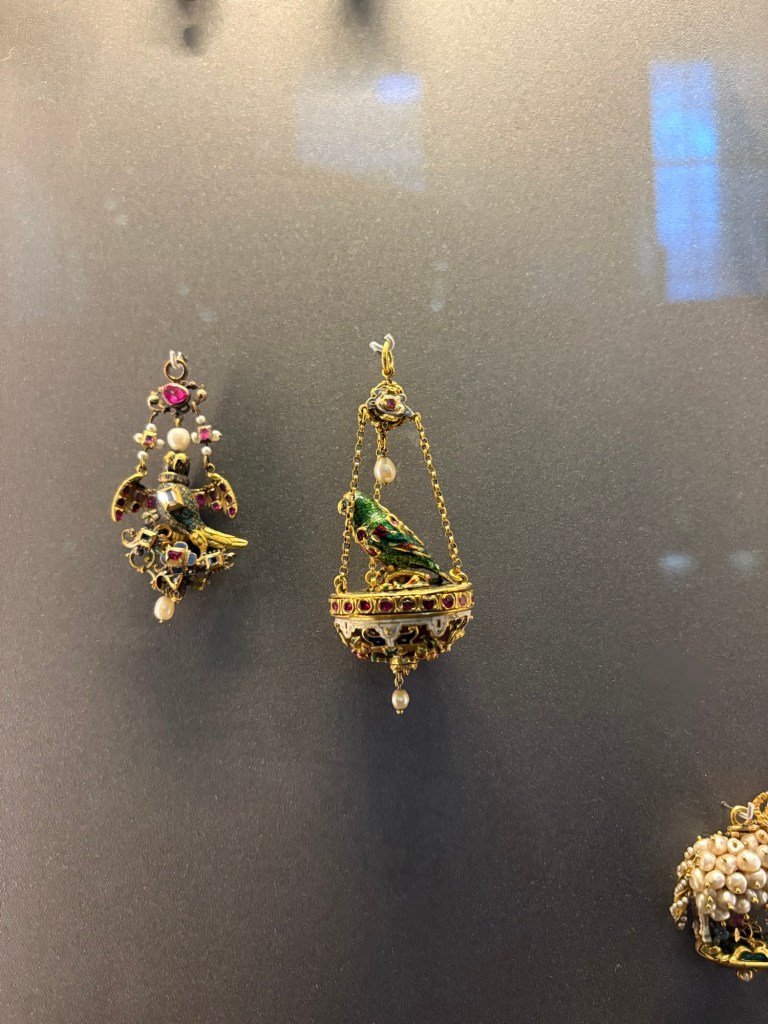
Waddesdon Bequest:
The Waddesdon Bequest was left to the Museum in 1898 by Baron Ferdinand Rothschild. It consists of about 300 medieval and Renaissance pieces of historic significance, as well as many ninteenth-century copies. The items are interesting and pretty. Shown here are some of our favorites.

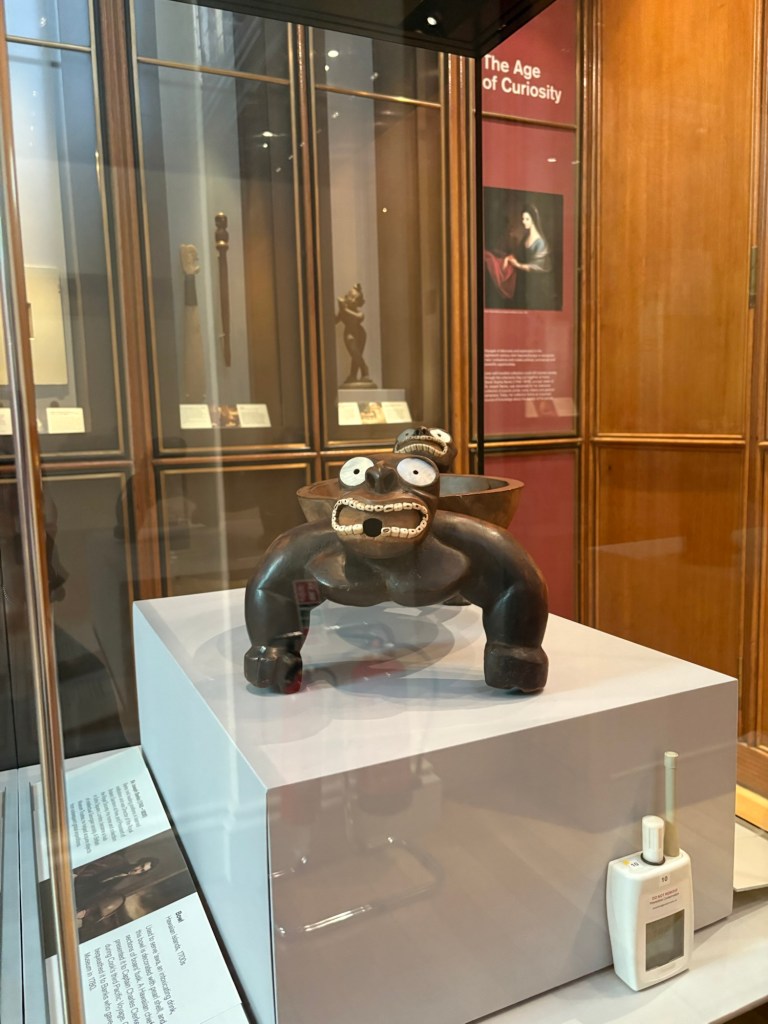
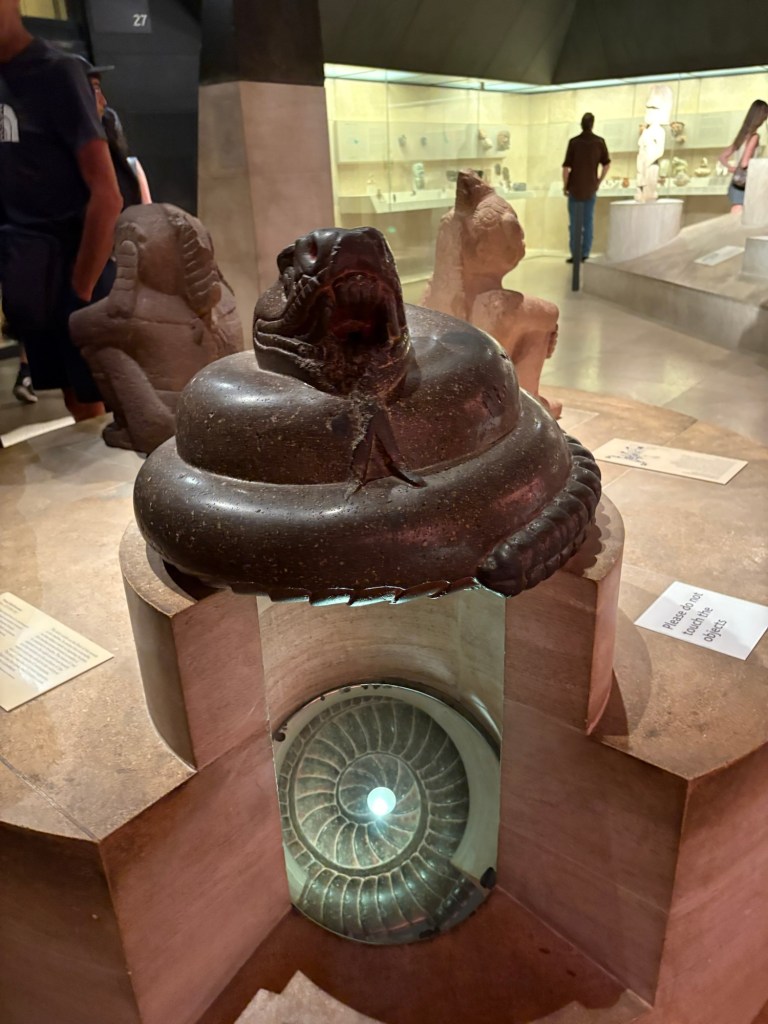
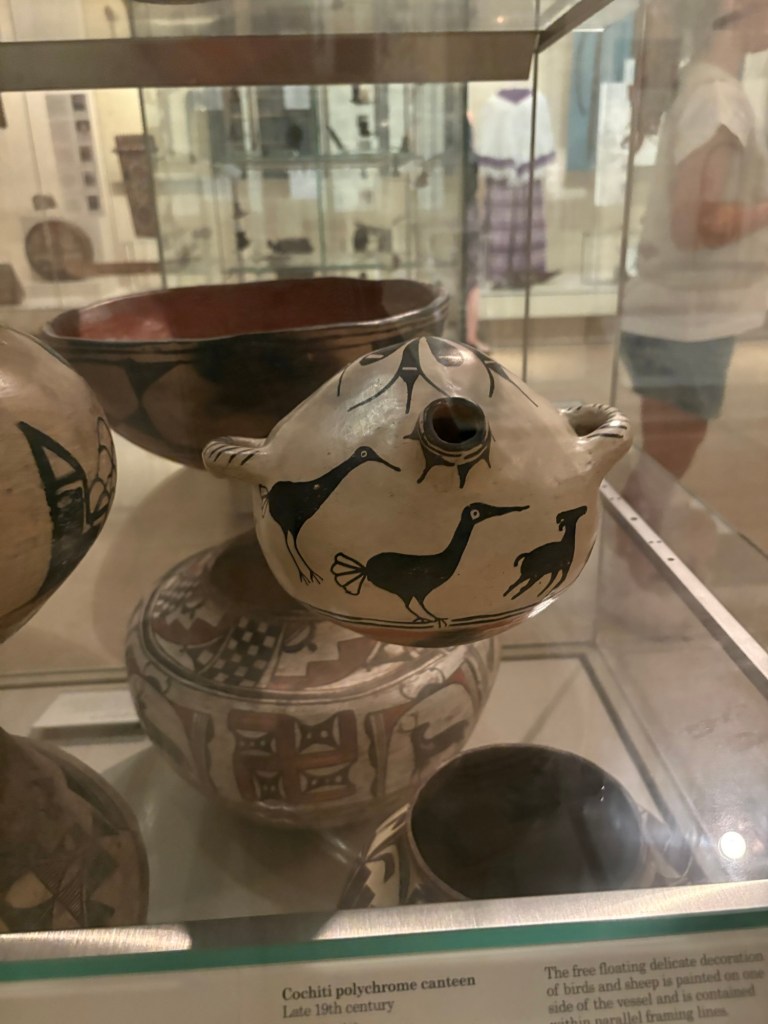
North America:
Greek and Roman Sculptures:
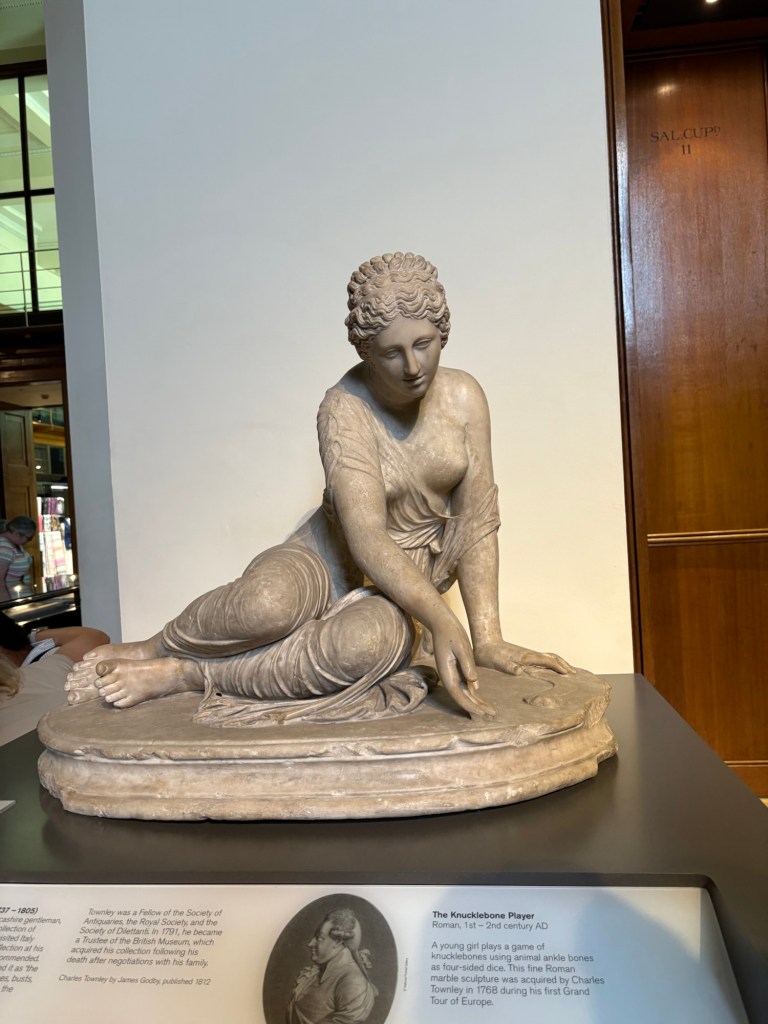
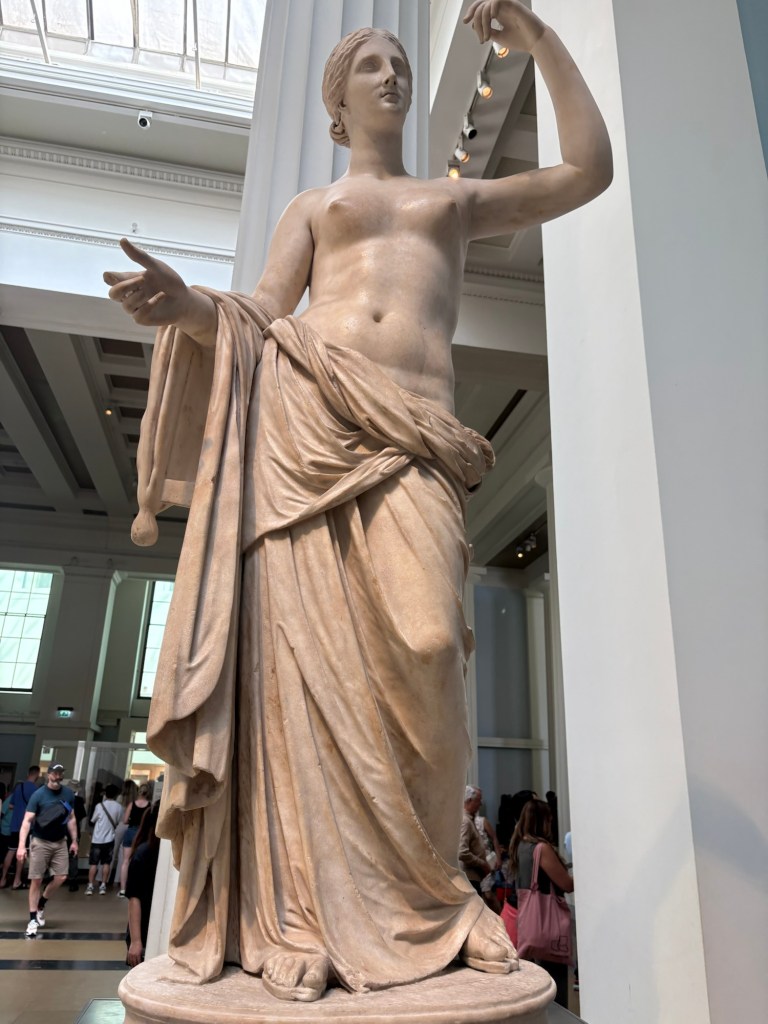
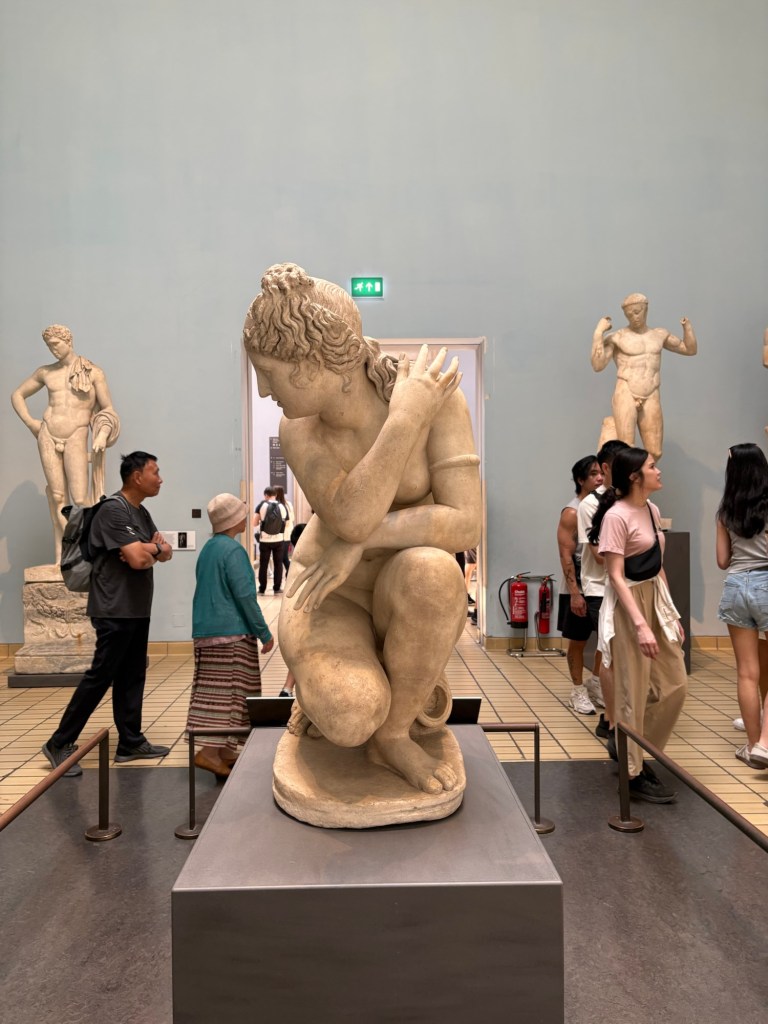

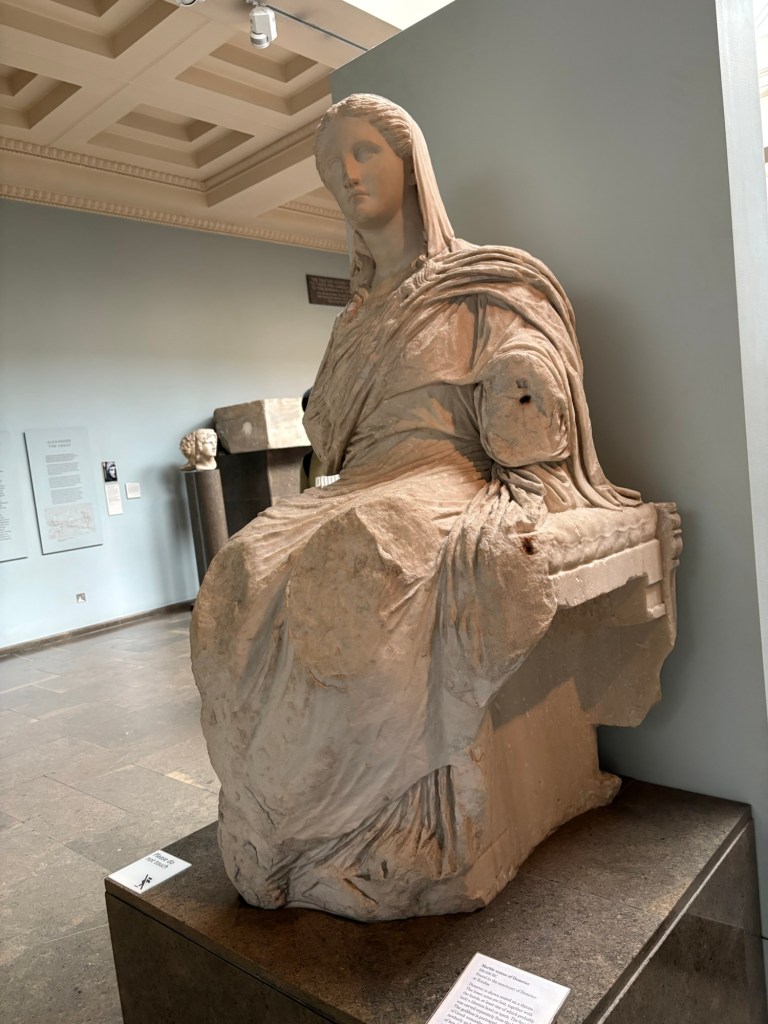
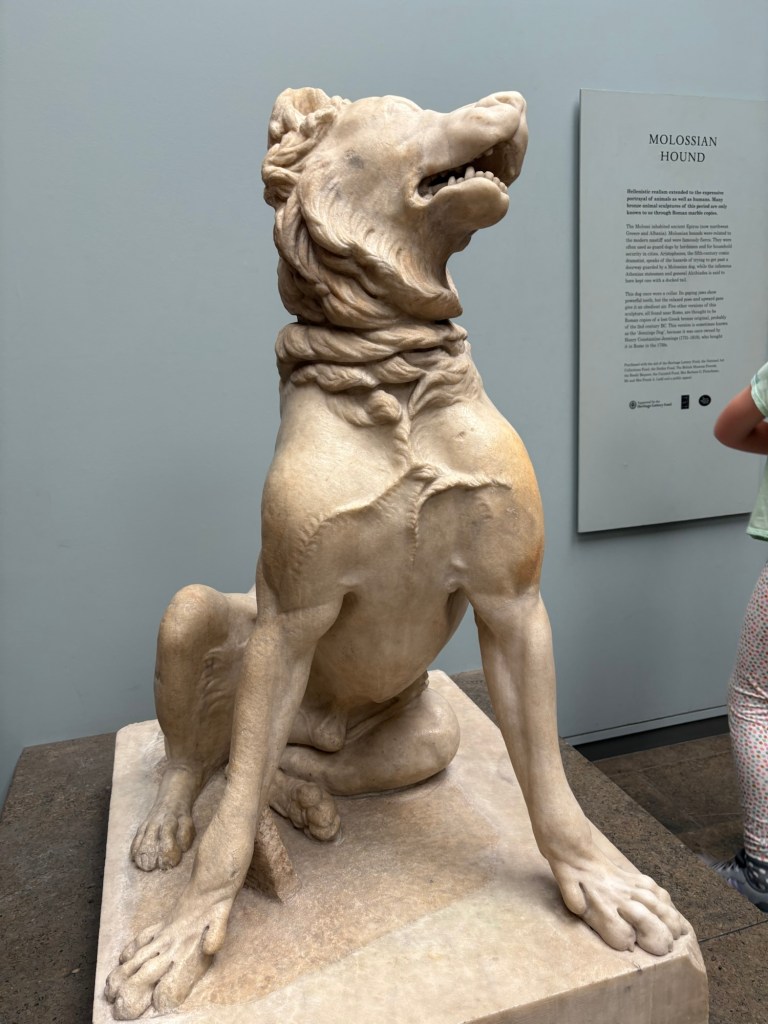
We were hoping to view the lost Caryatid sister. Five are housed in the Acropolis Museum in Athens; the sixth was brought to Great Britain by Lord Elgin. Unfortunately, the gallery where she is housed was closed for some reason. The gallery is typically open from 11:00-15:00, and we had arrived at 14:00. We waited for a bit to see whether we would be able to enter, but alas, no one opened the gallery.
Greeks and Lycians:

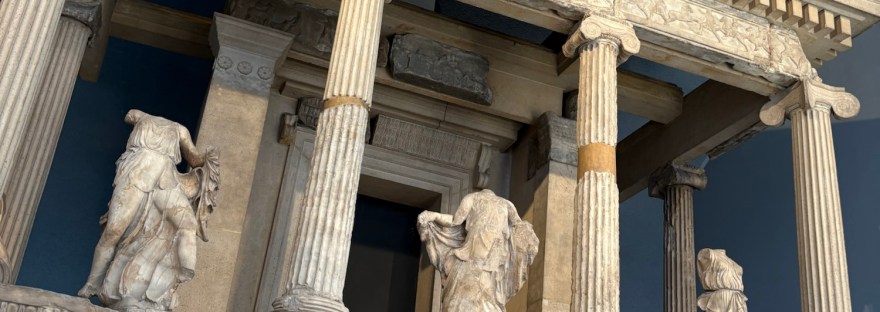
Room 20 is dominated by a large monument, the Nereid Monument. This monument was a Lycian tomb from Xanthos located in present-day Turkey. The room also contains a number of friezes that were brought to England by archaeologist Charles Fellow.
The Parthenon Sculptures:

Odds and Ends:
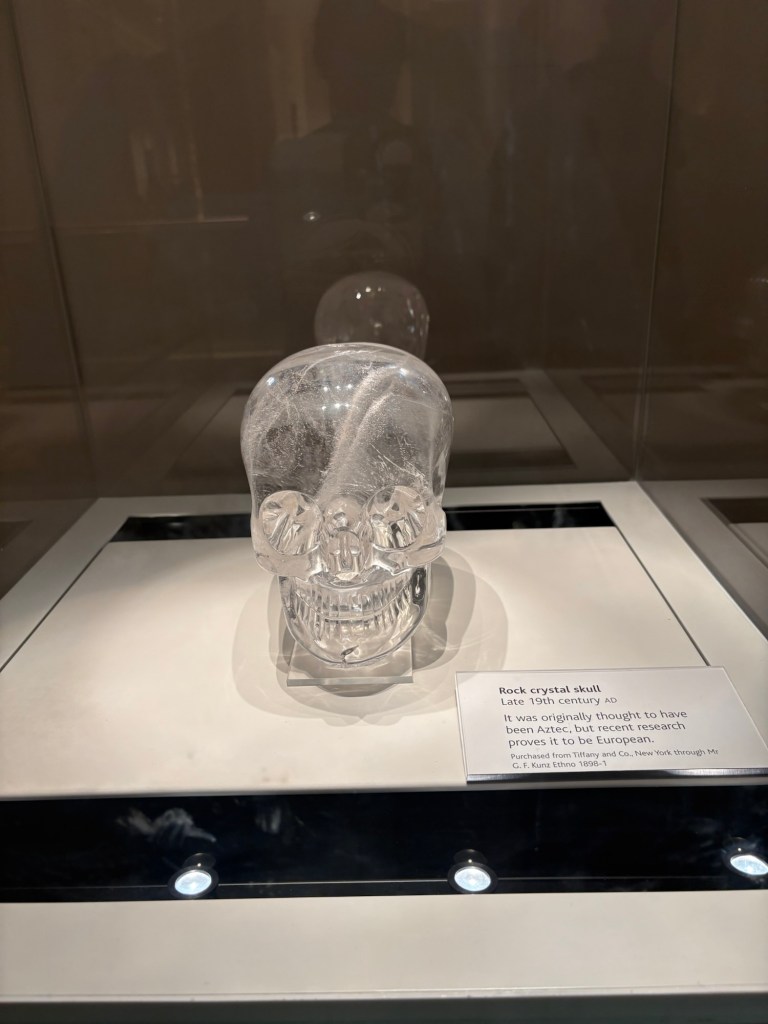
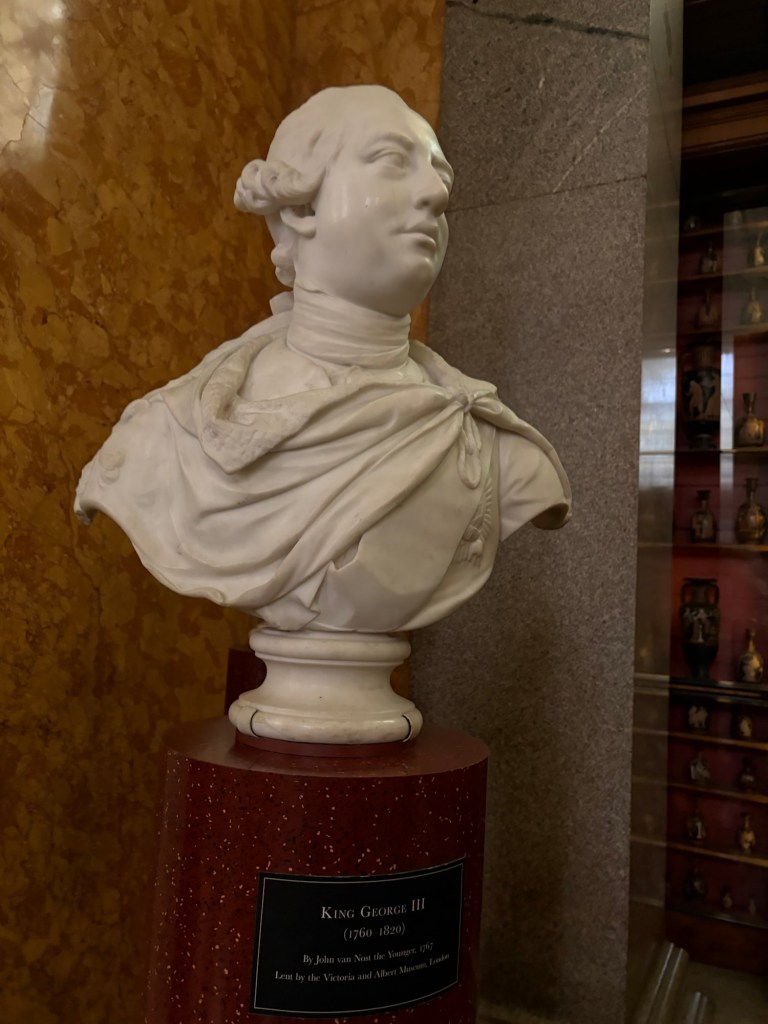
This was a fun trip back to the British Museum. I felt we were able to see more of the museum now that the kids are older. That said, visiting in the summer was much busier, and the museum itself was hotter, especially in the North American room, where the air conditioning was out. And in spite of, and perhaps because of the controversies that we are now more aware of, we could better appreciate the history these relics represent across time and space.
For tickets, and general information about the British Museum, check out britishmuseum.org. At time of writing, general admission is free. Cheers!
References:
The Parthenon Sculptures | British Museum, http://www.britishmuseum.org/about-us/british-museum-story/contested-objects-collection/parthenon-sculptures.
“Elgin Marbles: What Are the Parthenon Sculptures and Will Greece Get Them Back?” BBC News, BBC, 4 Dec. 2024, http://www.bbc.com/news/entertainment-arts-30342462.
Claus, Patricia. “Five Caryatids Await the Return of Their Sister from the UK.” GreekReporter.Com, 20 Sept. 2024, greekreporter.com/2024/09/20/five-caryatids-athens-waiting-sister/.
Adams, Alexander. “Which Countries Want Their Artefacts Back from British Museums? Whynow.” Whynow, 3 Feb. 2023, whynow.co.uk/read/which-countries-want-their-artefacts-back-from-british-museums.
Greeks and Lycians 400–325 BC | British Museum, http://www.britishmuseum.org/collection/galleries/greeks-and-lycians-400-325-bc.

 The Cranky Camper
1 thought on “The British Museum revisited”