

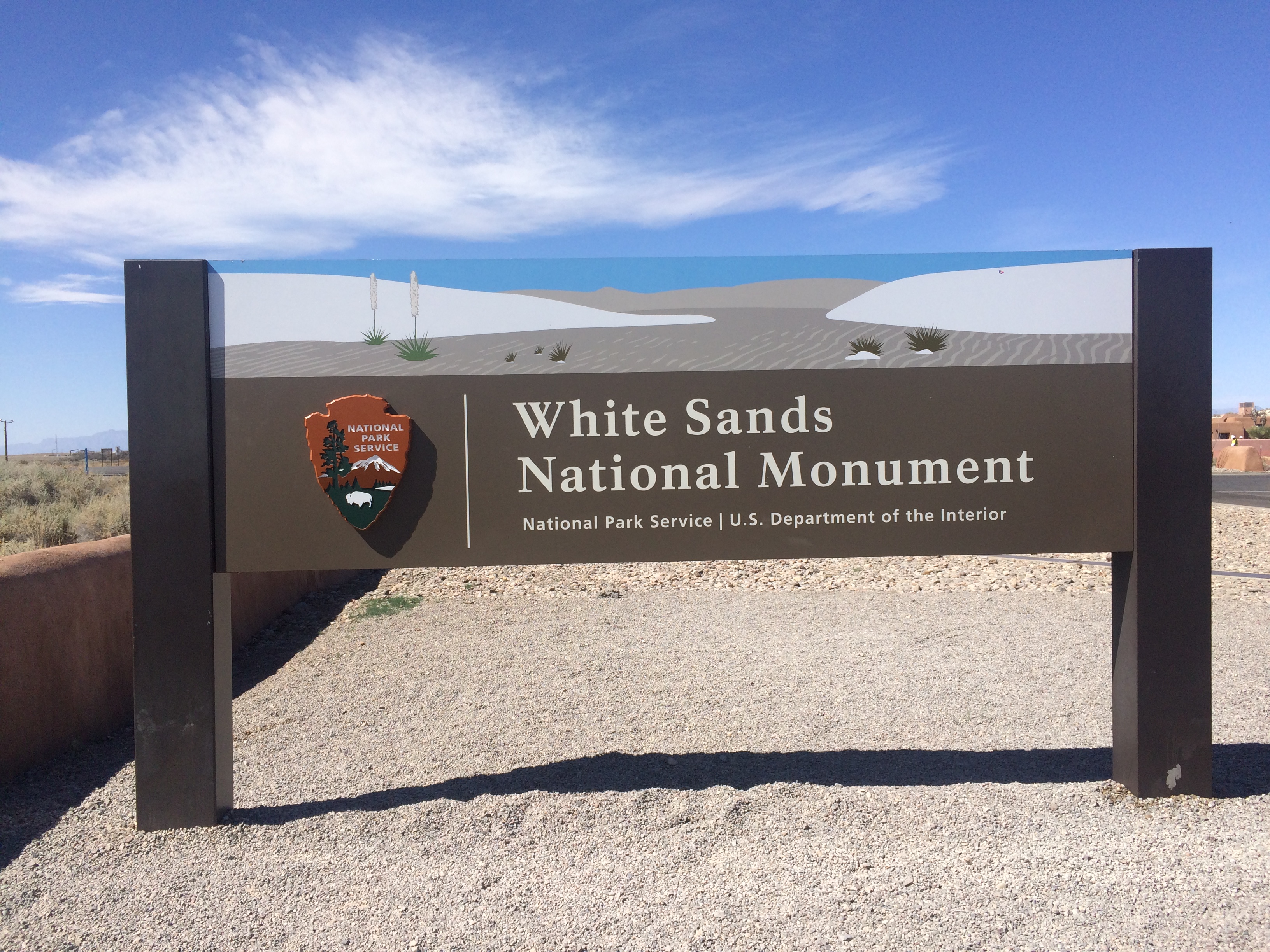
Spring break 2018 has come and gone and we are moving full steam ahead toward the end of the school year. As the kids are growing up quickly- too quickly it seems- we are more and more ditching our typical summer vacation schedule in exchange for spring and winter vacations. This year, spring break was spent hitting the road right after Easter festivities at our house and heading east over 800 miles to Ruidoso, New Mexico.
Ruidoso is a small, kind of off the beaten path, mountain town located in south-central New Mexico, 118 miles northeast of Las Cruces, and 181 miles south of Albuquerque. It the largest community in Lincoln County, however, that’s not saying much considering that Lincoln County’s total population is just under 20,500 according to the Census Bureau. But therein lies the charm. Located in the Sierra Blanca mountains, the views were spectacular and the clean air and quiet were a refreshing reprieve from the smog and bustle of So Cal. Additionally, this quiet town was the perfect home base for our parks adventures.
Our first official stop on our Southwest Spring Break adventure was at White Sands National Monument and the surrounding areas of Alamogordo and Cloudcroft. Alamogordo is home to pistachio orchards and wineries, such as PistachioLand, which boasts the ‘world’s largest pistachio.’ We made a stop here on the way to the national monument for some wine-tasting and window shopping. The kids picked up some ice cream as a snack while the husband and I were looking around- and wine-tasting.


White Sands, the world’s largest gypsum sand dune field, is a park like no other. Formed from gypsum carried from the San Andres and Sacramento Mountains to the Tularosa Basin by rainwater and snowmelt during the last Ice Age, the gypsum deposits settled in what used to be Lake Otero. The lake has since dried out, leaving deposits of selenite, gypsum’s crystalline form. Over the course of thousands of years, the effects of desert sun and wind transformed the lake bed into what it is today. The air currents exposed the selenite crystals, and years of freeze and thaw cycles eroded the gypsum pieces into fine grains of soft sand. The minuscule grains were carried by the desert wind, and eventually formed the famous dunes of White Sands. Today this geological process of deposit and evaporation and erosion continues. This is currently occurring at Alkali Flat and Lake Lucero on a much smaller scale, however, new sand continues to form and shape the landscape of White Sands.


This gypsum sand is different from the typical quartz-based sand you’d find at the beach. Gypsum sand is rare because it is water-soluble. It also does not absorb the heat of the sun’s rays, and so stays rather cool to the touch. The dunes at White Sands are made up of about 98 percent gypsum sand. As a result, the unusual white sand and desert climate gave rise to some interesting species of wildlife. Plants and animals here have to be able to survive on very little water. There are some examples of evolution in action, such as the bleached earless lizard and little white whiptail, lighter-colored varieties of lizards adapted for life camouflaged on the white sands. We also saw evidence of the desert roadrunner while at our lunchtime picnic site. Most of the animals were hiding on the day of our visit. The temperatures were very mild, in the mid-70s with very little wind, but the sun was strong.
Even more than learning about the wildlife and geology of the area, the kids really enjoyed sledding down the sand dunes. The visitor center has saucer sleds available for purchase if you forget to bring your own. We borrowed ours from the resort where we were staying. Sledding on sand was very different from snow sledding. The sand wasn’t quite as slippery as snow, so most of the time, the kids were doing more rolling than sledding. Still, it was a lot of fun. The husband and I were able to just relax on the cool, smooth sand. A margarita in hand would have perfected the afternoon if it were allowed in a national monument.


Some things to consider:
White Sands is located about 15 minutes southwest of Alamogordo, the closest town. It is surrounded by White Sands Missile Range and nearby Holloman Air Force Base. Missile testing can impact park hours, so check the NPS website for possible closures.
The fee to enter the national monument is $25 per vehicle, good for seven days from the time of entry. A per person fee of $15 is charged if there is only one person in the vehicle. The most economical way to visit, especially if you’re planning on visiting other federally protected lands is a national parks pass. At $80 annually, this is a great deal. There is also the Every Kid in A Park pass, which is a free parks pass available to fourth graders across the nation. The aim is to get fourth graders and their families exploring their national park lands to appreciate our country’s places of natural, cultural, and historical importance. Both Nate and Sami got their parks passes while in fourth grade, and we used them on many of our adventures.
The white sand reflects the sun’s rays, which makes the sand cool, however this can make it easier to burn. Be sure to bring plenty of water and sun protection. We made sure to apply and reapply sunscreen especially on Sami, who is very fair.
To protect this unique desert environment, please follow Leave No Trace principles. Pets are welcome as long as they are leashed, however, they’re not allowed in the visitor center or gift shop. It’s tempting to take home some gypsum sand as a souvenir, but this is a bad idea, and over time can damage the national monument. It’s also illegal to remove items from parks service land. Remember to take only photos, leave only footprints, and kill only time.
White Sands has a junior ranger program for kids ages five and up featuring Riley the roadrunner and his friends. The booklet can be picked up from the visitor center or printed and brought to the park. Participants who complete the required activities can earn either a cool junior ranger badge or an even cooler patch. And there’s no limit to the ‘up’ in five and up, so adults can participate too.
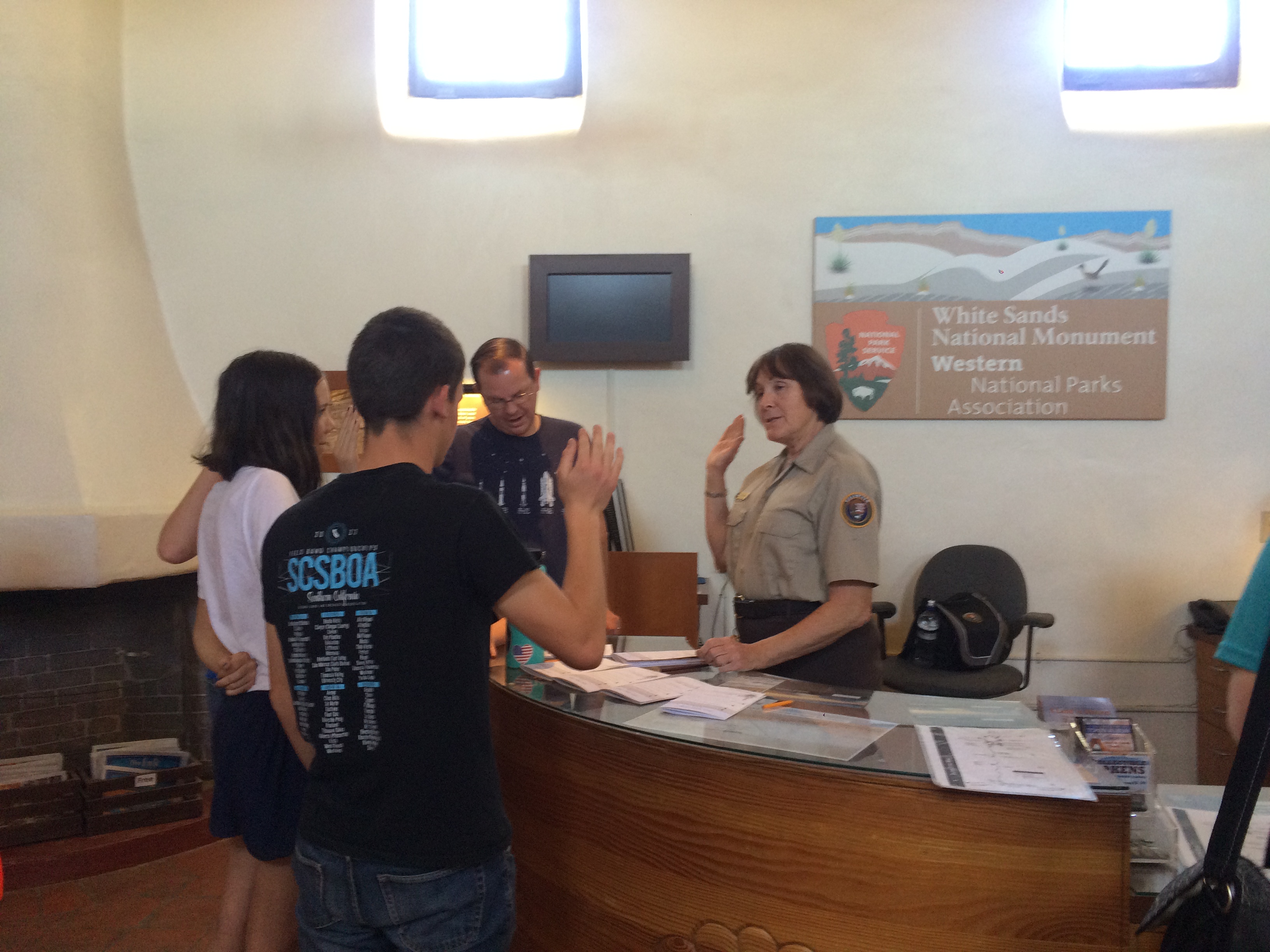
White Sands is an experience like no other and is definitely worth a stop if you’re in the vicinity of the Tularosa Basin. Happy trails!
References:
“Nature.” National Parks Service, U.S. Department of the Interior, 2018, http://www.nps.gov/whsa/learn/nature/index.htm.
Photos: the Haas family
*Update: White Sands National Monument became White Sands National Park in December 2019, when President Donald Trump signed the bill which included its redesignation. This makes White Sands America’s 62nd national park. Yay!

 The Cranky Camper
… EXCELLENT Report… photos … 🙂 /koca 🙂
LikeLike