

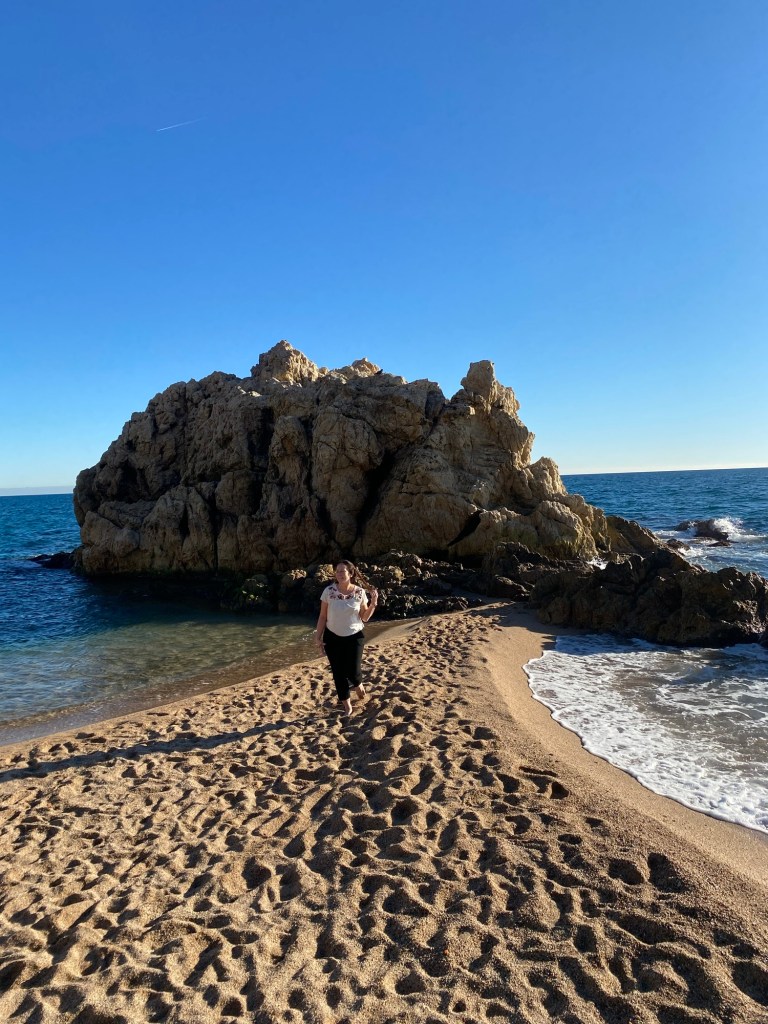
This past winter break was rather different from what we have experienced on previous Thanksgiving and Christmas trips in recent years. We had taken to going to Prague to visit Emily or to the Midwestern United States to visit family- places that are typically substantially colder than our So Cal home. This year, however, Emily requested someplace warm, and so we flew into Barcelona and stayed in Girona in the Catalonia region of northern Spain.
The weather was lovely for much of our trip: sunny and mild. While we started the day with coats, there were points when we were able to shed those in favor of lighter sweaters. Temperatures stayed in about the mid-60s over the Christmas week. And being so close to the Costa Brava, we had to take at least one trip to the beach. It wouldn’t be a Haas Christmas without it.
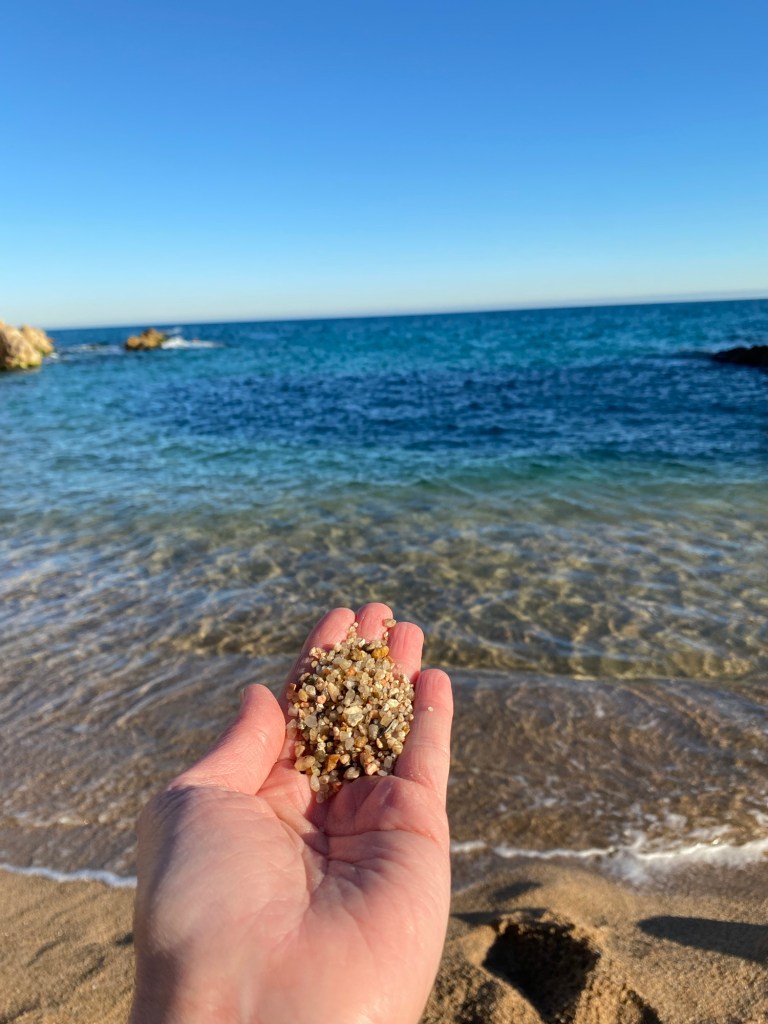

The Iberian Peninsula contains the countries of Spain and Portugal, and is separated from the rest of Europe by the Pyrenees Mountains. This landform is surrounded by the Atlantic Ocean on the west and the Mediterranean on the east. The Strait of Gibraltar divides Spain from Morocco in North Africa, and the peninsula forms the westernmost portion of Eurasia and continental Europe. Surrounded by water, the Spanish coastline is divided into several different costas, or coastal regions. The internet varies on how many costas are in Spain; I’ve seen numbers that range from ten to seventeen. Regardless, the Costa Brava, which translates to rough coast, is beautifully rugged and rocky and extends from just north of Barcelona to the border with France. There are sandy coves found among the cliffs and rock formations, but these are not extensive, relatively speaking. This is my favorite kind of beach.
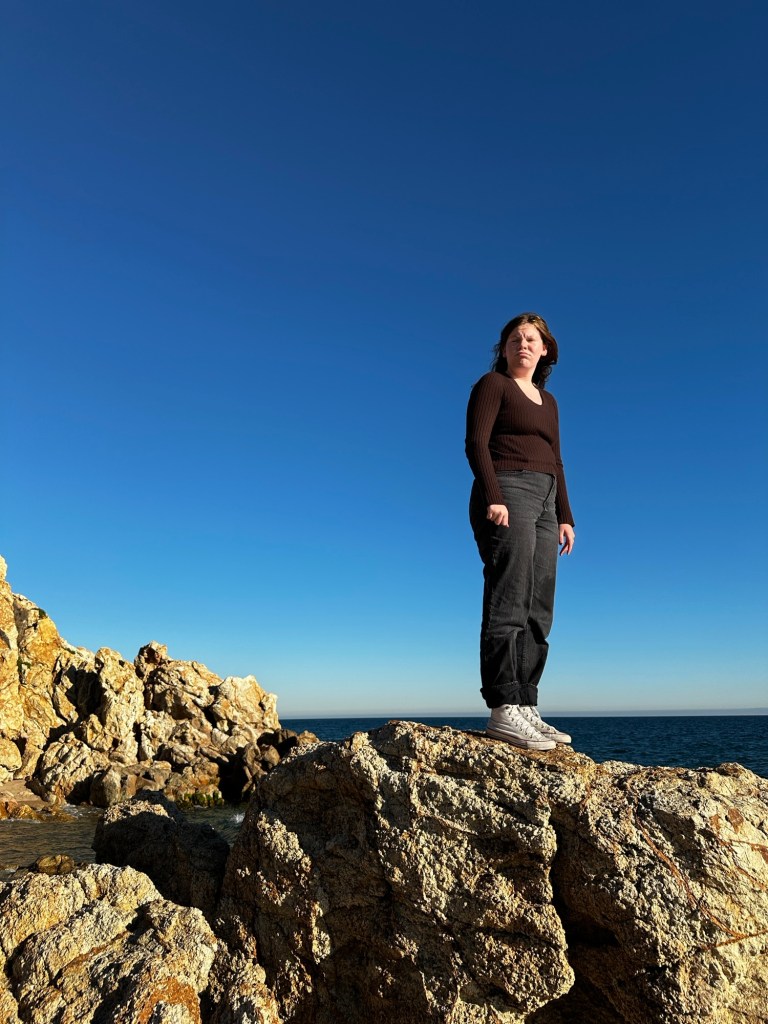

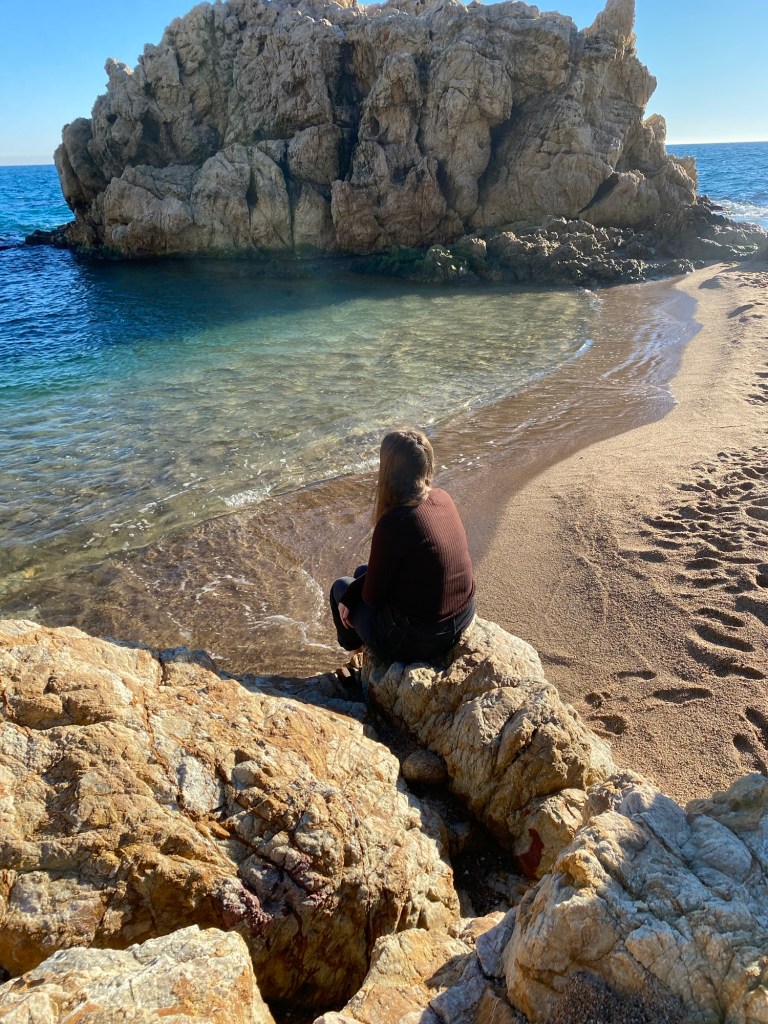
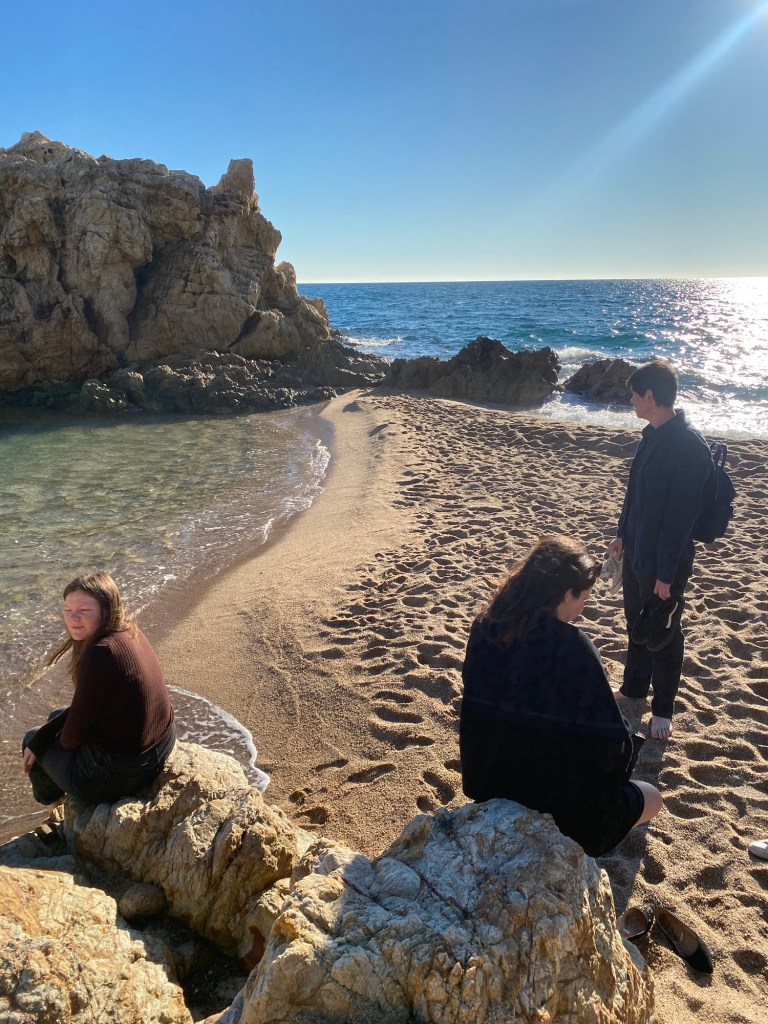
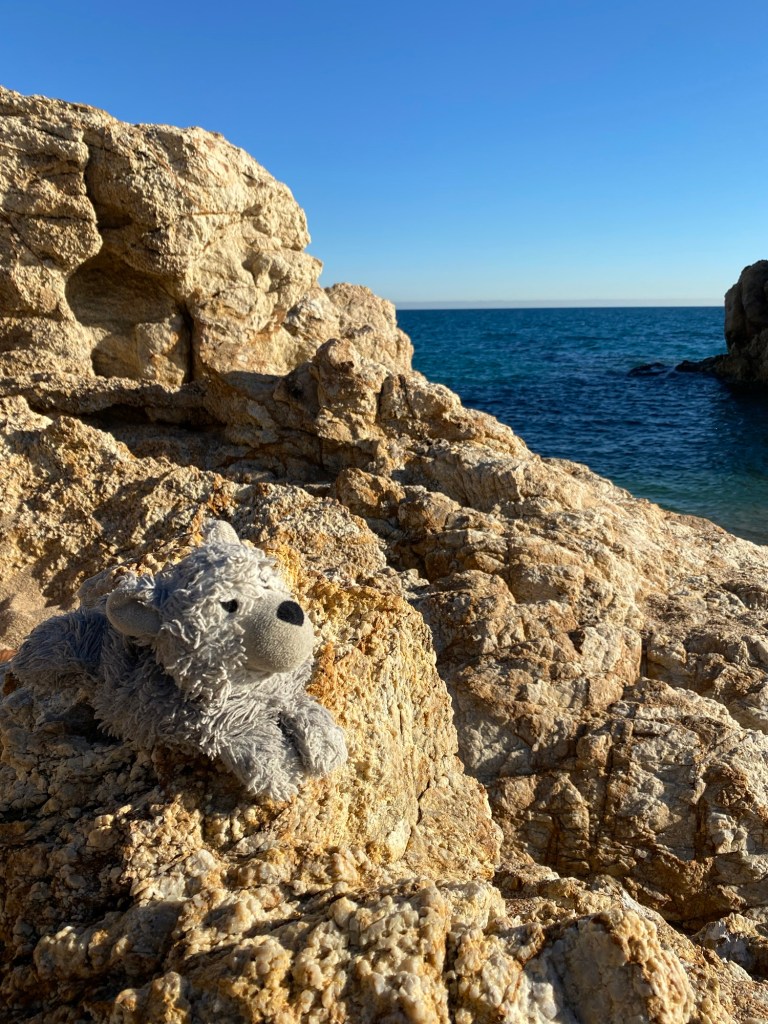
After applying for our emergency passports at the U.S. Consulate in Barcelona, we decided to carpe diem and redeem the time. We took the scenic route back to where we were staying in Girona. From Barcelona, we made our way to the N-11 via C-32, which follows the coast. Our first stop was Roca Grossa in Calella. This is a small, quiet swimming beach with rock formations, rough sand, and the crystal clear water of the Balearic Sea, a body of water within the Mediterranean Sea. Even on a weekday in December, there were a few families enjoying the sun. I’ve read that the beach gets significantly more crowded during the popular summer months. I could see why; Roca Grossa is beautiful. And with it being relatively quiet, it was very pleasant. While we had our suits in the van, I had no intention of swimming on this particular trip. However, I did stick my feet in the water, and was surprised to find how warm the seawater was, even in December. It felt refreshing. Sami, my rock climber, enjoyed playing on the rock formations with her siblings. While the kids climbed on the rocks, I searched for sea glass and cool shells, and successfully found both.
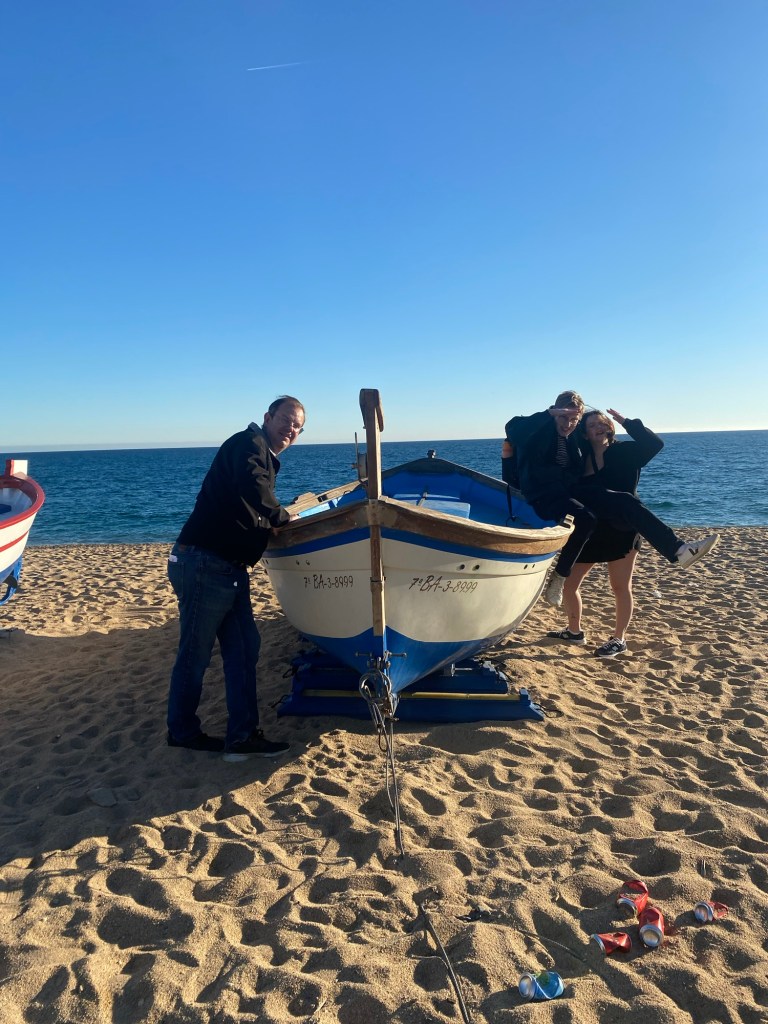
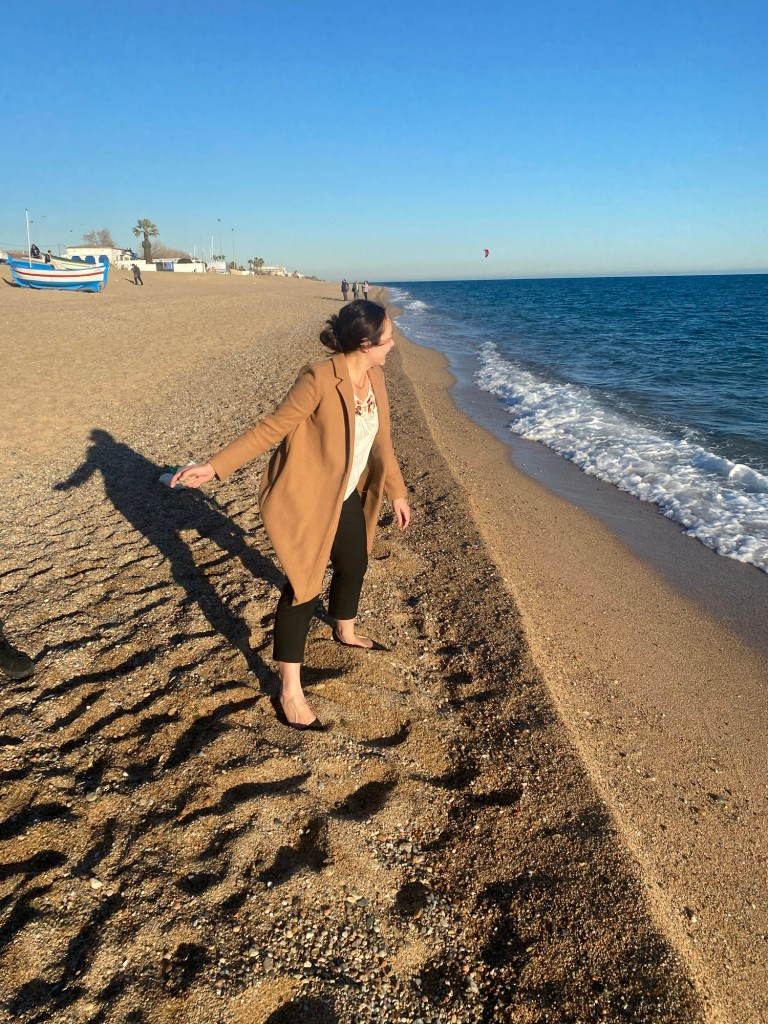
After a while, we packed back into the van and headed about 3 kilometers northeast into Calella itself. We found parking and walked to the beach. There the boys checked out the rowboats parked along the shore. Meanwhile, I skipped rocks to let out some lingering frustration over the passport situation and looked like an idiot in the process. Because of the slope of the shoreline, I was about 1 for 6 in terms of rock-skipping success, but I did feel a bit better after laughing at myself.

Following a brief rock-skipping competition with Nate, we walked back toward the town. There were people hanging out at the beach as well as in some of the restaurants in the series of alleys, however, it was rather quiet on a Wednesday mid-afternoon in winter. I would imagine that the place would be packed during the summer holidays. Still, the town itself was charming, and the walk was a good way to get in some steps and kill some time before dinner. We walked over to Iglesia de Santa María y San Nicolás, a Catholic Church in Calella with a long history. The parish itself dates back to the 1600s according to the church website, however the chapel building has seen some changes as a result of the collapse of the bell tower in 1747 and the civil war in 1936. The new building was reconstructed in 1940, and continues to hold mass and other services today.
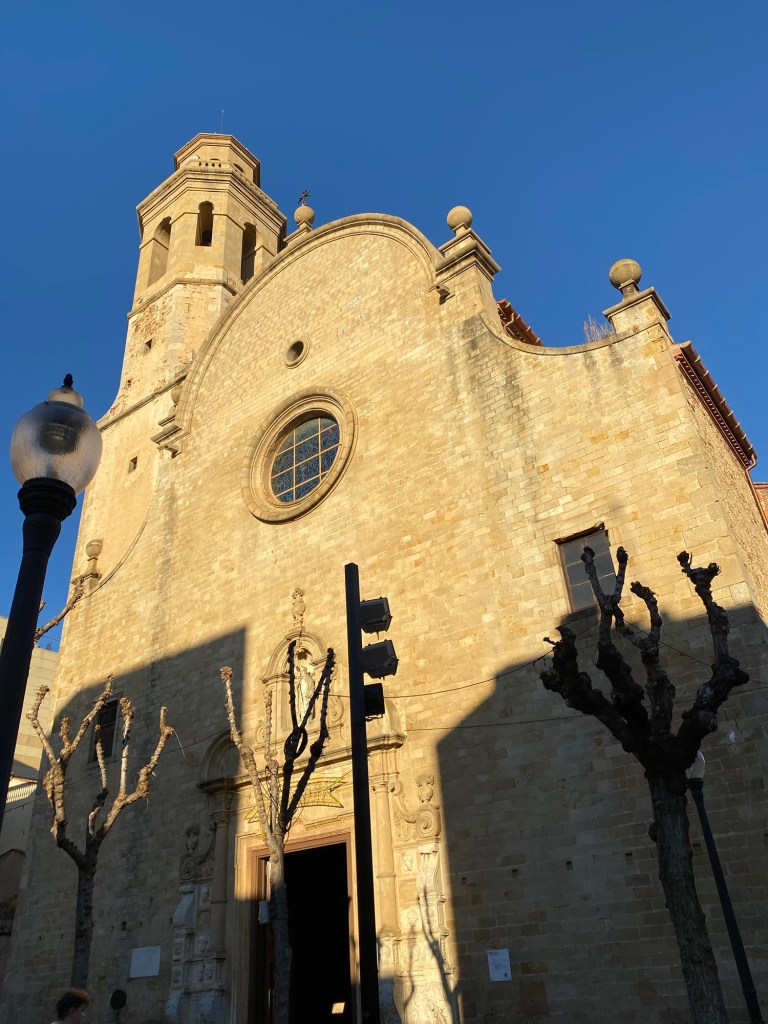
After taking a short rest at the church, we headed back to the car to continue toward Girona for coffee and dinner. Our stops exploring the Costa Brava were a pleasant way to redeem the time and drive from Barcelona for what could have been an unpleasant task. It was a good time with family, and we were able to see some truly beautiful sights. There is so much more to explore along Catalonia’s wild coast, including resorts and glamping adventures, dining, and wine tasting. Salut!
References:
“Costa Brava. What to See and the Best Travel Plans.” Spain.Info, http://www.spain.info/en/region/costa-brava/.
Cinto, Equip d’editors i. “Història Del Nostre Temple.” Parròquia de Calella, 19 Sept. 2023, parroquiacalella.cat/historia/el-nostre-temple-titol/.
Bonus: Sangria recipe
When I think of sunny days along the shore, I picture relaxing with a good book and a drink in hand. And when in Spain, what’s better than a pitcher of bold yet sparkling homemade sangria?
What I love about this wine-based fruity cocktail is that is really versatile and can be modified according to ingredients on hand as well as personal preference. I have concocted large batches when planning get-togethers. I typically use fruit I have in the fridge (and likely want to get rid of before it spoils), red wine blends, and a couple shots of spiced rum. I have used soda in the past; in my opinion, this makes the drink a little sweeter than I like it to be, but everyone has a different taste preference. So without further ado, here’s the Cranky Camper’s take on Spanish sangria.
Ingredients:
750 mL bottle of red wine. A Spanish wine like Temperanillo works well, however red blends can also be used.
Orange or tropical fruit juice
Chopped fruit- apples, oranges, berries, or mango work well. Be creative!
Spiced rum
Prosecco. Clear soda or soda water may also be used for this step.
Ice
Raw or brown sugar, optional
- In a large pitcher, pour in red wine. You may add a spoonful of brown sugar if you feel the wine is too dry.
- Add about 3/4-1 cup of juice and toss in fruit chunks. Place in the fridge overnight to allow the flavors to meld together. If you are short on time, as I have been on many an occasion, try to let it sit for an hour or two if you can.
- Add 1-2 shots of spiced rum or your preferred sweet liquor. I’ve heard Cointreau or brandy also works well. Then stir to mix.
- When ready to serve, add some sparkly beverage over the top of the mixture. Add ice and serve. Enjoy responsibly. Salut!

 The Cranky Camper