
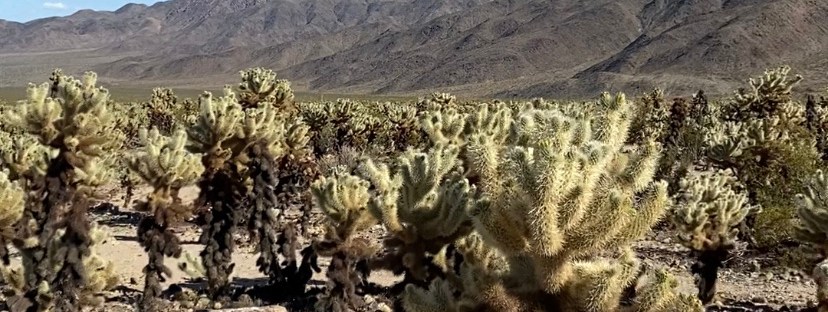
Cacti, that is…
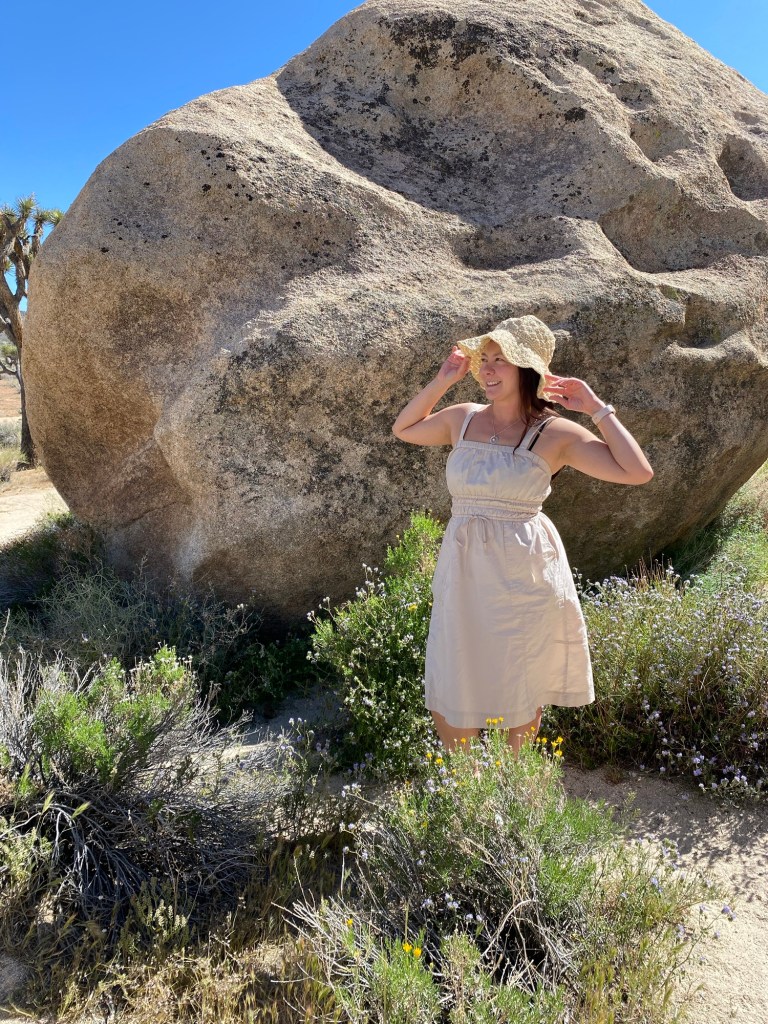
Two weekends ago, in honor of National Parks Week and Junior Ranger Day, Sami requested a visit to Joshua Tree National Park. Though it was already going to be a busy weekend with church and scout events, I have a difficult time saying no to a national parks trip. It had been almost exactly a year since our last trip, so I thought it would be nice to visit the park and have a new adventure.
Because of the church event, we were off to a late start. After packing lunch and snacks, we left for the two-hour drive just before noon. The drive went smoothly, even with stops at Coffee Bean for caffeine and the Taco Bell at Morongo for more lunch.
We arrived at the national park via the west entrance station in the midafternoon. The late April day was perfect for desert hikes- sunny with mild temperatures, and plenty of remaining daylight. After some debate as to where we should start our hikes, we drove past Barker Dam and headed to Hall of Horrors, a large rock formation and popular rock climbing spot within the national park.
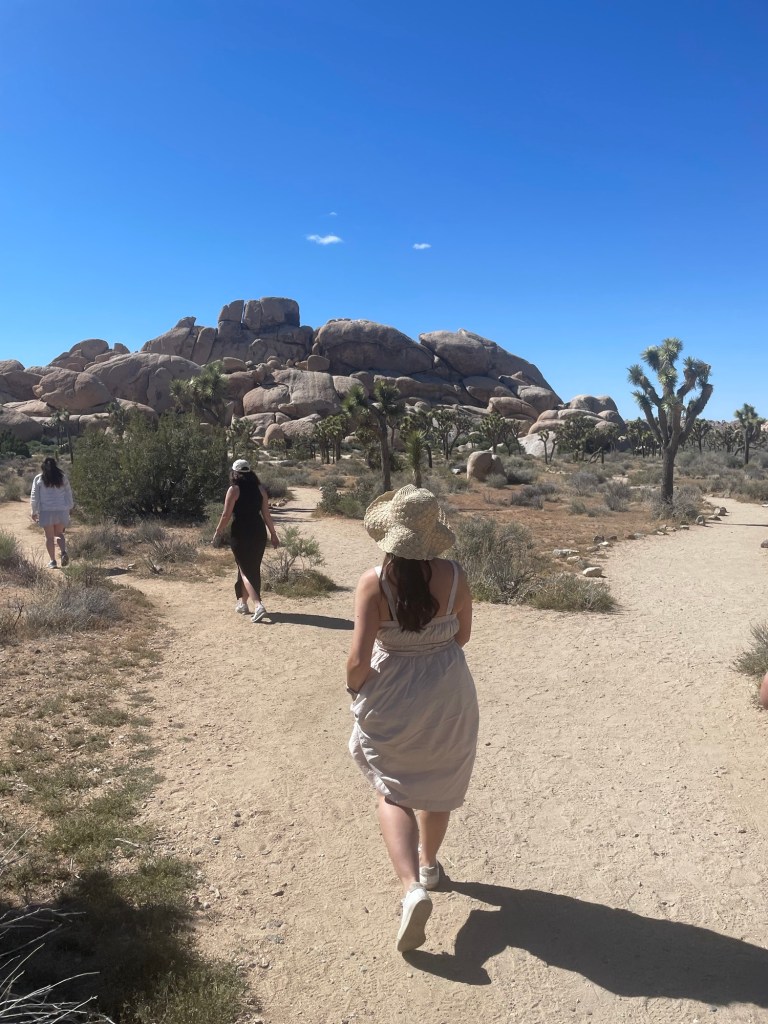
Hall of Horrors is located off Park Boulevard, the main road through Joshua Tree, about halfway between between Ryan Campground and Sheep Pass Group Campground. This rock formation features plenty of large boulders for climbing, as well as two small slot canyons. Hall of Horrors was probably named by the rock climbers frequenting the area. The walk from the parking area to the rocks is short and flat, so it was a hike with an easy payoff. Sami was very quickly jumping over boulders and having fun with her siblings under the California sun.

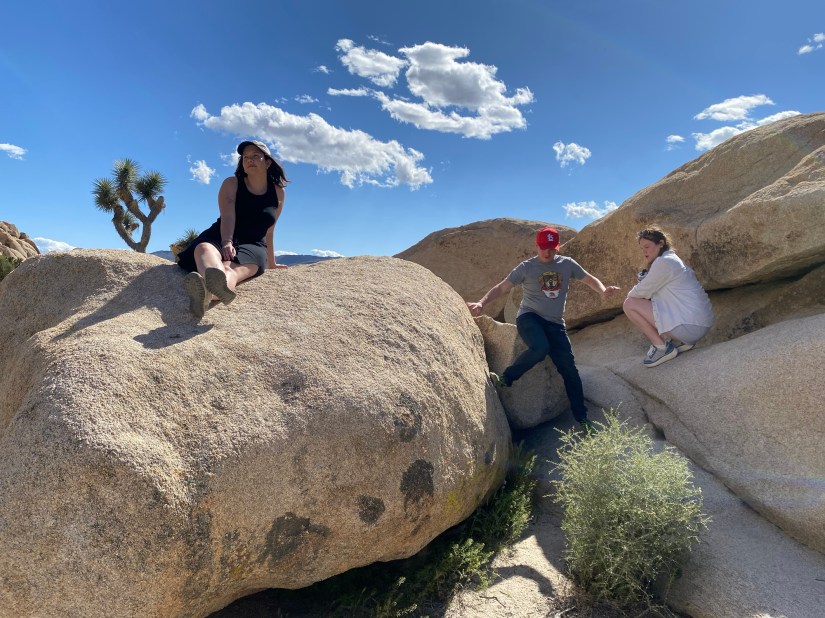

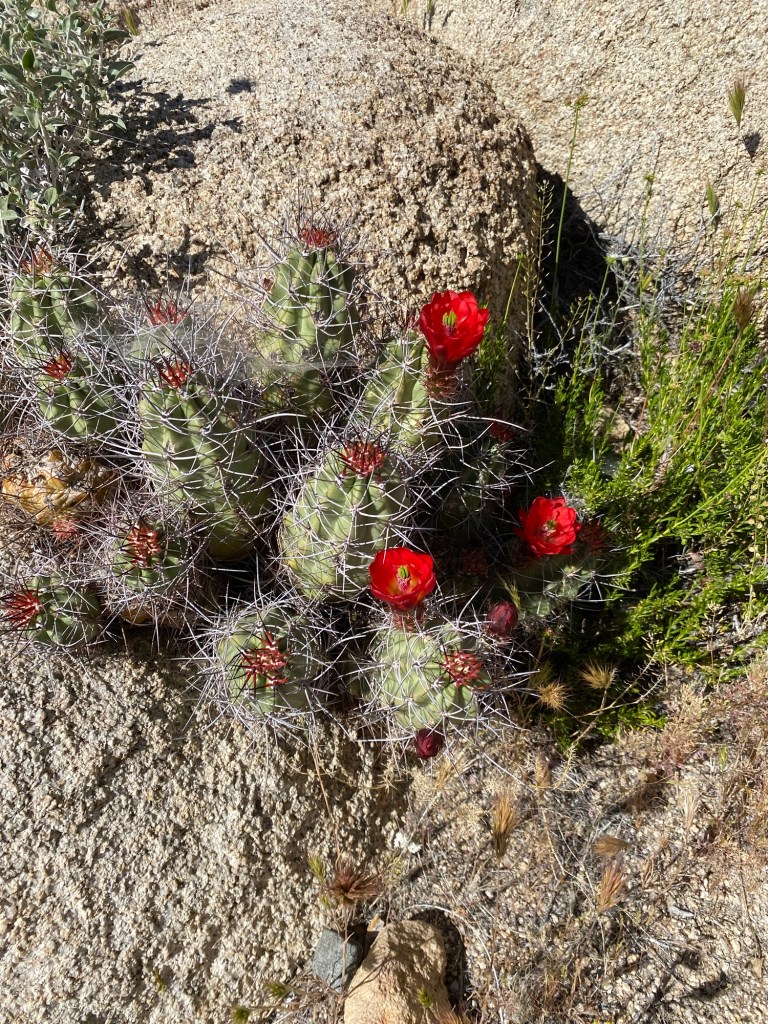
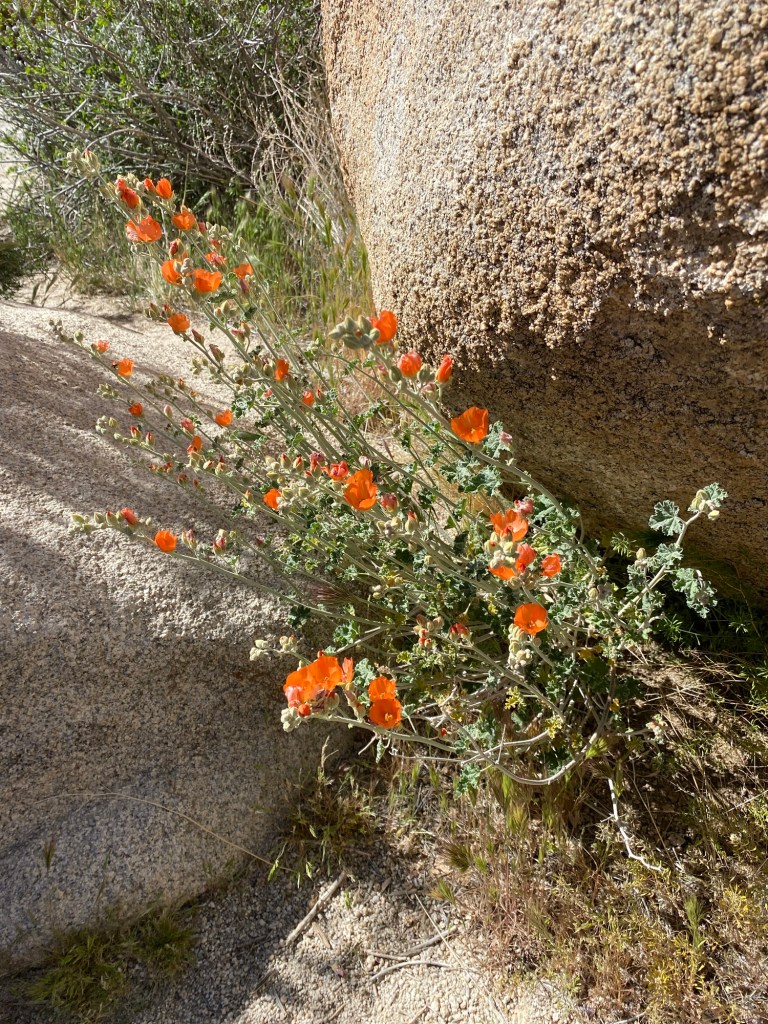
We walked on and around the rocks. While there was a good number of hikers as well as a few climbers, there was enough space so that it did not feel crowded. As a plus, we were also able to see some wildflowers in bloom. The claret-cup cacti were especially pretty with their brilliant red blooms.
After some time playing and sunning on the rocks, we hiked back to the car, and followed Park Bl south. We had been planning on hiking at Arch Rock, however, the girls were starting to doze off a bit. So I drove past the Arch Rock parking area and headed to the Cholla Cactus Garden.
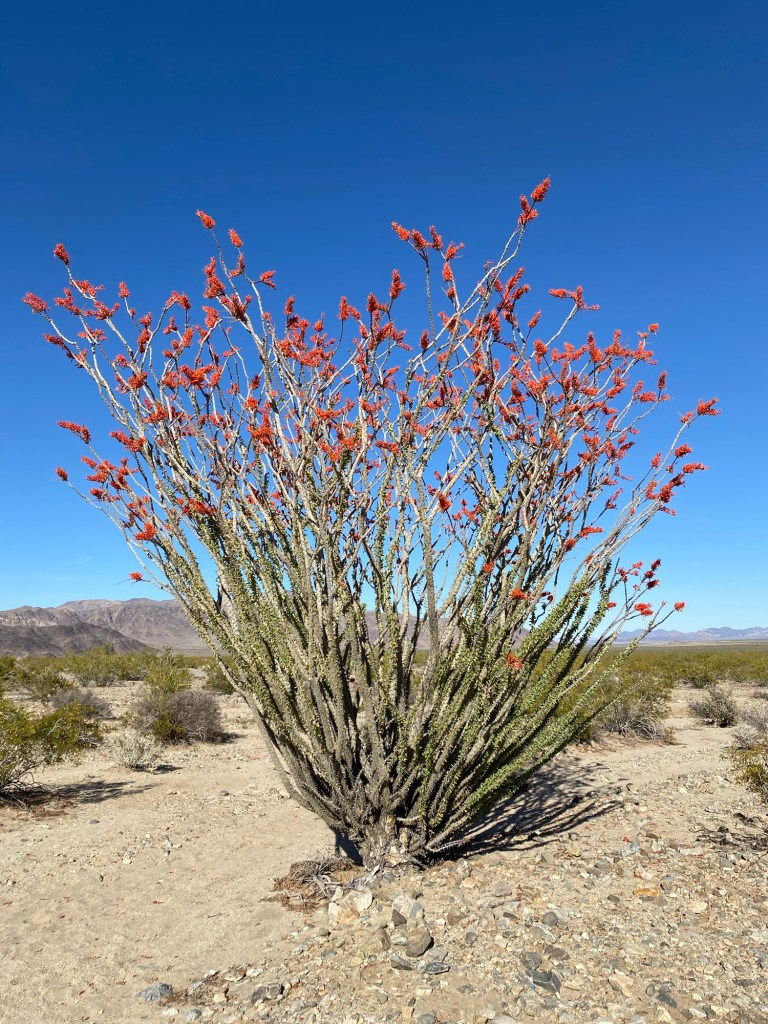
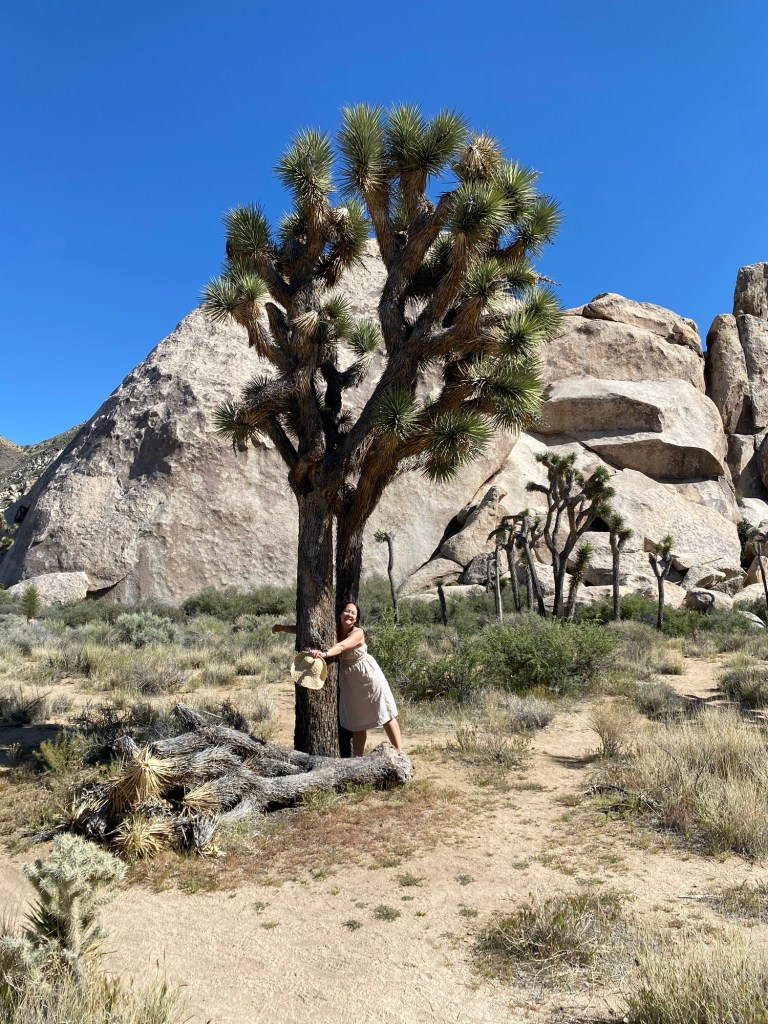
As mentioned in a prior post, Joshua Tree sits on two deserts. The western half of the park is part of the Mojave Desert, and is at elevations over 3000 feet above sea level. This region is marked by large populations of Yucca brevifolia, an interesting plant related to asparagus and agave commonly known as the Joshua tree, after which the park is named. In addition, coniferous pinyon pine and juniper, along with prickly pear cactus and Mojave yucca are endemic to this desert. To the south lies the Colorado Desert, below 3000 feet in elevation. This region is dominated by creosote bushes, reminiscent of scenery in Arizona. There also grows feathery green palo verde trees, seaweed-like spiky ocotillo, brittlebush, and cholla cacti. We drove to the south side of the park to hike among the teddy bear cholla.

The Cholla Cactus Garden features ten acres of Cylindropuntia bigelovii, affectionately known as teddy bear cholla. This unusual cactus has tightly packed spikes that look fuzzy, however the spikes are not so friendly and would be painful to remove if pricked. According to the National Parks Service, the teddy bear cholla typically reproduces vegetatively; this is a type of asexual reproduction in which new plants grow from detached parts of a parent plant. It is thought that the cactus garden may have started with one plant. I would be interested to see if indeed the garden is genetically identical.

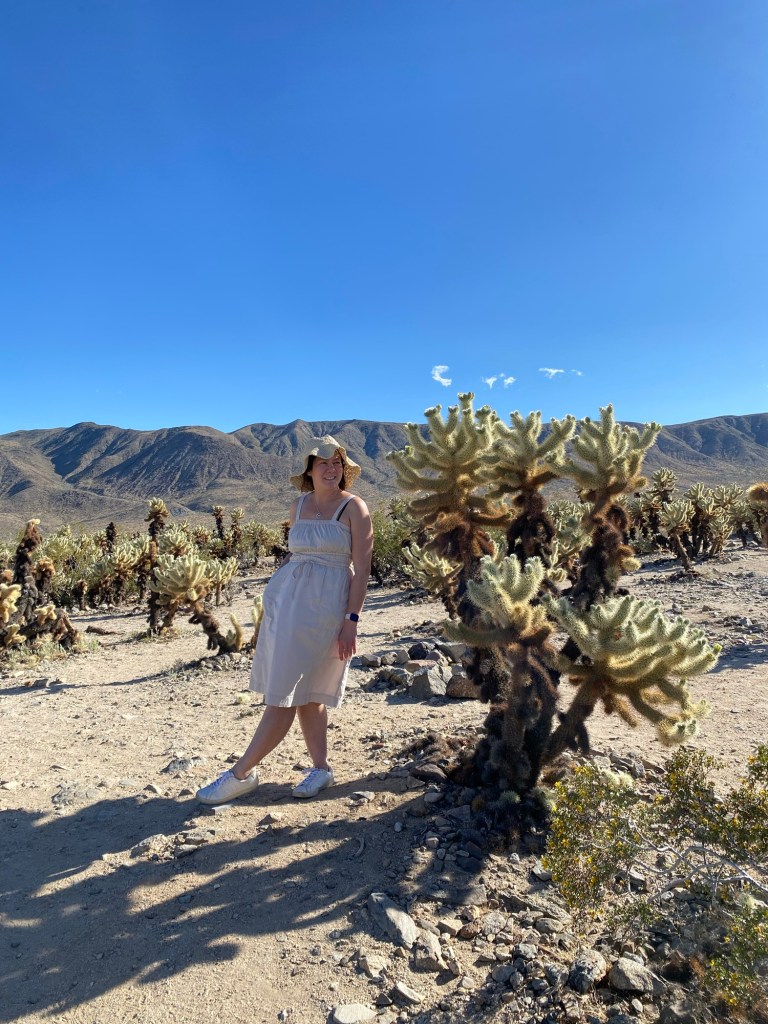
In addition to teddy bear cholla, we found creosote in bloom with tiny yellow flowers. There are also pencil cholla as well as other types of cacti. The nature trail is flat and easy at only about a quarter-mile long. As might be expected, there is no shade, but the day was mild, and we had plenty of water. Even so, the kids were starting to get hungry, so after taking a few photos, it was time to load back in the car and head out. They had their hearts set on Texas Roadhouse and some freshly baked rolls, so our stop at the restaurant in nearby Indio would hit the spot after an afternoon of adventuring.
Some things to consider:
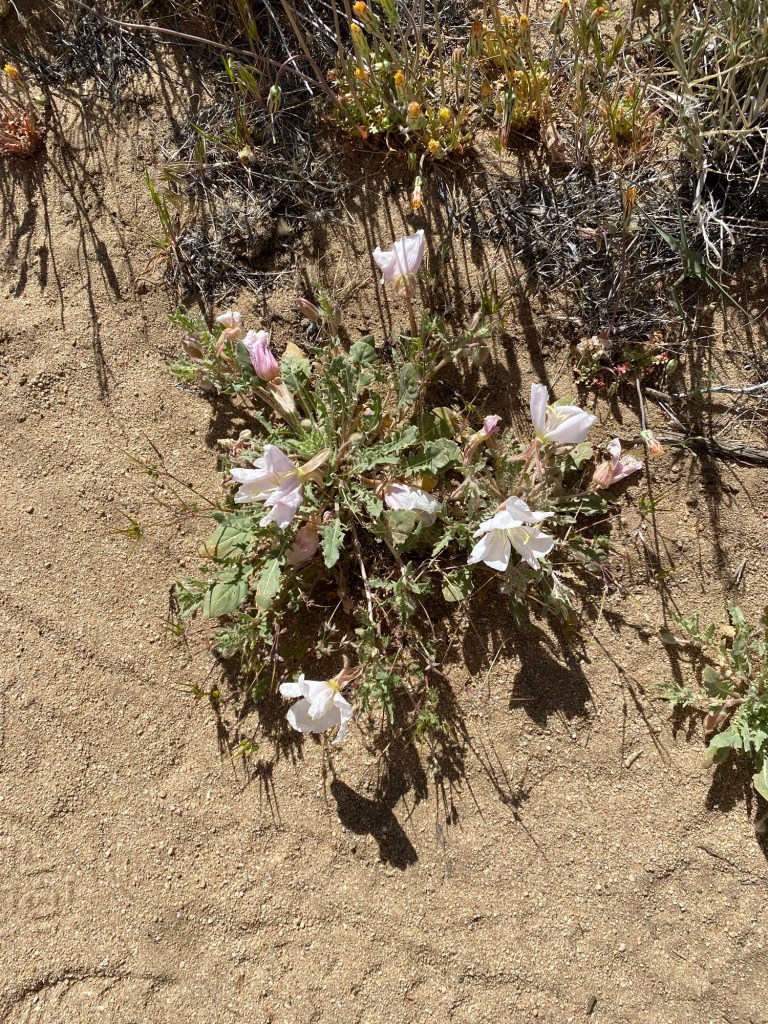
As the park experiences the rain shadow effect on account of the tall San Jacinto and San Gorgornio Mountains, it is dry and hot, especially in the summer months. October through May are ideal times to visit the park, as temperatures are typically more mild. There are wildflower blooms in the spring. We seem to visit most in April, when the wildflowers are still in bloom, and the park is comfortably enjoyable.
As mentioned, there is little shade in the park. Plenty of water and sun protection are a must, even on cooler days.

While Hall of Horrors is not the most visited part of the park, the parking area does fill up quickly. There’s room for about 30 cars or so, and there wasn’t parking along the road. We were fortunate that a spot opened up after only a few minutes of waiting. The parking area does have vault toilets which were relatively clean. It is a close walk from the parking area to the rock formations.
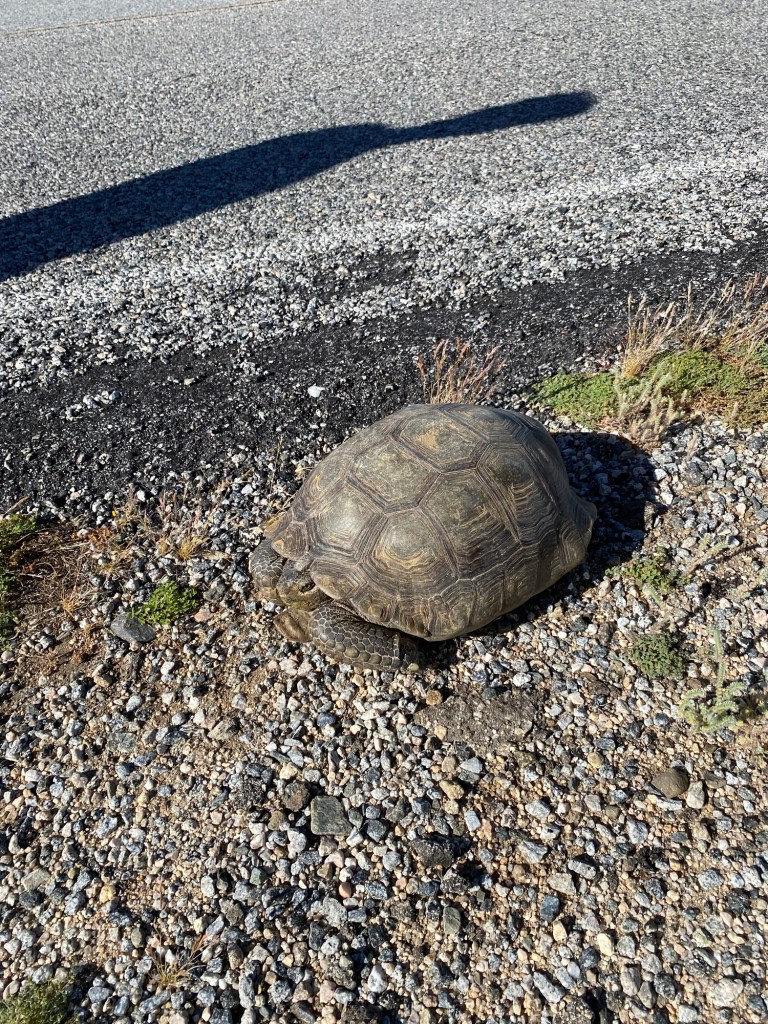
Be sure to obey speed limits and posted signs in the park. On this trip, we were fortunate to see a desert tortoise as we were heading to the Cholla Garden. Another party thankfully had spotted the tortoise in the road and carefully moved him to the side where he would be safer. A leading cause of death from human activity for many animals in national parks is being struck by a car.
While strikingly beautiful, the desert environs can be unforgiving. It is surprisingly easy to get lost in Joshua Tree National Park, and the weather can be extreme. It is important to follow the trails, be aware of landmarks, and stay with your group. My boys learned this the hard way when they almost got lost on our 2019 trip.
Speaking of getting lost, there is little cell service within the national park. This is wonderful for intentional getting lost, as in disconnecting from stress and endless email for family time and self-care. However, this can make it more difficult to get help if an emergency were to arise or a member of your party did indeed actually get lost.
We had a great time on this day trip to Joshua Tree National Park. I feel fortunate to be living close enough to the park that it’s a relatively easy drive, but far enough to make it special. There is still so much to explore in Joshua Tree and many adventures to be shared. Until next time, happy trails!
References:
“Cholla Cactus Garden.” National Parks Service, U.S. Department of the Interior, 11 July 2017, http://www.nps.gov/jotr/learn/nature/cholla-cactus-garden.htm.

 The Cranky Camper
3 thoughts on “Joshua Tree: Halls of Horrors and Cholla Gardens”