


Once a medieval fortress, then a Renaissance palace, and finally a public museum, the Musée du Louvre stands proudly in the heart of Paris. The Louvre is the most visited art museum in the world, hosting over 8.7 million visitors in 2024 alone. And it is no wonder: its collections are large and exquisite. Approximately 35000 works of priceless art are on display in the museum, however this is nothing compared to the total number of objects housed for preservation and research. According to the Louvre website and other sources, the museum holds over 480000 works, and this is not even considering the ornate detailing of the building itself. With all of this in mind, I opine that a first trip to Paris is not complete without a visit to this amazing national museum.
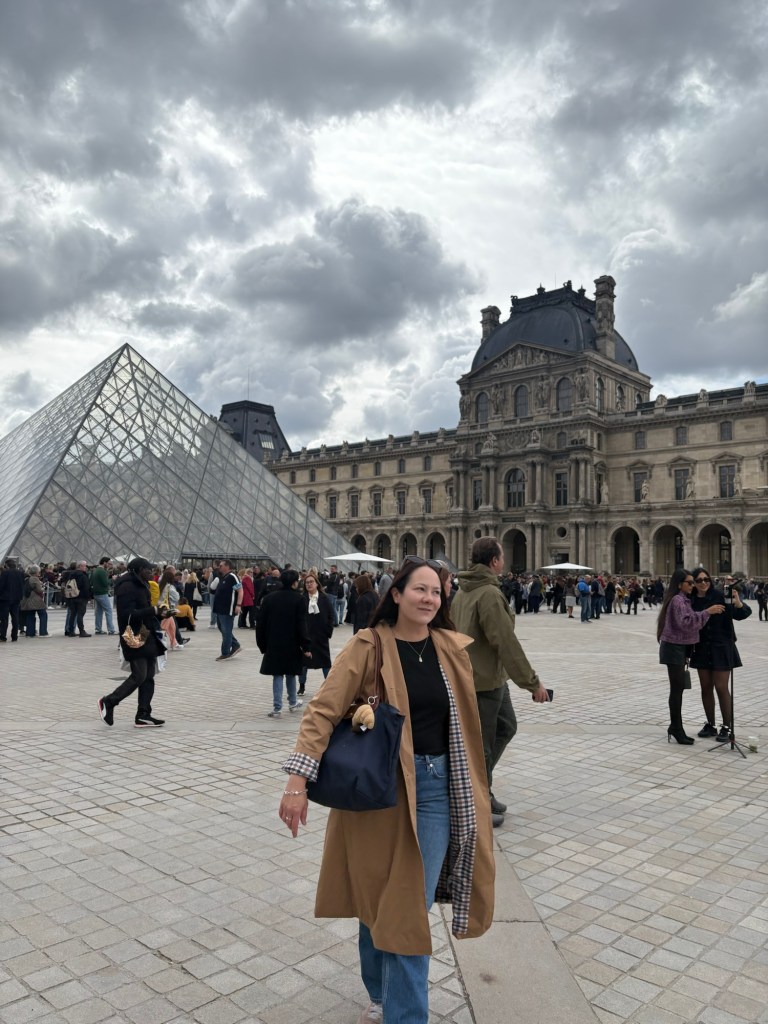
Emily had booked timed tickets for the second day of our trip to Paris. General admission was a reasonable 22 euros apiece, however, they did have to be reserved pretty well in advance especially since we were traveling right around the Easter holiday. Unsurprisingly, the museum was very busy, with long lines wrapping around the courtyard. The good thing, however, at least for entry into the museum and going through security, the timed tickets were pretty efficient. We were able to enter under the glass pyramid a few minutes before our 11:00 time.

That was where ease and comfort would end. Once inside the museum, we had to wait to enter the galleries. We knew the museum was going to be crowded, but I was unprepared for how crowded it was going to be. The line progressed quickly, and we headed into the Denon Wing, which houses Greek and Roman antiquities, as well as works of the Italian masters.
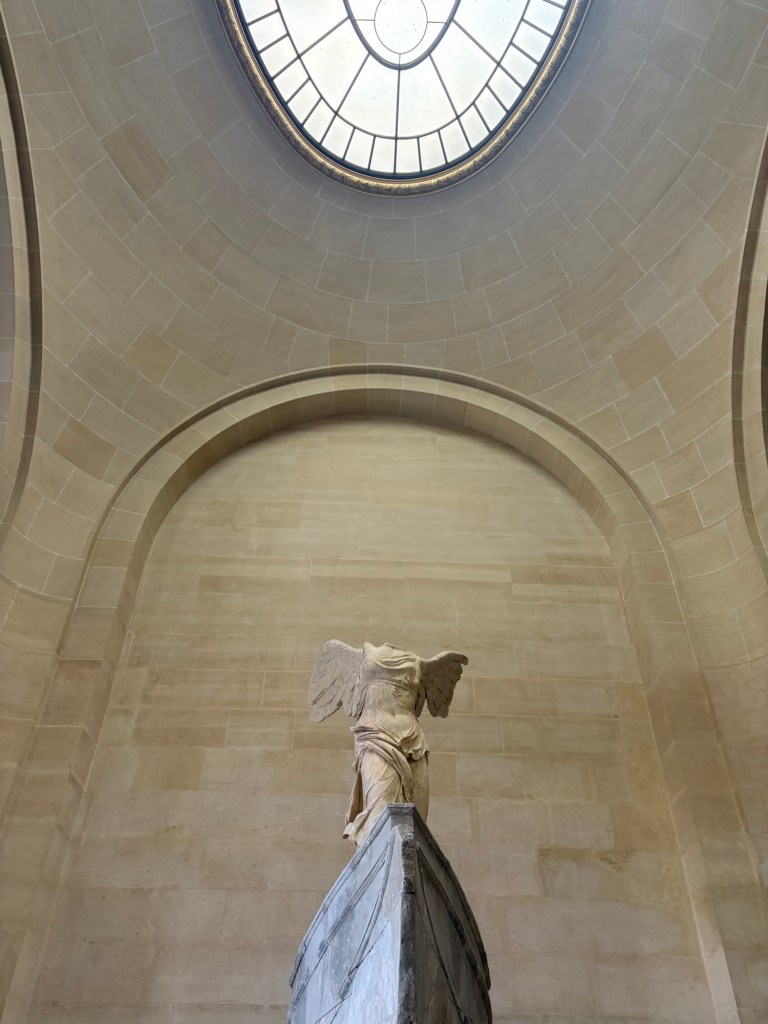
Rather than explore the ground floor with the antiquities, we first trudged up the famed Daru staircase and were greeted by the Winged Victory of Samothrace when we victoriously reached the top. After a few photos, and fanning ourselves, we followed the signs toward room 711. While the Mona Lisa was our main goal, we did observe other splendid works of art from the Italian Renaissance.
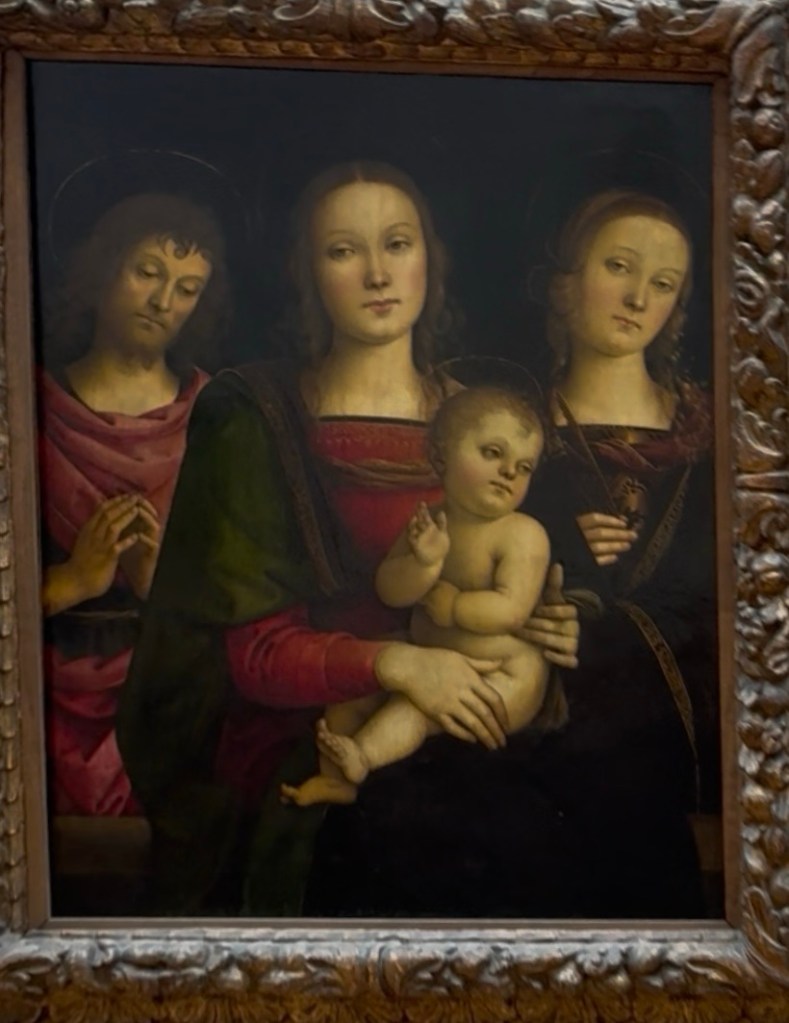
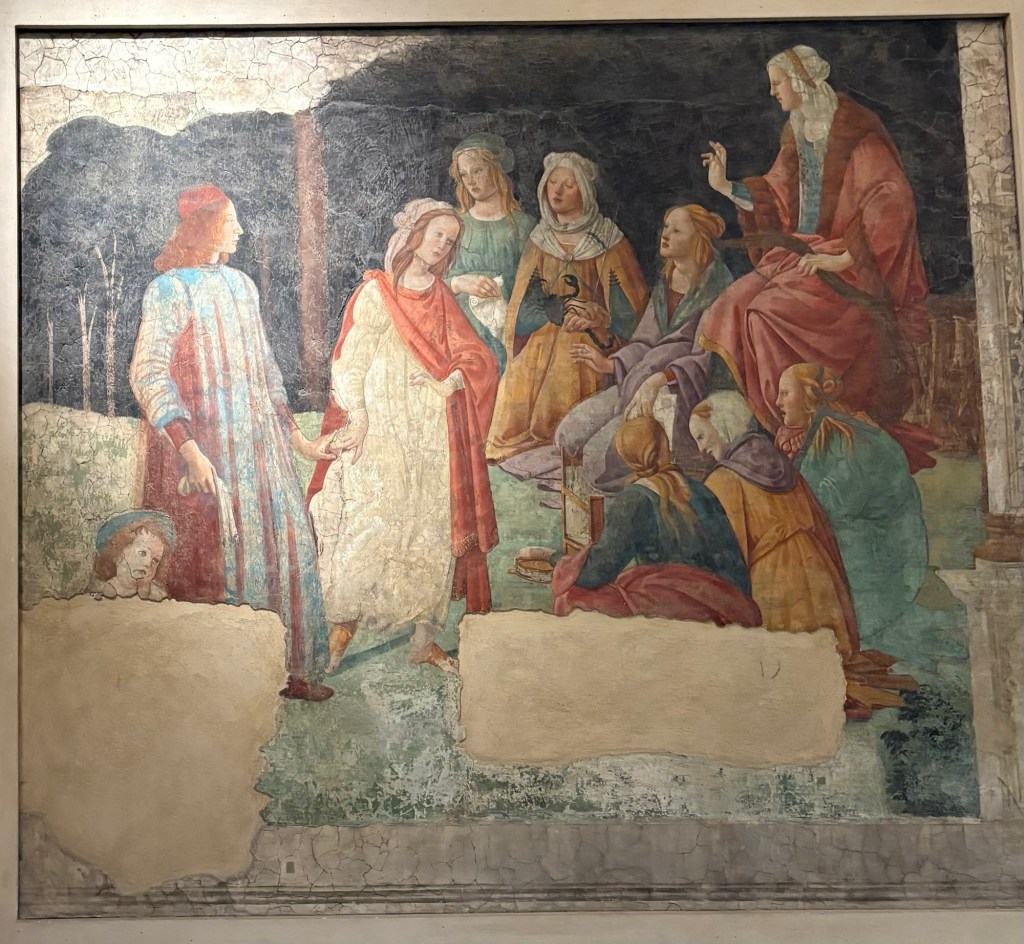
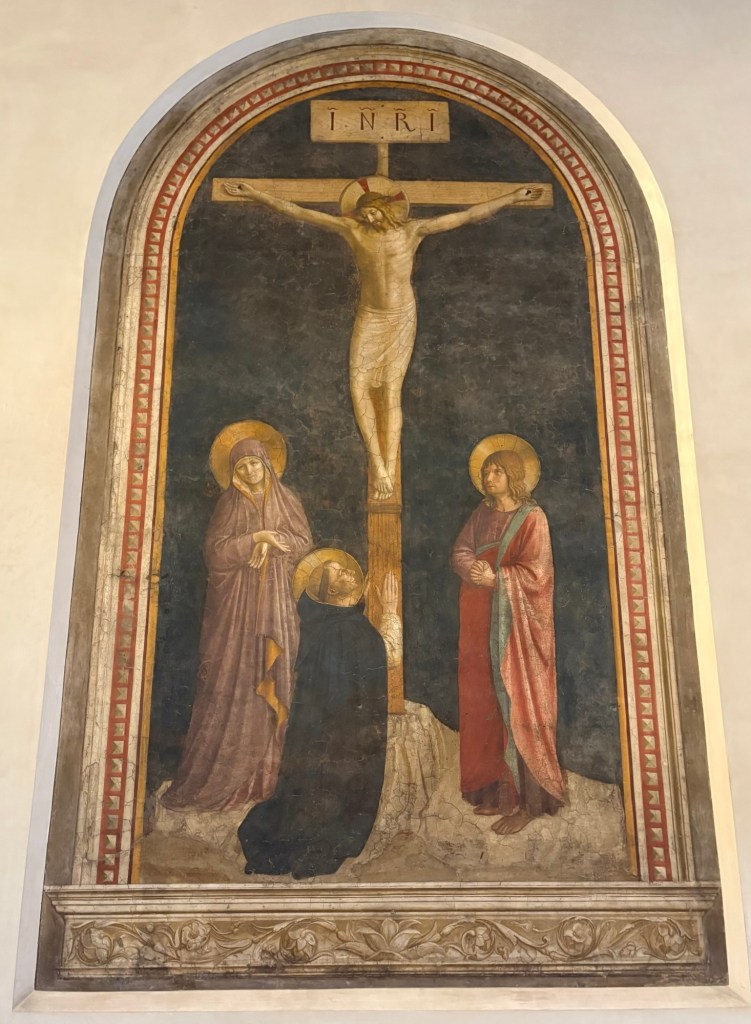
Leonardo da Vinci’s possibly most famous work is currently hung in room 711 against a deep blue wall. The room, while large, was rather too small to hold the number of people gathered to view the Mona Lisa. There are a number of other paintings, including the massive Wedding Feast in Cana by Veronese. We slowly made our way to the front of the space, where people were taking selfies in front of the painting.
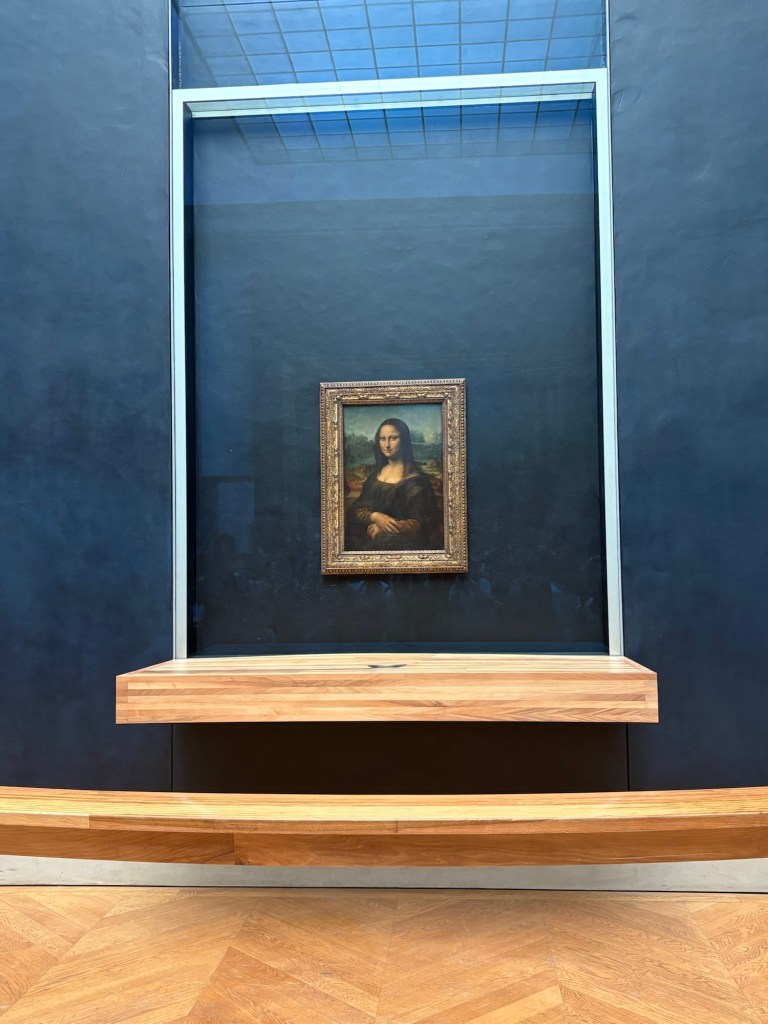
The oil-on-wood masterpiece would have been underwhelming, especially being housed in the Louvre’s largest room, if not for the exceptional brilliance in this work of art. The painting itself is very small- a half portrait- and it is done with a sfumato technique, which softens the image and brings attention to the subject, though the background is fascinating as well. The painting is thought to have captured the image of Lisa Gherardini, who was married to an Italian silk merchant. The colors are muted, possibly due to the age of the painting. It is said that Mona Lisa was one of da Vinci’s favorite works. I could appreciate the enigma of the work, and wondered too, what is it that makes the Mona Lisa smile.

After visiting Mona Lisa, we headed back to the Michelangelo room to view the sculptures. In this room, we viewed many famed works from Michelangelo to Giambologna and Canova.
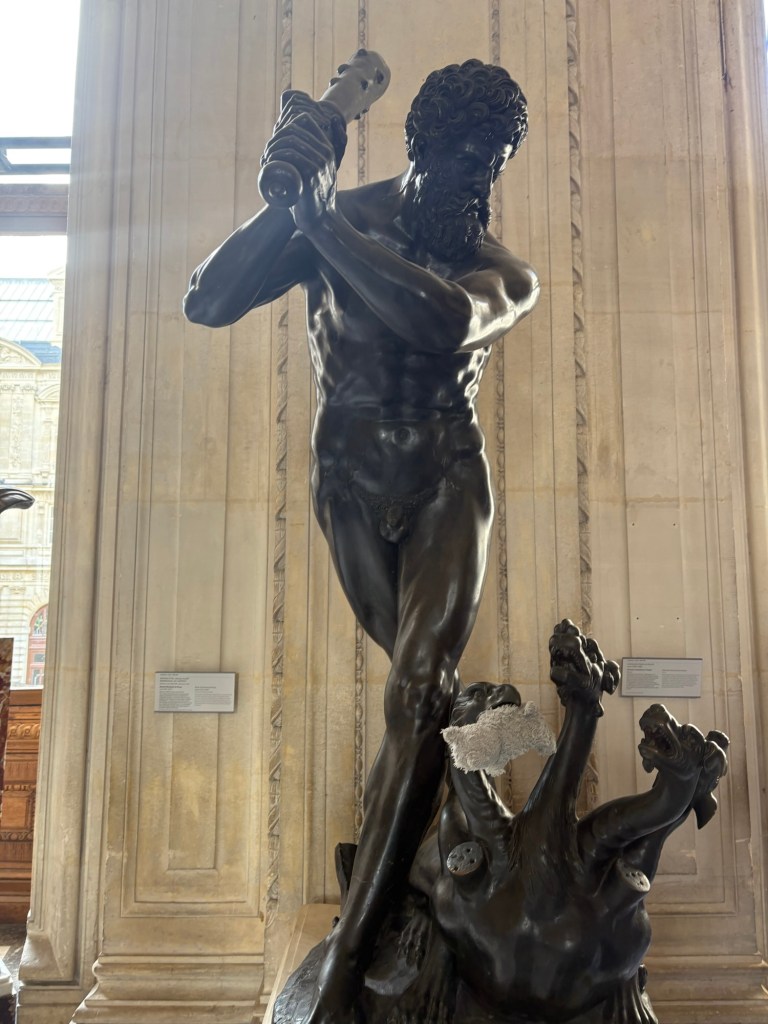

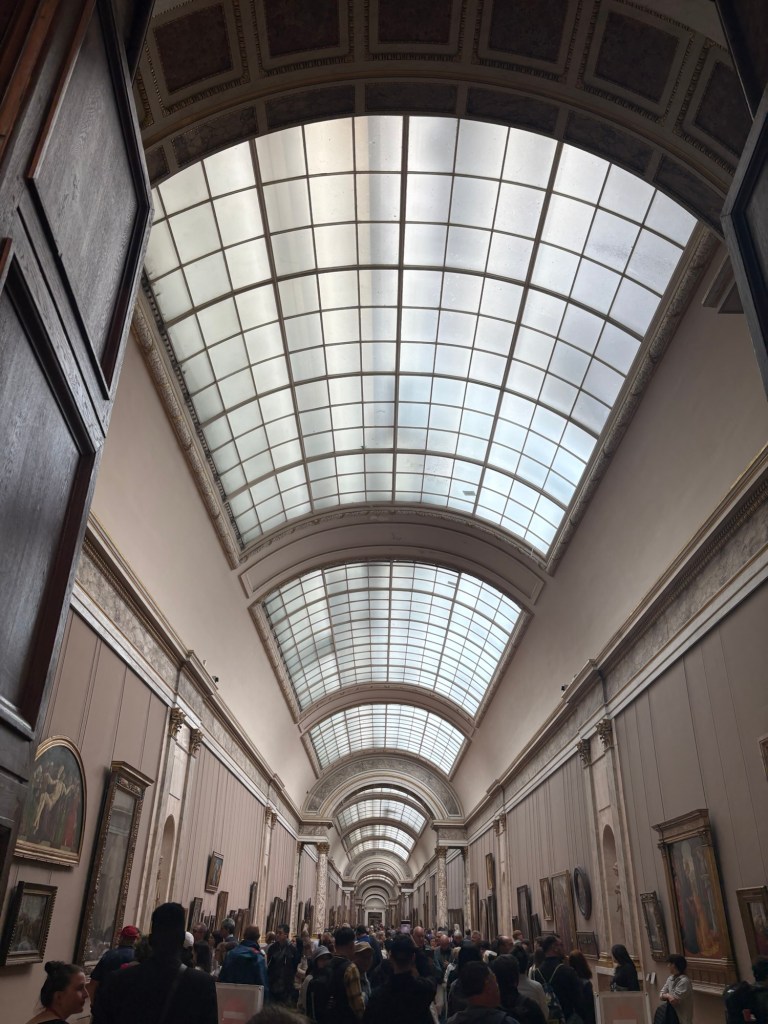
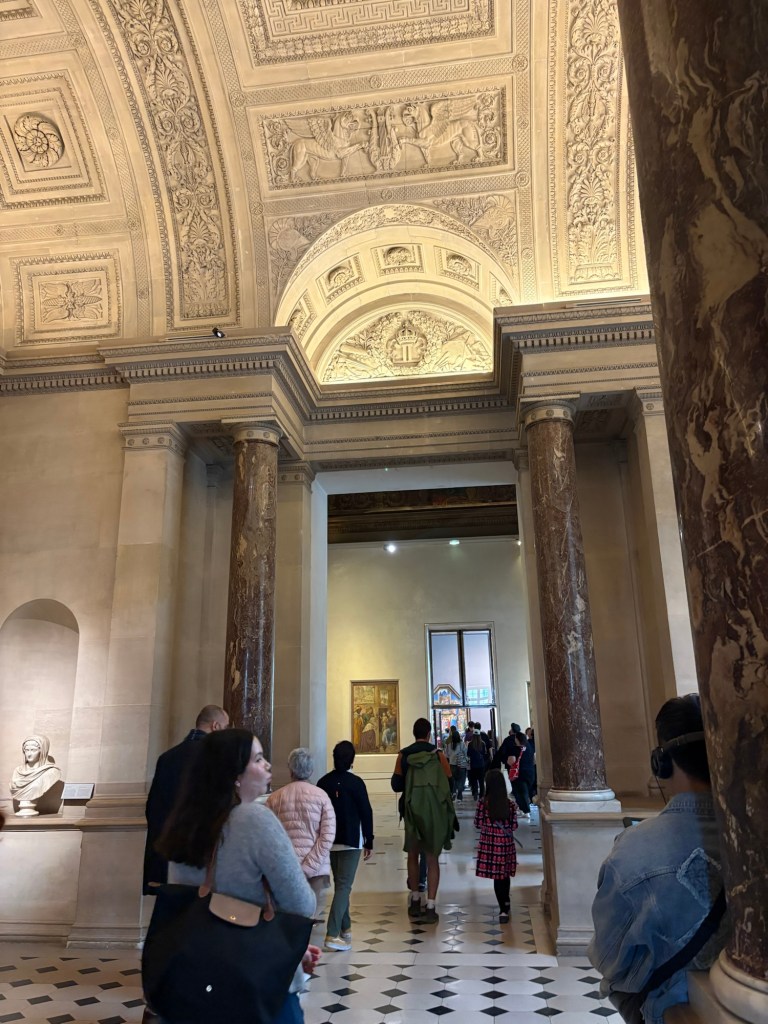
After visiting the Michelangelo room, we decided to head out. The museum was so busy, and though the day was cool, the sheer number of people made the rooms quite hot. That did not mean there was not more to see on our way out. We did take photos of the halls and ceilings, all opulently decorated.
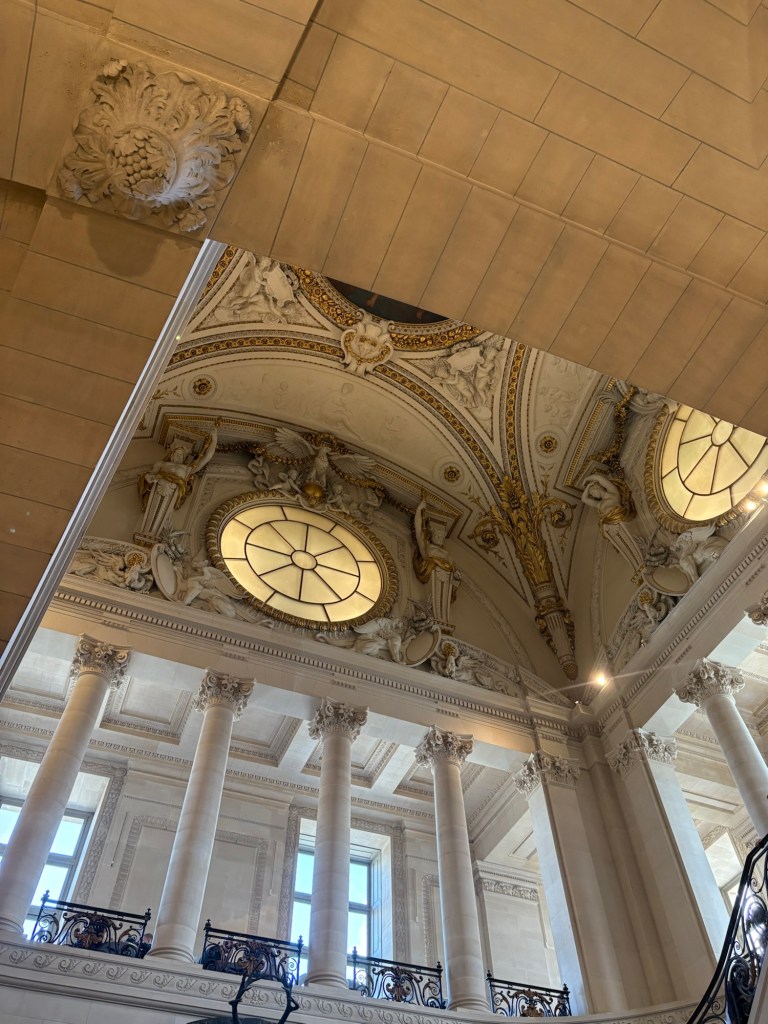

Even minus the time it took for more photos, it took a while to get out. We followed the exit signs to the Carrousel du Louvre, which is a sort of mall-like shopping area with restaurants and shops ranging from kitsch to luxury. Unfortunately, our first go lead us to the parking area, which was not what we wanted, but we rerouted and ended up following a group of people who looked like they knew better how to exit. We made it out, and found ourselves back near the courtyard with the famed glass pyramid as well as views of the Eiffel Tower in the distance.

We took a bit of a rest and had some water. It was getting to be lunch time and we were feeling peckish before the rest of the day’s adventures. Still, we took some time to take photos and enjoy the history of the space. While we did not get to see nearly all the museum had to offer, it was still a good experience. I felt more cultured going out than I did heading in, and I got to leave a bit less philistine.
Some things to consider:
As mentioned, Musée du Louvre is extremely busy. Reservations should be made at least two to three weeks ahead for slow times, and two to three months in advance for busier seasons. We purchased our tickets over two months in advance. Tickets may be purchased directly on the Louvre website. Please be cautious when purchasing tickets. It is not recommended to purchase from a third-party site, especially those promising ‘jump the line’ tickets. General admission is 22 euro at time of writing. Visitors under 18 are free.
The museum is massive and there is so much to see. We were only able to get through one wing on our visit; there is much we missed. I would recommend planning and prioritizing the rooms with your favorite works, knowing that to see the entire museum in depth would have to take several trips.
To get to the museum, we took the Metro, stopping at Palais Royal- Musée du Louvre. From there is was an easy walk. To pay our fares, we picked up Navigo easy cards when we arrived in Paris, and we were able to recharge these as needed.
Be sure to be aware of your surroundings both inside and outside of the museum. There are so many potential distractions that pickpockets can take advantage of. It was good to travel in a pair; we could help each other keep an eye on our belongings. That said, I did feel generally safe in the area. I just wasn’t going to let my guard down.

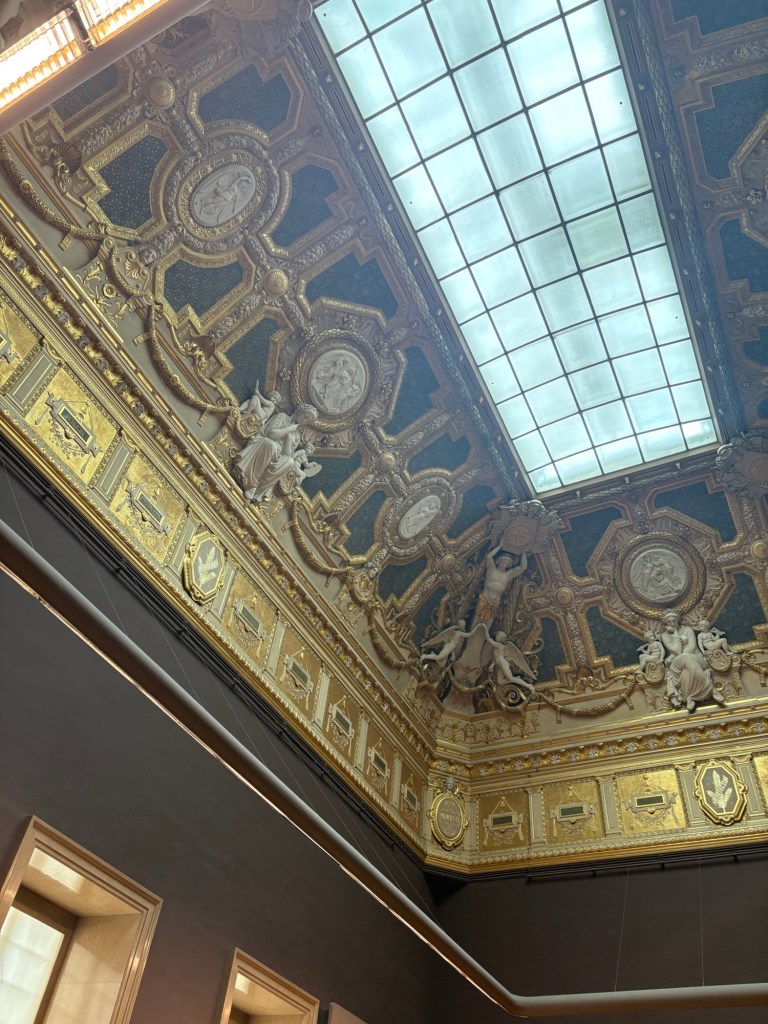
In addition to enjoying the art, I would also recommend taking some time to enjoy the Louvre’s beautiful architecture and exquisite furnishings. The moldings, pillars, ceilings, and floors are absolutely stunning. This attention to ornate detail in every fixture struck me as extraordinarily French. I also recommend taking time to see the other works of art while going from hall to hall.

There is so much to explore in the Musée du Louvre. I wished we could have stayed longer, but there were other stops on our busy itinerary for our quick hop in Paris. The museum was also warm and overstimulating, thus we probably would not have benefitted staying too much longer. All to say, I hope to be able to return to see more of these priceless works and learn more about their history. Au revoir!
References:
“Louvre Museum.” Museums.Eu – The European Museums Network, 2014, museums.eu/museum/details/702/louvre-museum#:~:text=The%20Mus%C3%A9e%20du%20Louvre%20contains,art%20in%20eight%20curatorial%20departments.
Bowden, Trevor. “15 of the World’s Most Famous Art Galleries + Museums.” RMCAD, 26 Dec. 2024, http://www.rmcad.edu/blog/15-of-the-worlds-most-famous-art-galleries-museums/#:~:text=1.,writes%20the%20Paris%20Tourist%20Office.
“Science & Nature – Leonardo – Mona Lisa.” BBC, BBC, http://www.bbc.co.uk/science/leonardo/gallery/monalisa.shtml#:~:text=Could%20this%20be%20why%20Leonardo,has%20yellowed%20over%20the%20years.
“Three Centuries of Italian Sculpture – the Michelangelo Gallery.” Le Louvre, http://www.louvre.fr/en/explore/the-palace/three-centuries-of-italian-sculpture.

 The Cranky Camper