
As the events of the 1930s Europe unfolded, the Netherlands maintained a position of neutrality. While arguably this stance worked for the country during World War I, this could not be the case in World War II. Though the Dutch government tried not to criticize the Hitler’s politics and give no reason for escalated hostility, Germany nevertheless invaded the Netherlands in May 1940. The taking over of the Low Countries- the Netherlands, Belgium, and Luxembourg- was part of the larger invasion of France. Though the Dutch government has been preparing for a potential German invasion, the military was underprepared in terms of up-to-date equipment and training. Furthermore, the German Wehrmacht was just much larger. And after the bombing of Rotterdam and the threat of bombing in Utrecht, the Netherlands surrendered to the German occupation five days later. According to the history books, there was some collaboration between the Dutch government and the Nazi occupation at first. The Dutch police collaborated with Nazi security forces, and the Dutch railroad was active in transporting people to concentration camps. But not everyone was in support of these policies. There was a growing resistance to the Nazi occupation and the atrocities enacted by the regime.

The Scheveningen prison complex was nicknamed the Oranjehotel by the Dutch in honor of Dutch resistance fighters, as well as to highlight their loyalty to the Dutch royal family. In a way, the moniker was a quiet act of defiance against the harsh regime. About 25000 individuals were detained for interrogation, prosecution, and worse over the course of the five years between the Nazi invasion and liberation of the Netherlands by Allied forces.

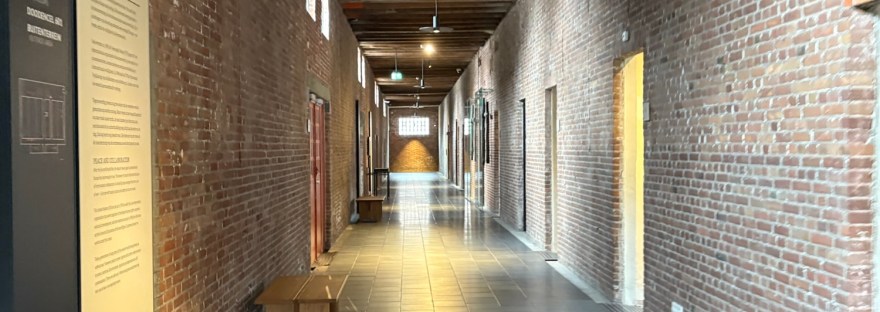
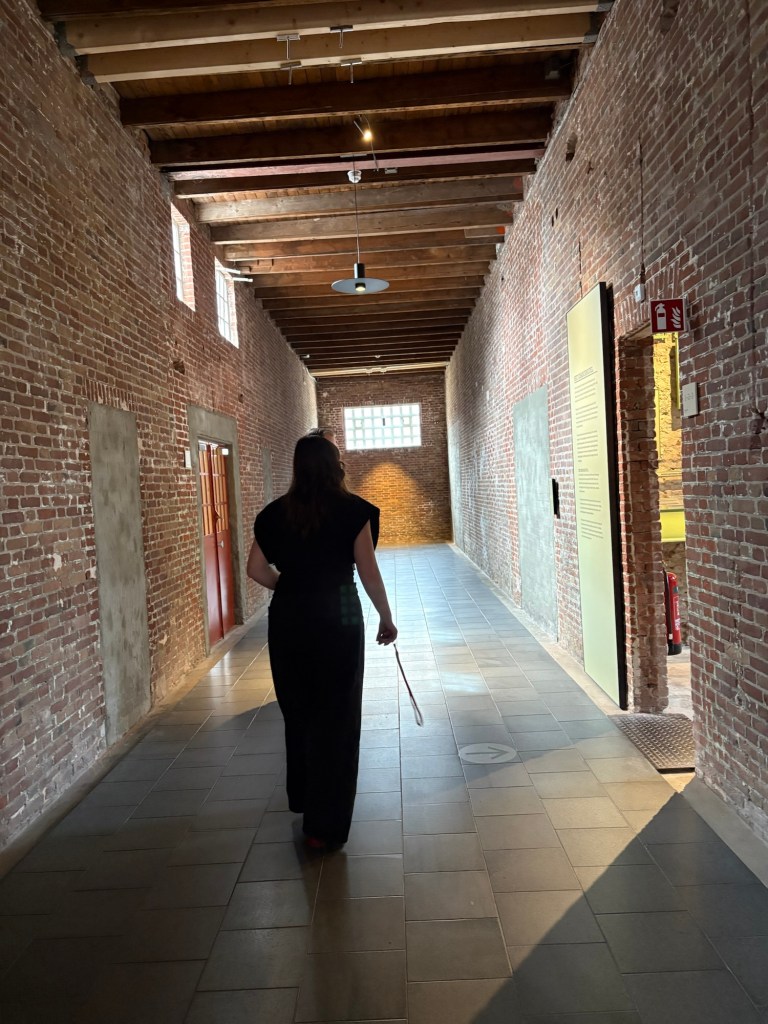
National Monument Oranjehotel is located in the Scheveningen area of Den Haag, known for its beach and pier. Until 2009, the complex was part of The Hague Penitentiary Instutition. It was opened to the public as a monument and museum by King Willem-Alexander in 2019. On a cloudy summer Tuesday, with a sea breeze blowing and seagulls squawking overhead, we took the bus to Duinkerksestraat. From there it was a short walk to the gate. We put our bags and sweaters in one of the free lockers while Michael purchased our tickets, which included an audio guide for a self-paced tour.
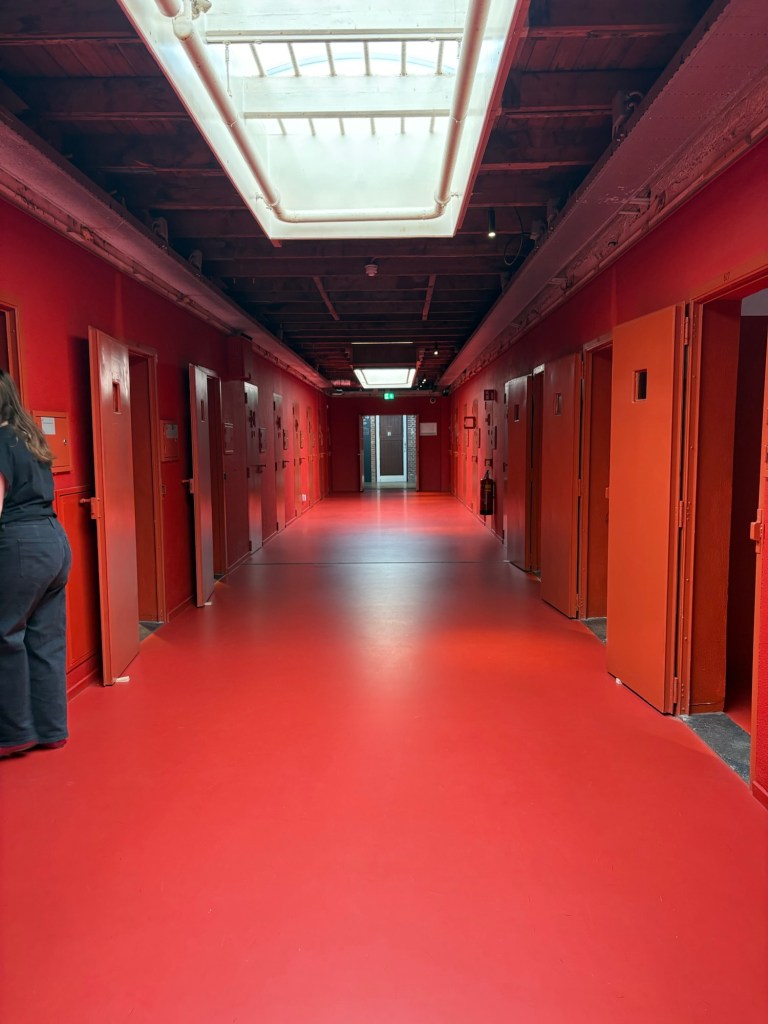
The tour began in an orange hallway, through which over 80 years ago, prisoners would have been walked. We watched a video, featuring five stories from survivors of the Oranjehotel. Jos Hartman was a high school student at the time of his arrest for illegal possession of weapons. Johanna Clasassen-van Dorsten was imprisoned for 90 days, accused of distributing a resistance newspaper. She was liberated in 1945. Helen Berman-Cohen was just a kid, arrested for being Jewish, and taken from hiding in Rotterdam. Gerrit Koele was suspected of fleeing to England when he was arrested. After a 153-day imprisonment, he fled while being transported to Germany in 1943. Marijke Margry-Roes was a Red Cross employee and artist, arrested for showing national support for people in hiding. These are just some of the many stories echoing through the walls of the Oranjehotel.
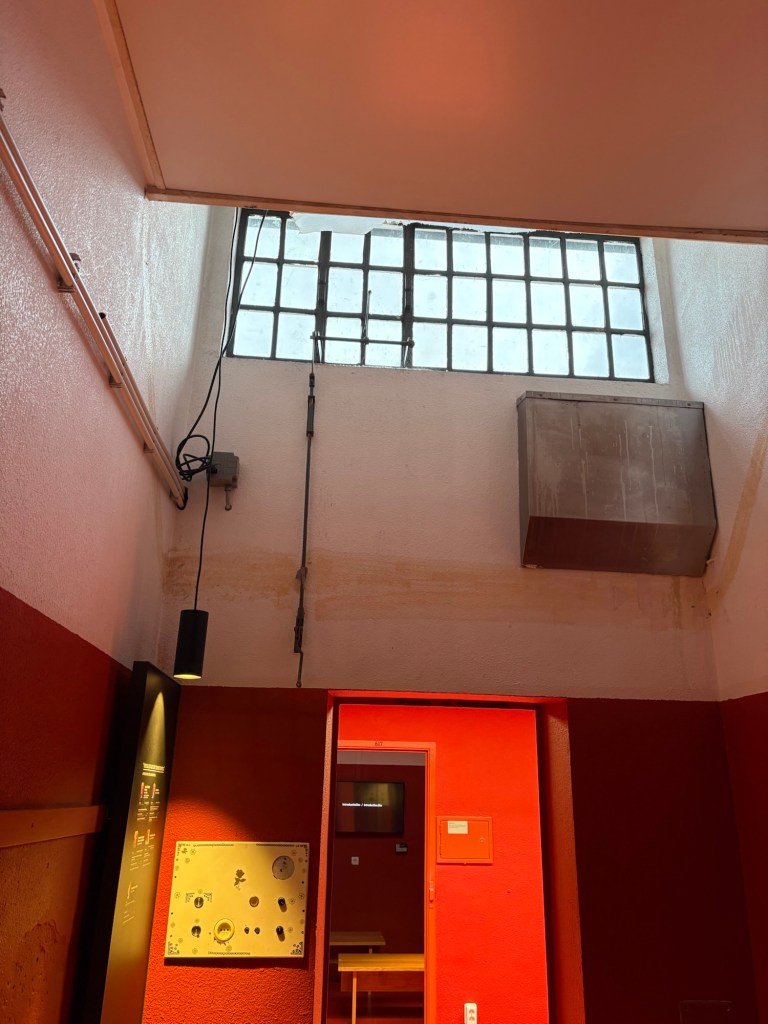
From there, we continued on quietly. The timeline presented was one that was depressing, however, it was a reminder that the events of World War II and the Holocaust did not happen overnight, nor did it happen in a vacuum. Complex geopolitical events in Europe, as well as across the globe, contributed to what would become the rise of Nazism. The Treaty of Versailles, which ended World War I, imposed harsh penalties on Germany. The economic impacts of the Great Depression, beginning in the United States, quickly spread across the globe, leading to further deterioration of the situation and feelings of hopelessness in Germany.
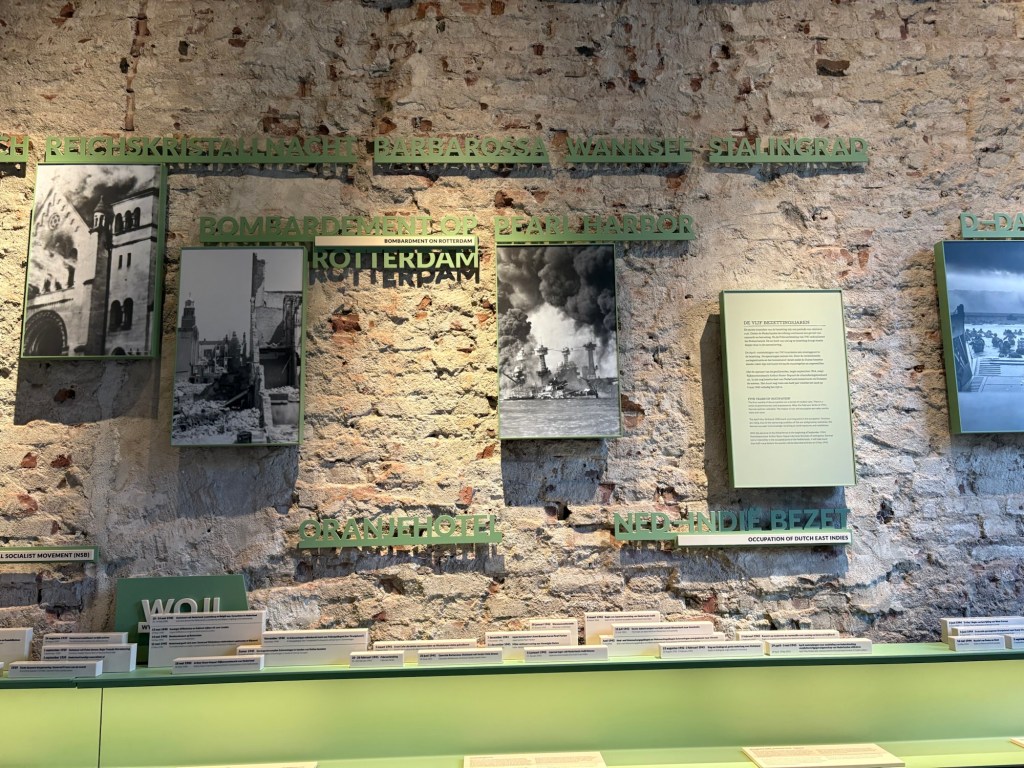
The bleak financial outlook and low morale left Germany in a position where a rejected-art-student-turned-politician named Adolf Hitler could make a rise to power. In the interwar period, Hitler gained substantial power and influence through democratic and other legal means. In 1933, following the Reichstag fire, which burned Germany’s parliament building, civil liberties were suspended, and by July of that year, Germany had become a single-party state. From there, Hitler and the Nazi party were able to carry out their agenda of extreme nationalism, antisemitism, anti-capitalism and anti-communism, racial supremacy, and authoritarianism. Hitler and his followers envisioned a ‘perfect’ German empire, an impossible and unspeakable goal- one that would come at great cost to millions of lives and liberty across Europe, including the Netherlands.
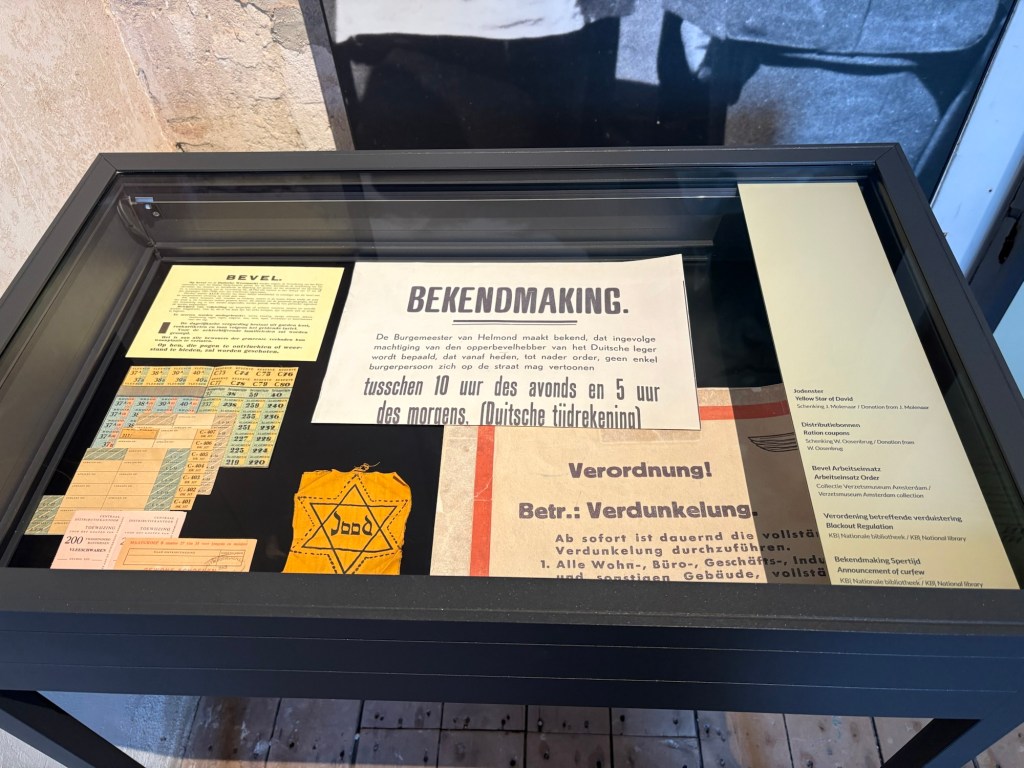
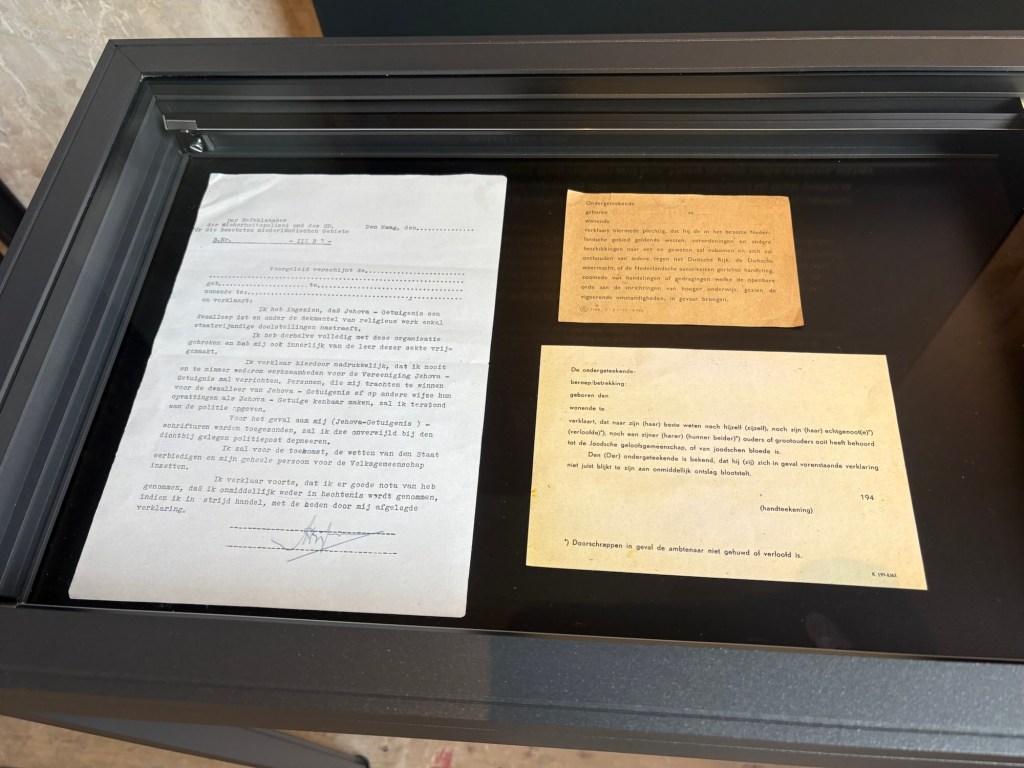
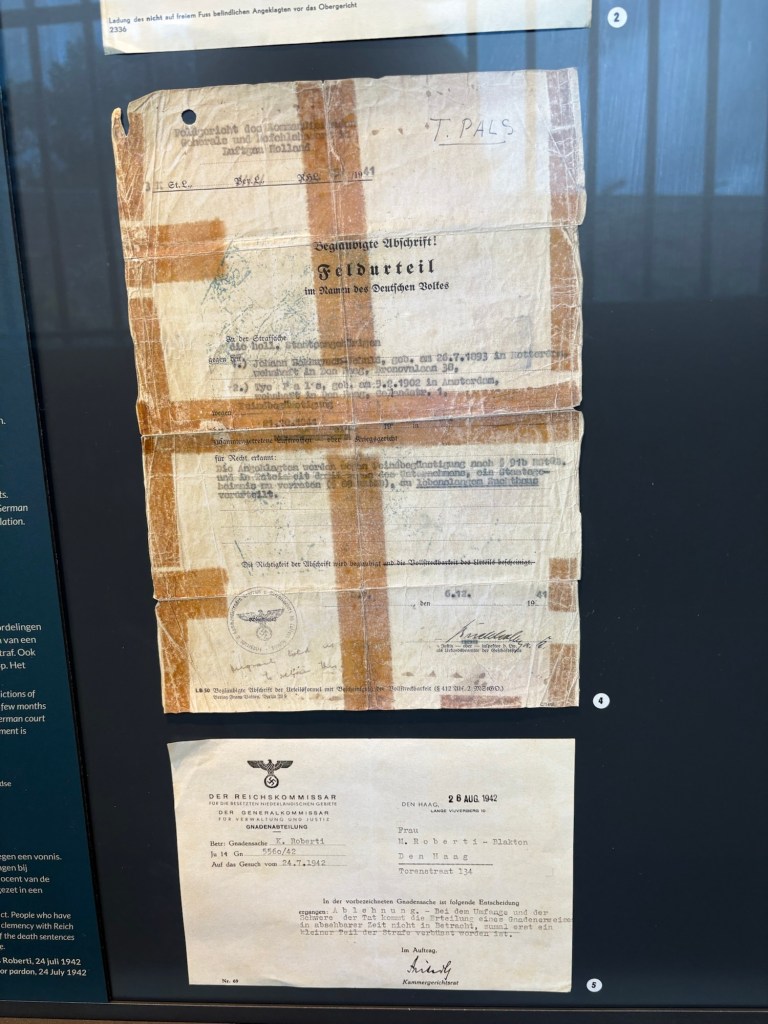

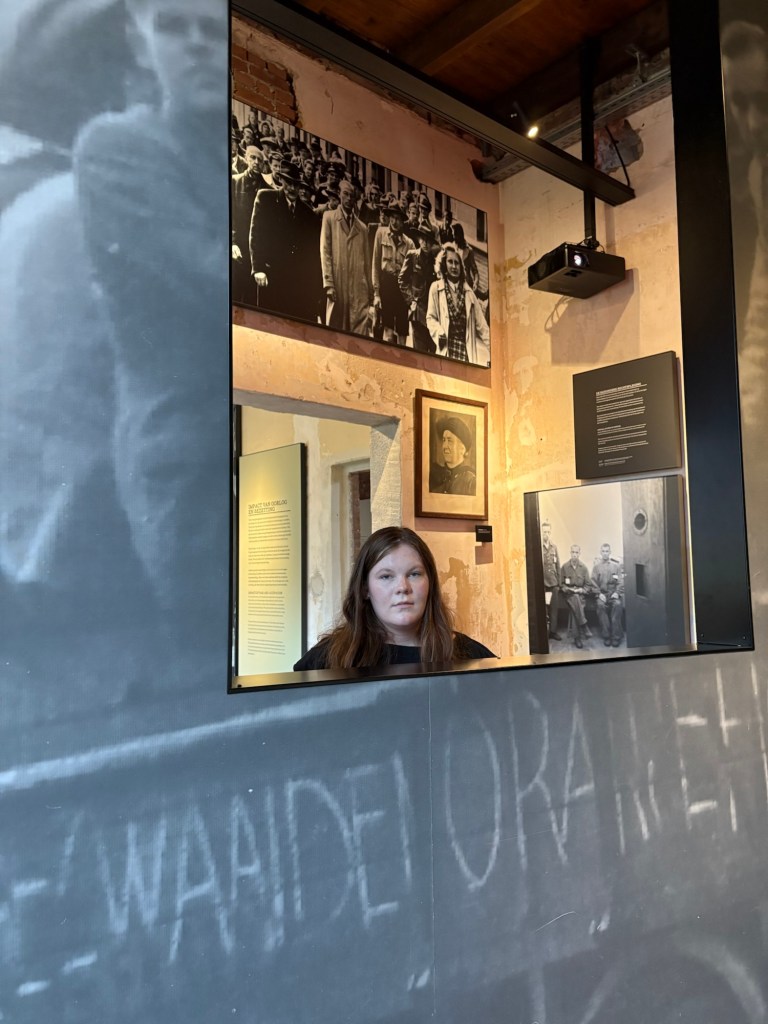
Walking through the rooms, we saw artifacts and heard the stories from people who survived the Oranjehotel, as well as those from those who died while in prison or who were executed. The artifacts and documents on display told a story of despair, or torture, of difficult choices that individuals had to make. The Nazi government ran on fear, and some complied with the occupation to survive. Others dissented, which if caught, came at a high cost. In December 1941, Hitler made the Nacht und Nebel decree, which allowed for those viewed as political opponents to be ‘set apart’ and taken to concentration camps. These prisoners disappeared in ‘night and mist,’ without a trace.
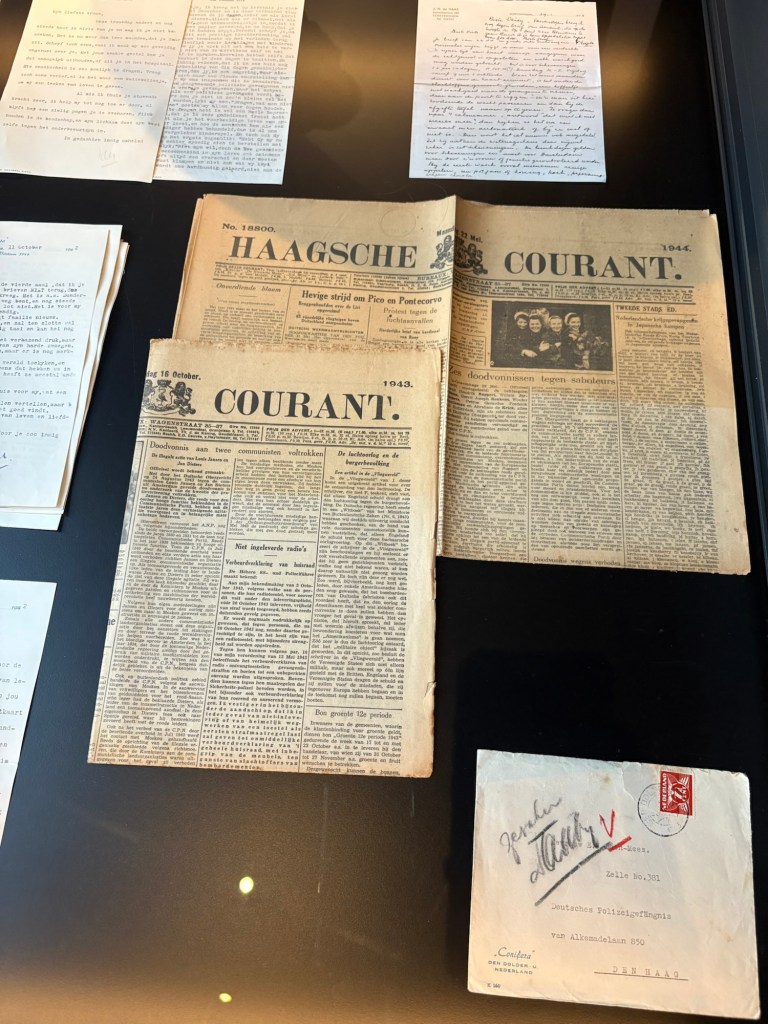
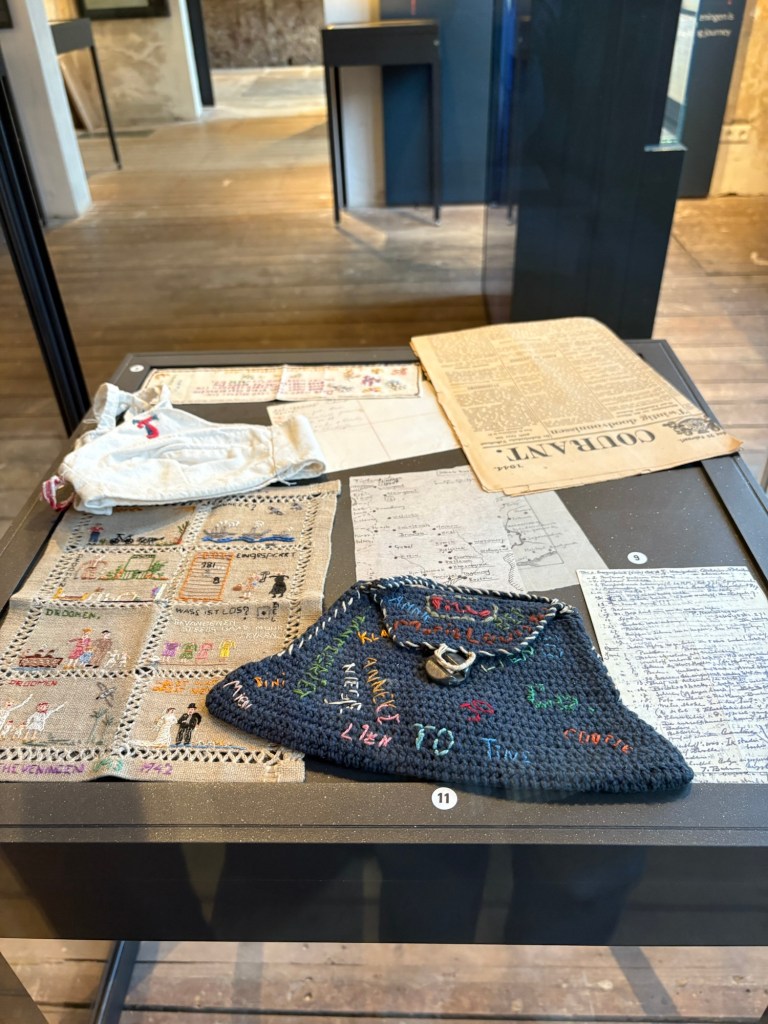
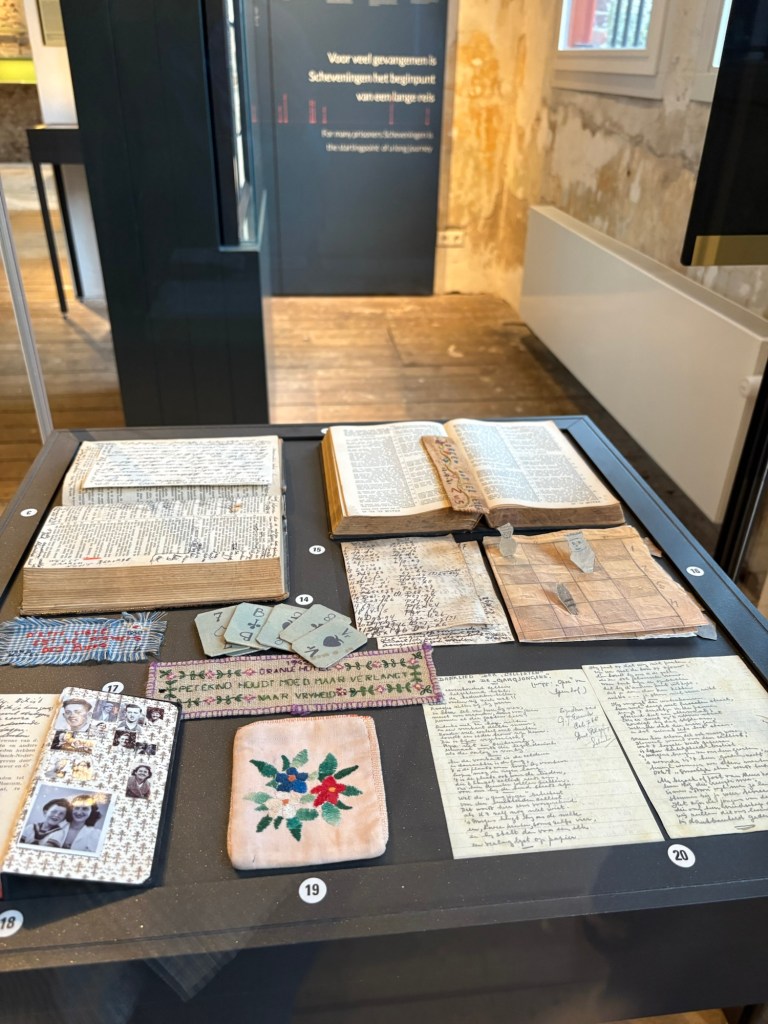
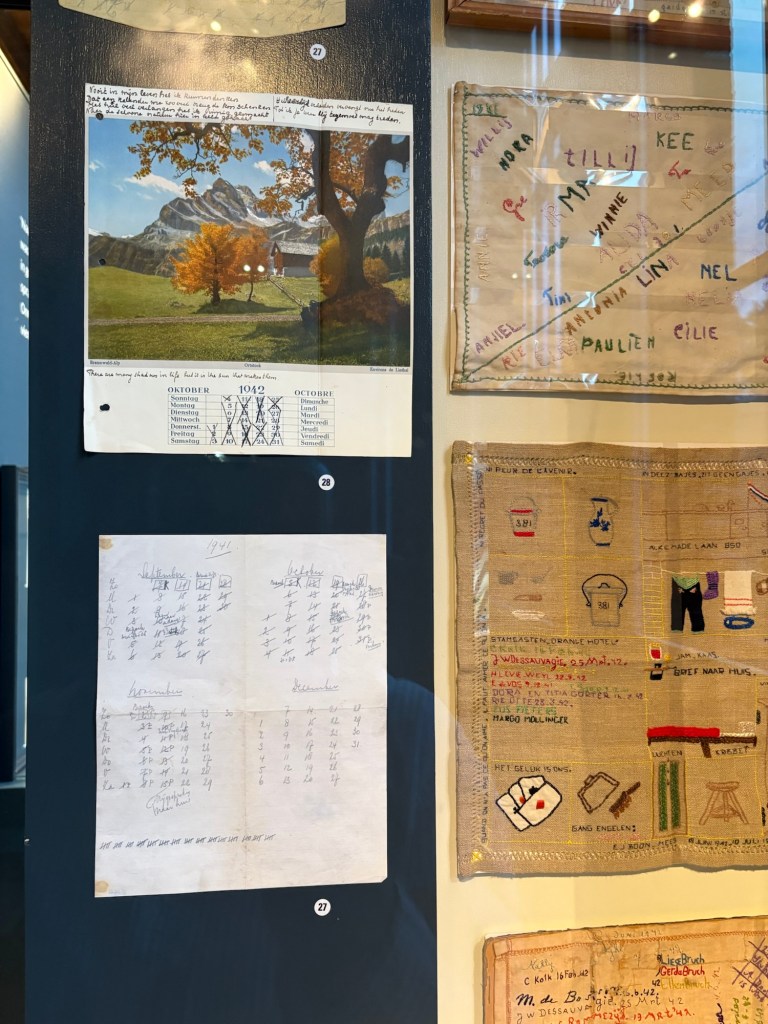
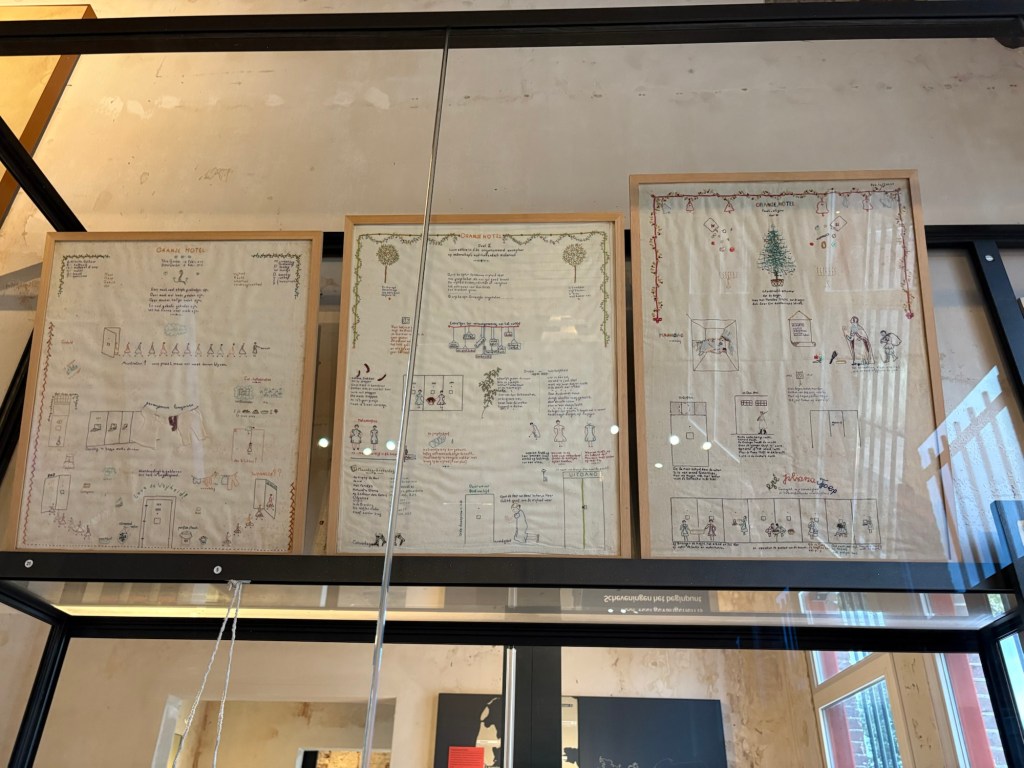
Prisoners faced insecurity, fear, and boredom. There were great psychological stresses, as well as physical stressors. And there are also stories of hope and perseverance. Letters were written, embroideries documenting life in prison cells were made in beautiful detail, sketches were created. Eduard Messer and Mathieu Smedts even created an ‘Oranje Newspaper’ from toilet paper, which was passed from cell to cell. People found ways to survive in horrible settings.
But some did not survive their time at Oranjehotel. There were at least 734 deaths as a result of the Oranjehotel. Some passed due to torture during interrogation, others possibly through illness, and still more after being transported to concentration camps. There are many whose fates were ultimately unknown. It is known that 250 members of the Dutch resistance were sentenced to execution by firing squad in nearby Waalsdorpervlakte. Those who received a death sentence spent their last days in one of the D row cells. Below, cell 601 has been preserved as a memorial. Inscriptions on the walls made by prisoners are still carved into the walls, serving as reminders of lives that were taken.


The Oranjehotel was used to detain, interrogate, execute, and transport people who were seen as a threat to the Nazi regime. This could mean people who were seen as a threat due to their religion, who they tried to protect, or how they practiced free speech- aspects of life that we tend to take for granted in a free society. These threats and atrocities continued until May 1945, when the Allied forces liberated the Netherlands. The charge was led by Canada, with support from Great Britain and the United States. Liberation Day is celebrated on May 5, commemorating the liberation of the Netherlands.
At time of writing, it has been 80 years since the end of World War II. While the world is not exactly a peaceful place in 2025, many of my generation and my kids’ generations throughout the western world have not had to face war on home soil. In many ways, we still have the right to freedoms. But freedom and peace are not guarantees. The horrors of the Nazi occupation did not sprout up overnight. There were geopolitical factors that led to what became authoritarian control- factors that have some parallels to we experience today. Civil liberties were not instantly snatched; they were chipped away, with justifications for why individuals should give up their freedoms. And in times of economic uncertainty and feelings of despair, it is easy to look for someone to blame: the Jews, the political opposition, the immigrants. And it can be easy to fall for the propaganda that feeds into those feelings of resentment and blame.
History does not exactly repeat itself, but it does often rhyme. As American President Ronald Reagan once said, ‘Freedom is a fragile thing and it’s never more than one generation away from extinction.’ I hope that we don’t allow our fear and divisive anger to lead us to an authoritarian state. I hope we don’t lose sight of the beauty and fragility of freedom. I pray that we never forget the events of the past- at the Oranjehotel and other places around Europe and globally- and that we seek justice, love mercy, and walk humbly, that we might work together toward a better world for all.

For more information and to plan your trip, visit Nationaal Monument Oranjehotel.
References:
“The German Invasion of the Netherlands.” Anne Frank Website, http://www.annefrank.org/en/anne-frank/go-in-depth/german-invasion-netherlands/.
Fall of Rotterdam | Holocaust Encyclopedia, encyclopedia.ushmm.org/content/en/film/fall-of-rotterdam.
“Nazi Persecution of Other Groups: 1933 ‑ 1945.” Holocaust Memorial Day Trust, 21 Feb. 2024, hmd.org.uk/learn-about-the-holocaust-and-genocides/nazi-persecution/.
Oranjehotel | Just Peace, http://www.justpeacethehague.org/en/contributor/oranjehotel.
U.S. Contribution to the Liberation of The Netherlands, nl.usembassy.gov/u-s-contribution-to-the-liberation-of-the-netherlands/#:~:text=In%201944%20and %201945%2C%20the,the%20liberation%20of%20the%20Netherlands.&text=The%20Netherlands%20was%20occupied%20in,days%20of%20sometimes%20heavy%20fighting.
United States Holocaust Memorial Museum, United States Holocaust Memorial Museum, encyclopedia.ushmm.org/content/en/article/night-and-fog-decree.

 The Cranky Camper
1 thought on “National Monument Oranjehotel”