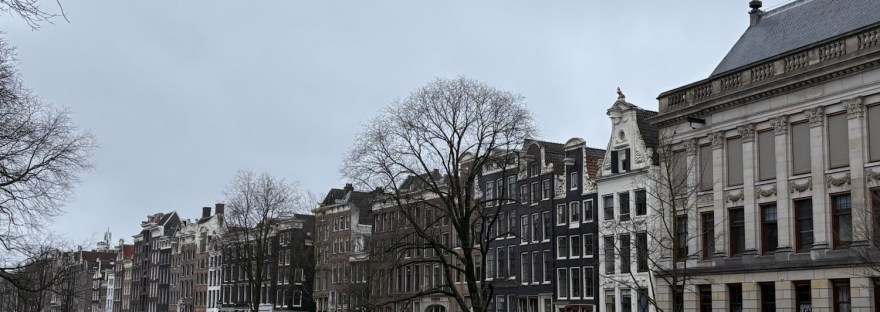
On a cloudy Sunday in Amsterdam, we paid a visit to the Anne Frank House. From the summer of 1942 through 1944, the Frank family and four companions his in the secret annex as the Nazis occupied the Netherlands. They were discovered in 1944 and sent to concentration camps in Germany. Only Otto Frank survived. To honor Anne's dreams of becoming a writer, Otto published his daughter's diaries, now translated into 75 languages and read by millions. The house was dedicated a museum in 1960 and can be visited today with timed entry tickets.
Tag: European History
National Monument Oranjehotel
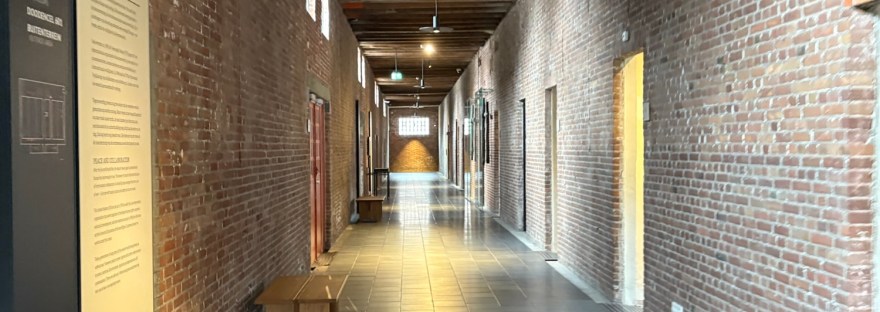
On a cloudy Tuesday near the sea, with seagulls squawking overhead, we headed to the National Monument Oranjehotel, Scheveningen's prison. About 25000 people were detained here during the Nazi occupation of the Netherlands. In this museum, the cells and artifacts tell stories of despair and pain, hope and perseverance. Trigger warning: This article discusses World War II history, which includes mentions of death, torture, and violence. I also discuss Hitler’s rise to power and the formation of a one-party state through legal means.
Slot Loevestein
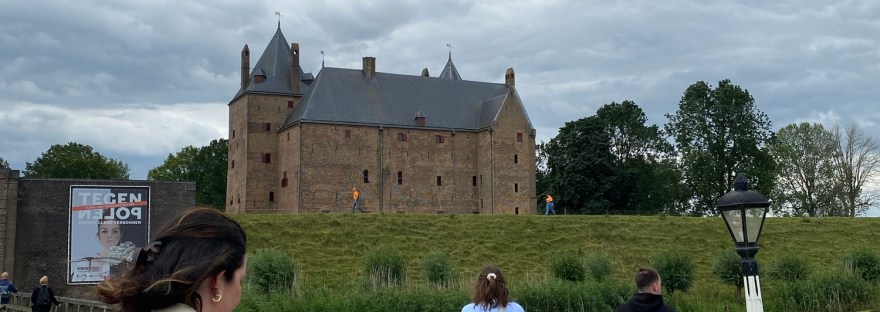
The fourth post in our Netherlands series sends us to Slot Loevestein. This medieval castle played a role in the defense of the Dutch Waterline up through World War II. We spent the day as a family, exploring the castle and the scenic towns surrounding it, while learning about its rich history.
National Monument on VÃtkov Hill
After five days in Berlin, the Cranky Camper family returns to Prague for the remainder of the trip. The first day back was spent exploring Prague 3, with a visit to Národnà památnÃk, the National Monument on Vitkov Hill.
The Berlin Wall
The Cranky Camper family visits the Berlin Wall and the place that once divided East and Western Europe. The remnants of the wall stand as a monument to a divided history that will hopefully never be repeated. We also reflect on what Berlin may have looked like when my dad was stationed in the American sector many years ago.