
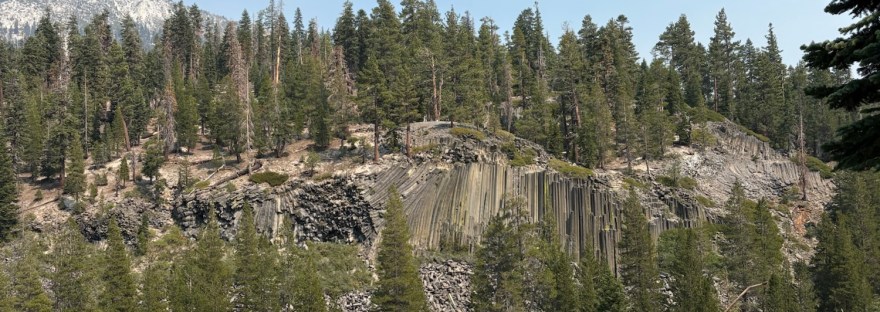
Devils Postpile National Monument, located in the Mammoth Lakes, protects the unique columnar basalt formation that is the Devils Postpile. According to the National Parks Service, Devils Postpile was originally protected as part of Yosemite National Park. This protection was short-lived, however. In 1905, the postpile lost its protected status due to pressure from local mining ventures that planned to blast the postpiles in order to dam the San Joaquin River. Fortunately, activists were successful in persuading then-president William H. Taft to restore protection of both Devils Postpile and Rainbow Falls by designating the area a national monument in 1911. Thanks to those efforts, Devils Postpile and Rainbow Falls are still natural wonders that can be enjoyed by over 130000 visitors annually.
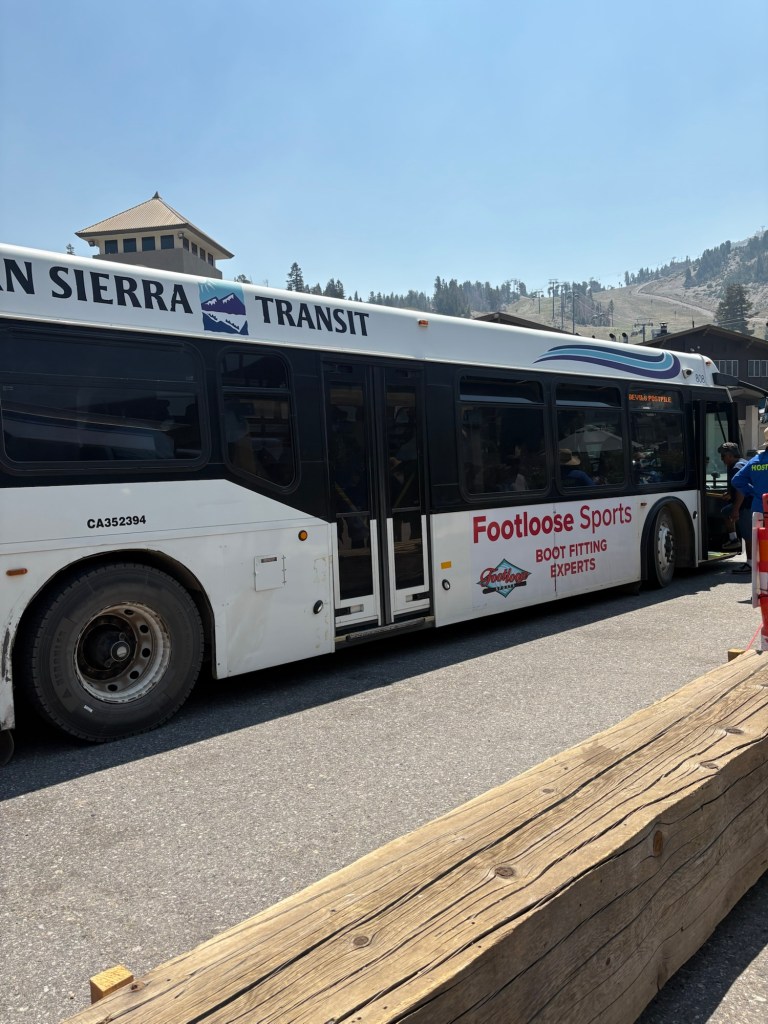
After our nice brunch in Mammoth Lakes, we backtracked to the welcome center to get more information from the NPS rangers on how to enter the park and any pertinent information about the our visit. On their advice, we drove west to the Mammoth Mountain Adventure Center to catch the shuttle to the park.
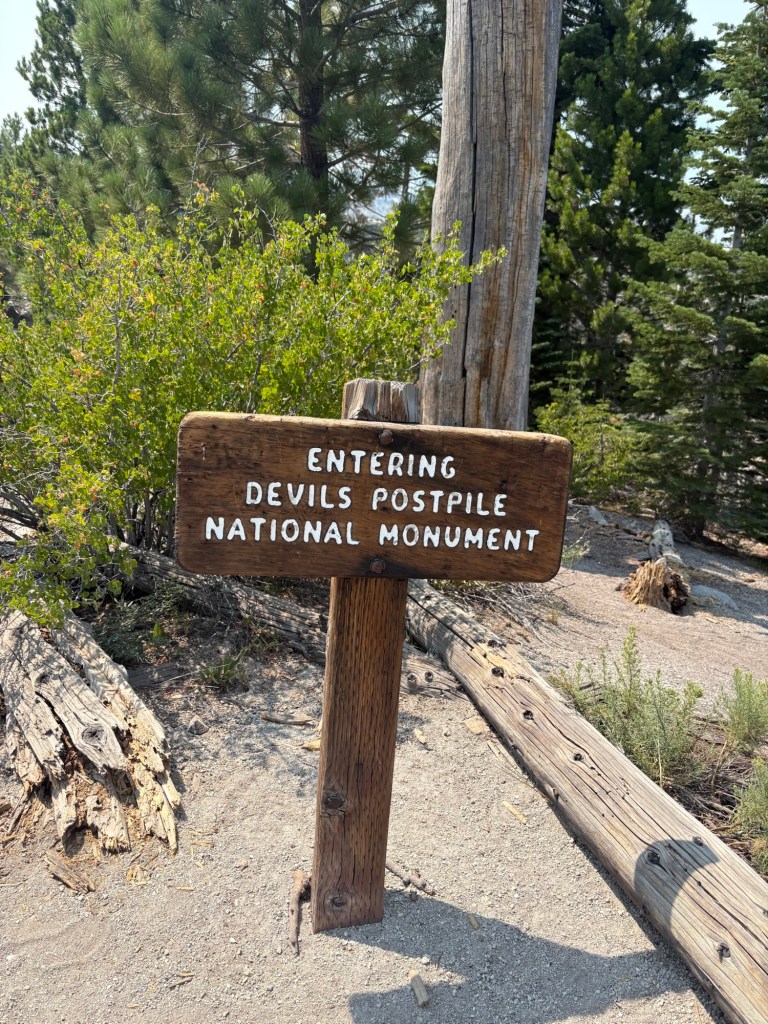
After a short wait and paying $15 per person for round trip passes, we boarded the bus for the 30 minute ride to Reds Meadow. With the current construction on Reds Meadow Road, I was glad to not be driving. The drive down was not too bad, and we arrived at the Rainbow Falls Trailhead stop soon enough.

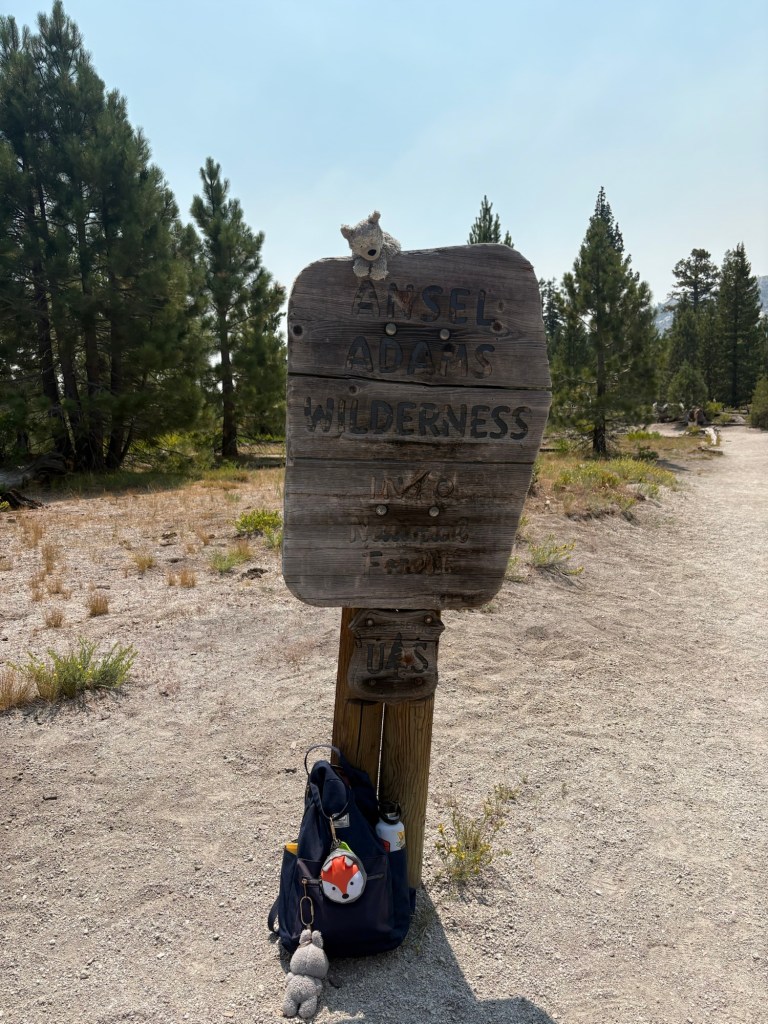
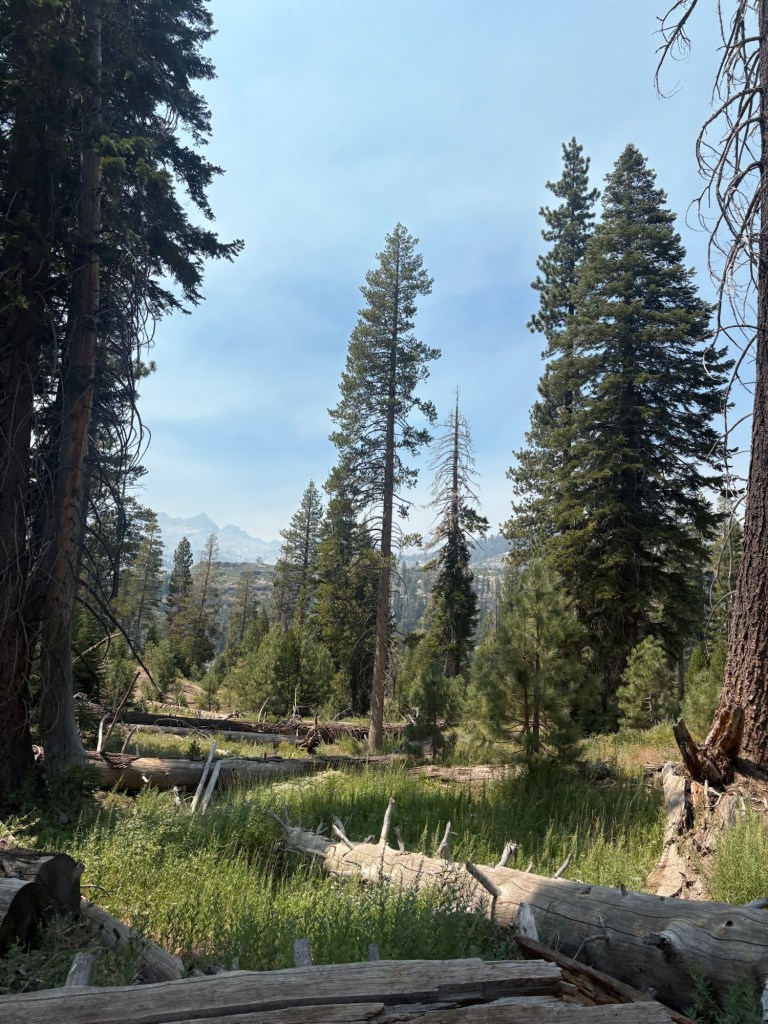
After a quick stop at the toilets and a quick snack, we hit the trail to Rainbow Falls. Being about 7500 feet above sea level, the weather was mild on an August afternoon. We walked along the relatively flat trail, which cut through meadows, and offered beautiful views of the Ansel Adams Wilderness. About 747 acres of the 798 acre national monument is part of the Ansel Adams Wilderness, which was established by Congress in 1984 and named in honor of the famed photographer and wilderness advocate.

The trail to Rainbow Falls is considered moderate, with about 530 feet of elevation. The trail to the falls offers little shade, so I was applying sunscreen and wearing my trusty California bear hat. That said, we had a relatively short hike to the falls; stopping at the trailhead shaved off about a mile from our trek, energy that we would need for our return hike.
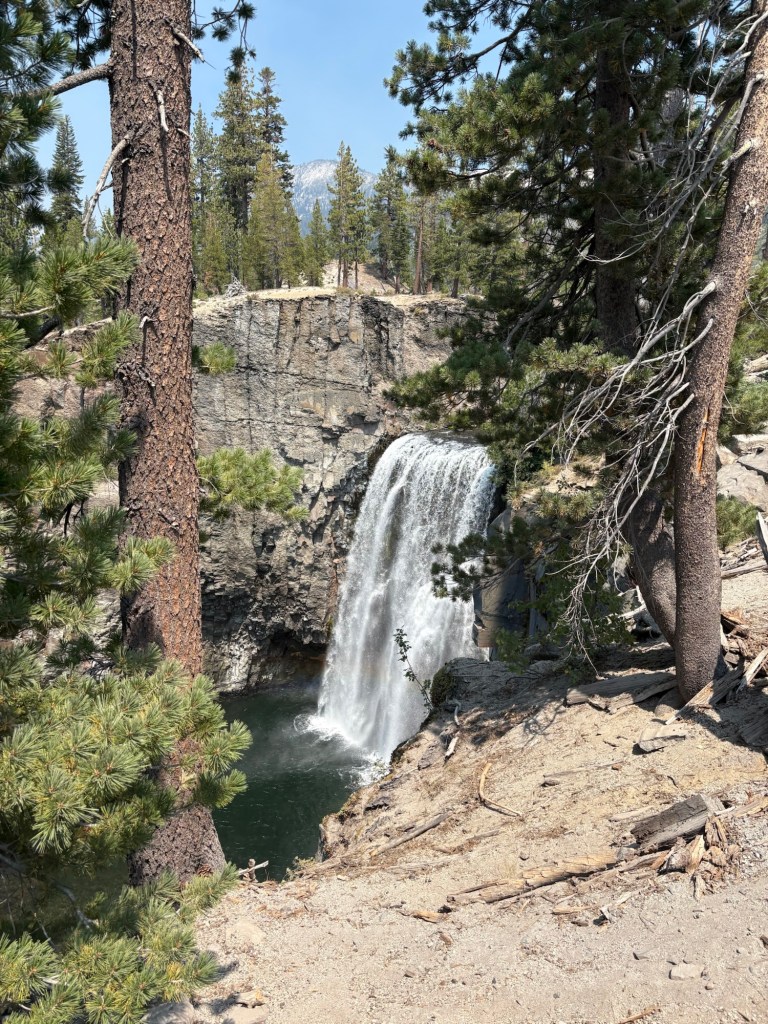
Rainbow Falls is the highest waterfall along the middle fork of the San Joaquin River, with a powerful cascade over a 101-foot high volcanic rock cliff. When the sun is shining, the mist catches the light creating the rainbows after which the falls are named. My photos did not do this justice, but if you zoom in, you can see the faintest trace of a rainbow.
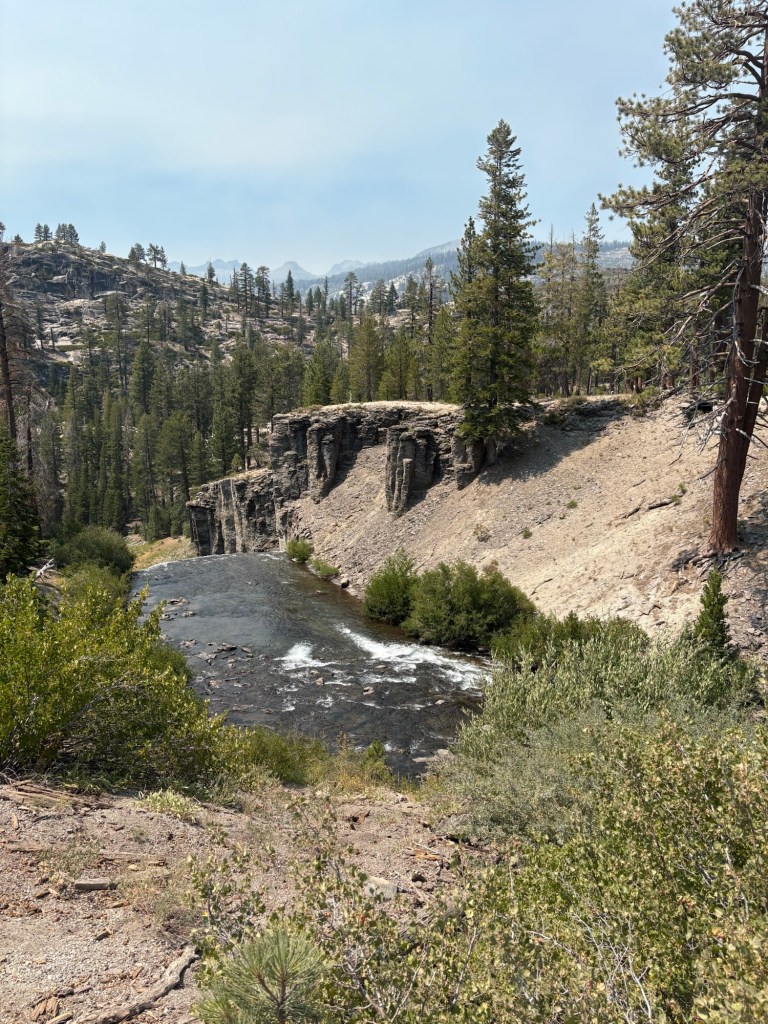
We watched the water falling over the volcanic rocks, and debated whether we wanted to follow the trail descending to the base of the falls. As we were short on time and did not bring our swim clothes into the park, we decided against it for this trip. So we headed back the way we came, stopping to take photos of the river upstream from the falls. We headed north toward the stock bridge, crossing over and continuing on the John Muir Trail and Pacific Crest Trails.
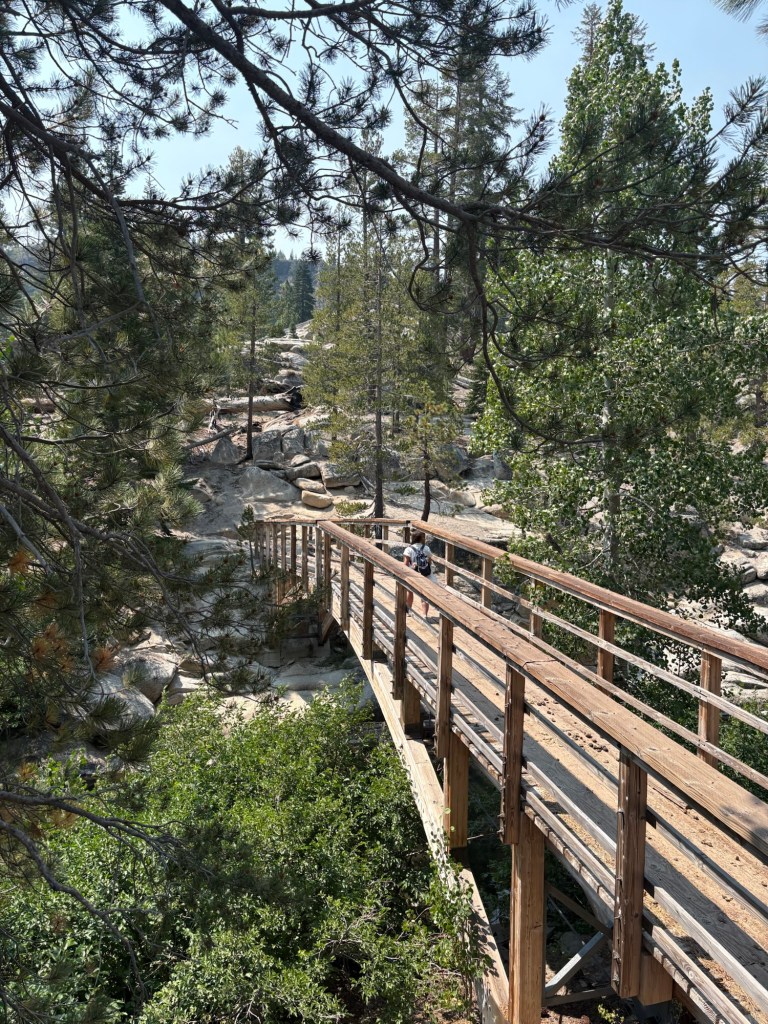

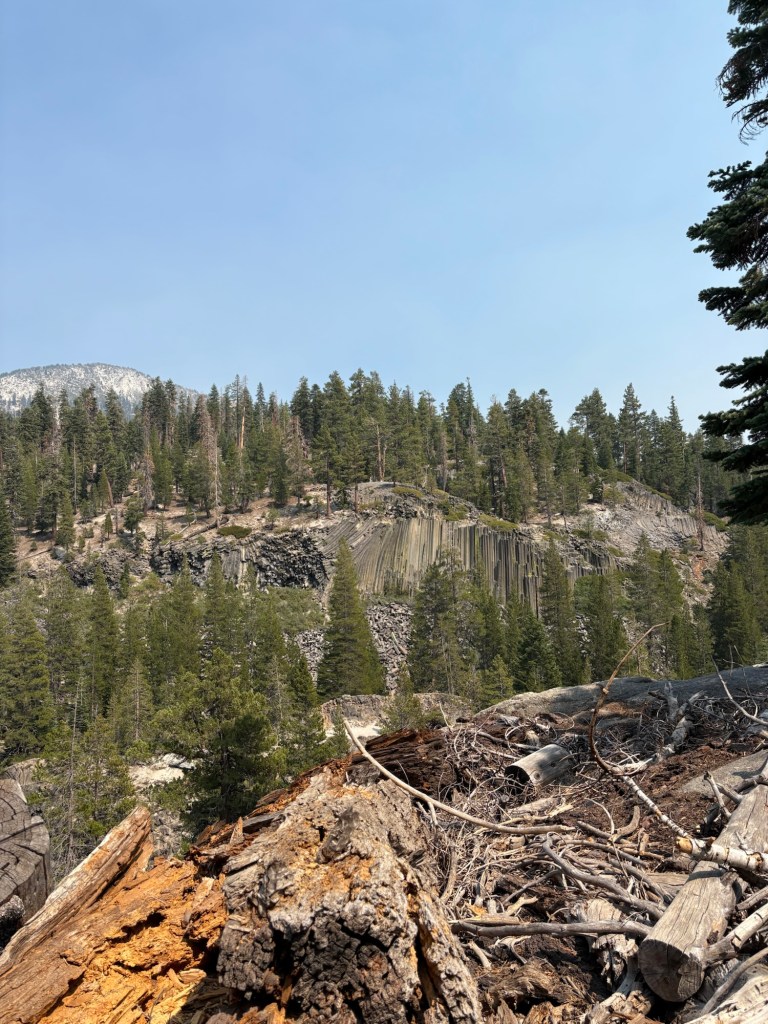
The John Muir Trail is a 211-mile wilderness trail, with 170 of those miles running mostly in conjunction with the 2653-mile Pacific Crest Trail, traversing the Sierra Nevadas from Yosemite Valley to the peak of Mt. Whitney. The JMT takes hikers through some of the most beautiful places: the John Muir Wilderness, Kings Canyon and Sequoia National Parks, Ansel Adams Wilderness, and so many more beautifully rugged places in California’s Sierras. We followed the JMT/PCT for just over a mile. The result was that it took us to the other side of the canyon, where we had a full view of the postpile.
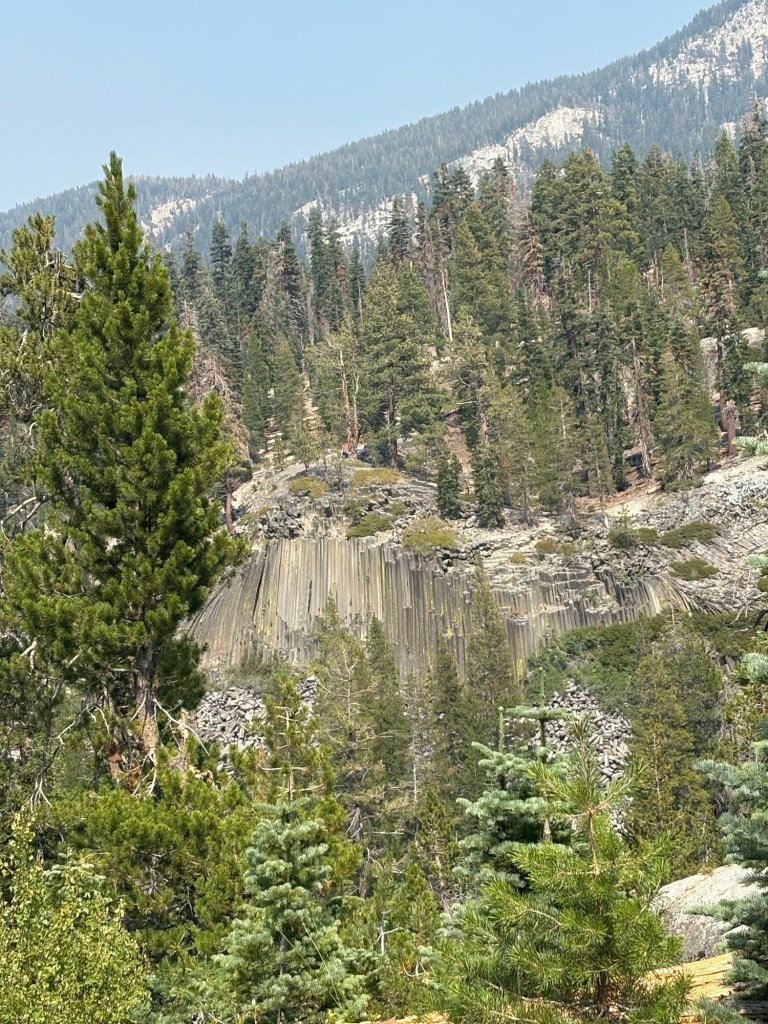
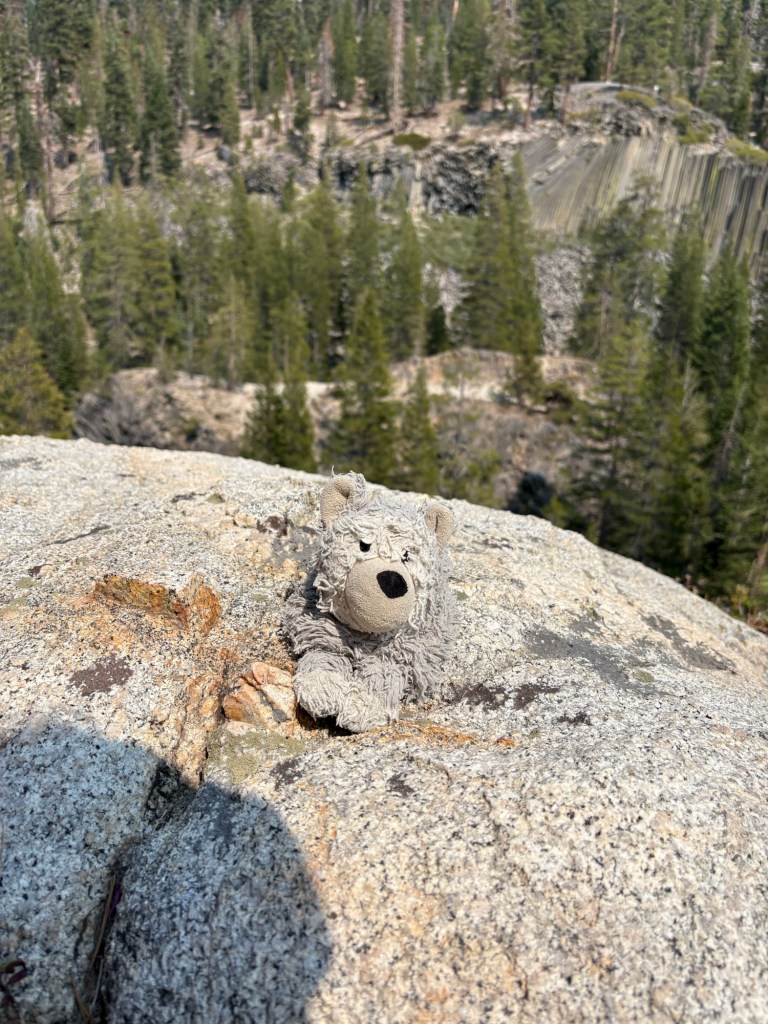
Devils Postpile is one of the best examples of columnar jointing. The hexagonal basalt columns were formed between 80000-100000 years ago as a result of the slow, even cooling of chemically homogenous lava from an unknown source. The process of contracting and fracturing as the basaltic lava cooled resulted in the vertical, mostly hexagonal columns that make up the Devils Postpile. Glaciation from about 15000 years ago carved away part of the postpile and polished the tops of the formation.

After taking photos and admiring the awesome formation, we hiked on. We came to the split on the trail. While it would have been nice to check out Minaret Falls or more of the eight miles of trails within the monument’s boundaries, we decided that even an easy hike to the falls probably would not be worth returning to the ranger station late and missing the shuttle. So we followed the signs back to the ranger station, crossing another bridge that offered really pretty views of the meadows with the San Joaquin flowing through it.


We arrived at the ranger station with just enough time to pick up our junior ranger books. We were able to complete the books just before the ranger station started closing, so we were able to receive our Devils Postpile badges. We also found out from the very helpful park ranger that dogs are allowed in the park. I wished that we had a chance to take Owen to the park, but it was nice to be able to share our memories of our trips to Yosemite and Joshua Tree with the kind ranger. Devils Postpile is a pretty place to share an adventure with a fluffy buddy, so long as they are on leash and BARK ranger principles are followed.
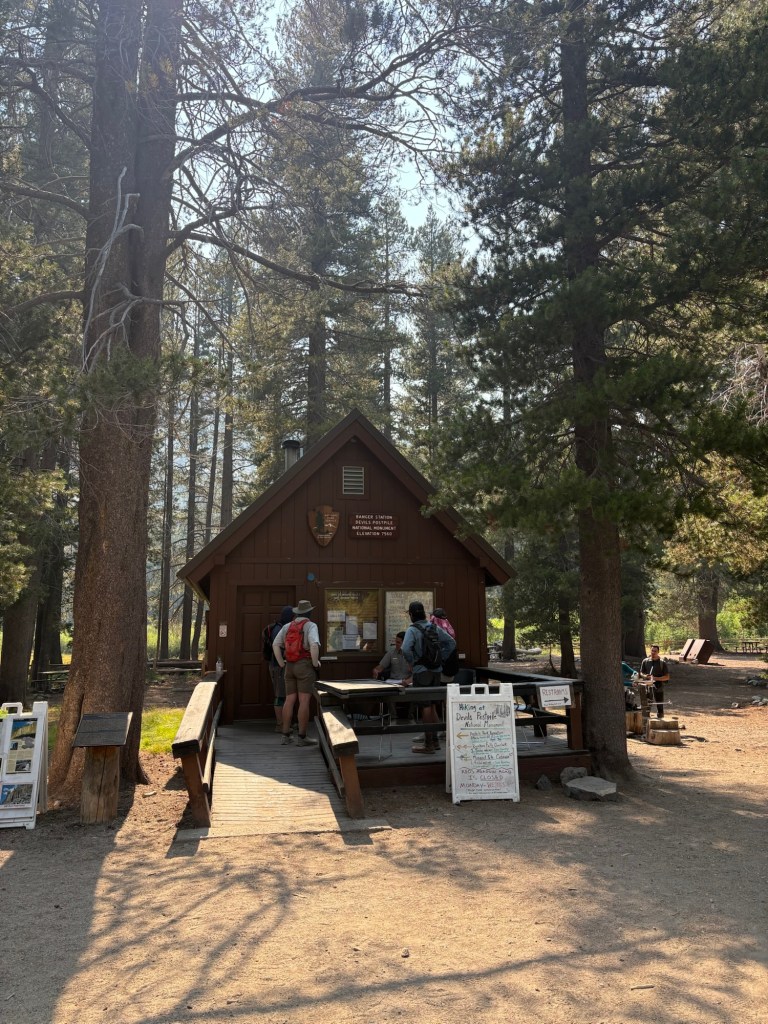
Soon enough, the shuttle stopped at the ranger station, and it was time to head out. Late in the day, the bus filled up at Reds Meadow as folks piled in to exit the park. I was glad to have a window seat to gaze out the window and enjoy the pretty scenery as we headed back to Mammoth Lakes for dinner. This was definitely a fun half-day trip exploring a new park and making new memories.
Some things to consider:
Devils Postpile National Monument has an operating season which runs from about June through October. The weather in the Eastern Sierras can be changeful, so be aware that winter weather can cause the national monument to close early.
During the summer months, visitors arriving between 7:00 am and 7:00 pm must use the Reds Meadow shuttle to enter the park. Exceptions include those with a reservation for Reds Meadow Resort or a designated campground in Reds Meadow Valley and vehicles displaying valid handicap placards. We purchased our tickets from the Mammoth Adventure Center for $15 per person roundtrip.
The trail to Rainbow Falls and many trails in the park have little shade. Sunscreen, sun protection, and plenty of water are a must.
With the JMT and PCT running through it, this is a popular place for backpackers. There are some areas of the park that require wilderness permits. These can be obtained through the Inyo National Forest on recreation.gov.
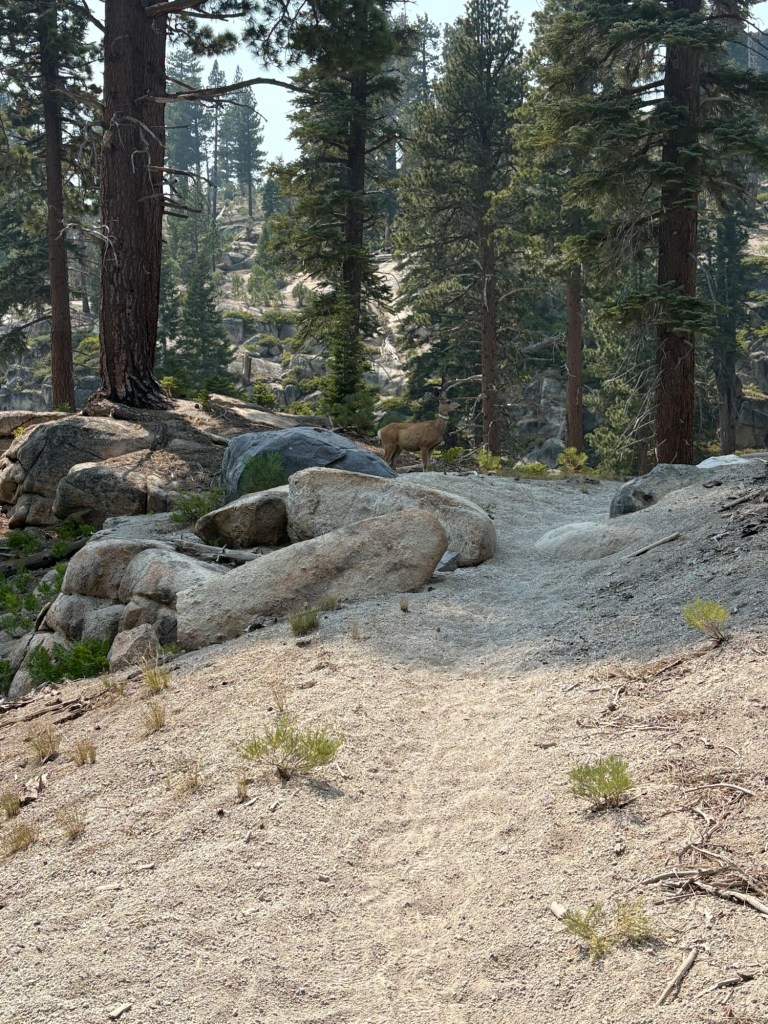
Devils Postpile is a great place to view wildlife. There are bears that live in the park, as well as mountain lions, deer, chipmunks, and more. We did get to see a deer with what looked to be a GPS tracker.
Devils Postpile National Monument is a wonderful place to visit during the summer and early fall. It is amazingly scenic, and it was fun to be able to hike along another part of the PCT. Remember to be prepared, pick a happy trail, and go! It is definitely an adventure meant to be shared.
References:
“Geology.” National Parks Service, U.S. Department of the Interior, http://www.nps.gov/depo/learn/nature/geology.htm. Accessed 14 Sept. 2025.

 The Cranky Camper
4 thoughts on “Devils Postpile National Monument”