
“It’s a wonder I haven’t abandoned all my ideals, they seem so absurd and impractical. Yet I cling to them because I still believe, in spite of everything, that people are truly good at heart.” -Anne Frank, July 1944
Annelies Marie Frank was born in Frankfurt, Germany on June 12, 1929, the second child of Otto and Edith Frank. As Hitler’s Nationalist Socialist Party was gaining power and influence over the course of the early 1930s, the family decided to leave Germany for the Netherlands in hopes of safety and a stable life. The family arrived in Amsterdam in 1934, and Anne and her sister, Margot, acclimated to their new lives and new Dutch school. It seemed a normal, happy existence for Anne, who was known to be bright and curious, with big goals for her future career. That is, until 1939, when Germany invaded Poland, marking the start of what would become World War II.
It was not long before the Nazi forces made their way across Europe. The taking of the Low Countries- the Netherlands, Belgium, and Luxembourg- was part of the larger invasion of France. As we had learned when we visited Nationaal Monument Oranjehotel last summer, the Netherlands did not stand much of a chance against the well-organized, powerful German Wehrmacht. After four days of fighting, the bombing of Rotterdam, and the threatened bombing of Utrecht, the Dutch government surrendered. And this changed life for Anne and the Frank family.
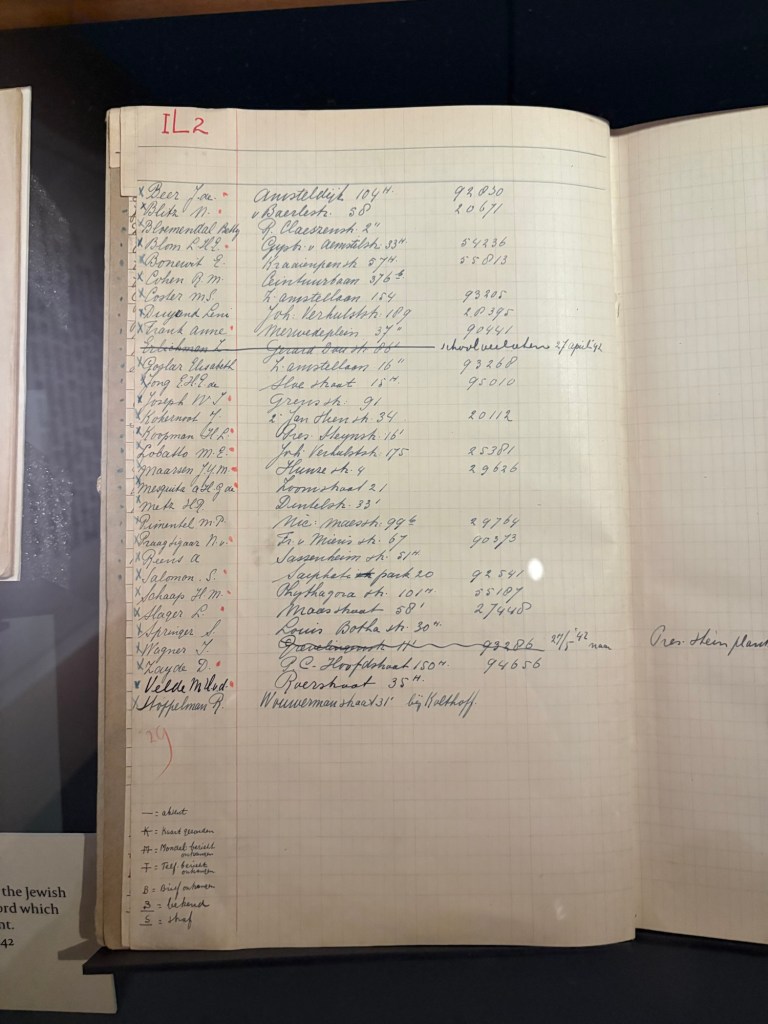
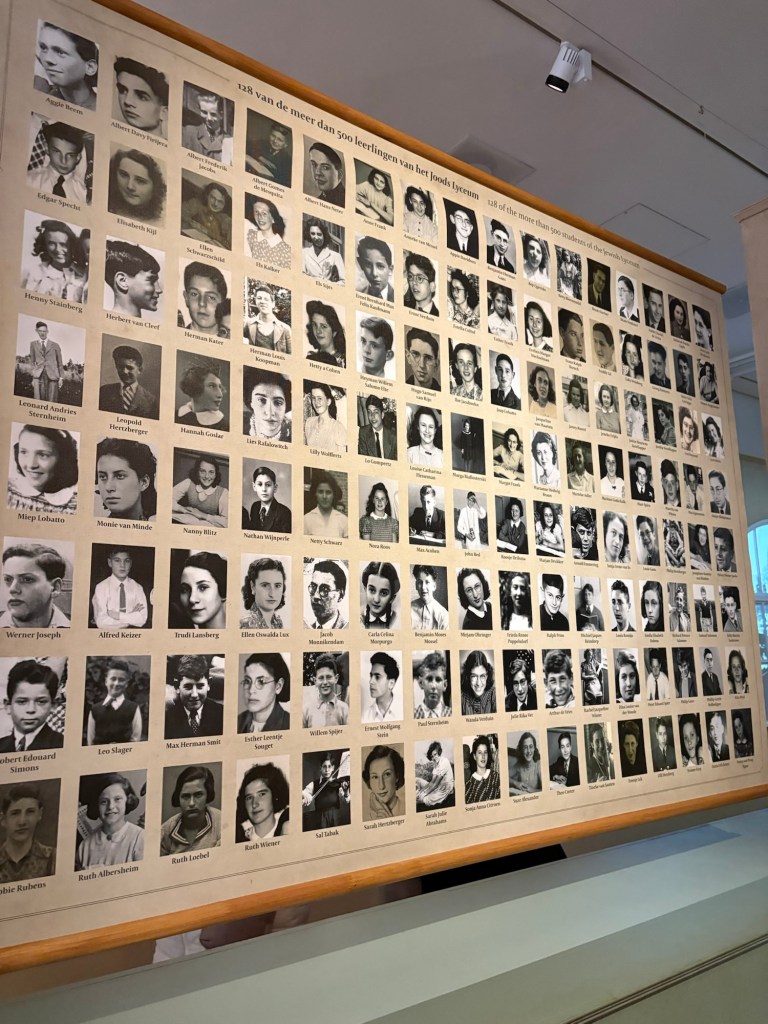
The infamous segregation of the Jewish people was enforced by Nazi personnel. Jewish people could no longer patronize non-Jewish businesses, and students had to begin attending segregated schools. Anne and her sister were removed from their schools and forced to attend the Jewish Lyceum. This again changed in 1942, when Margot, now 16 years old, received a message to report to a German labor camp. It was at this point that the family went into hiding in the now famous Secret Annex.
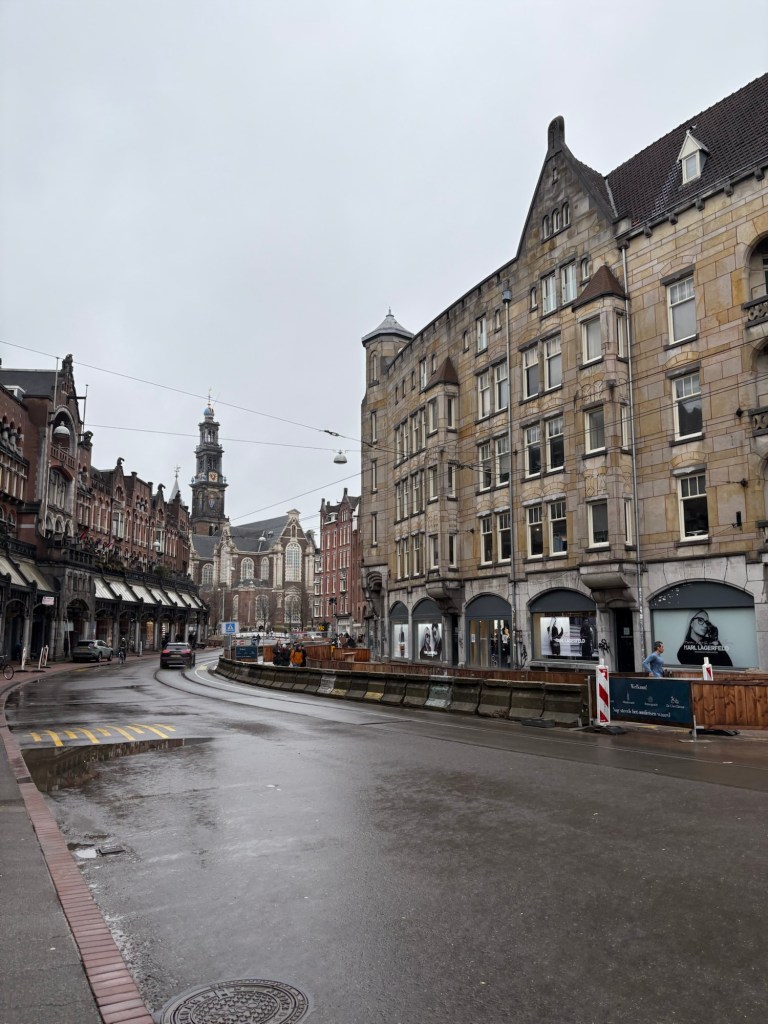
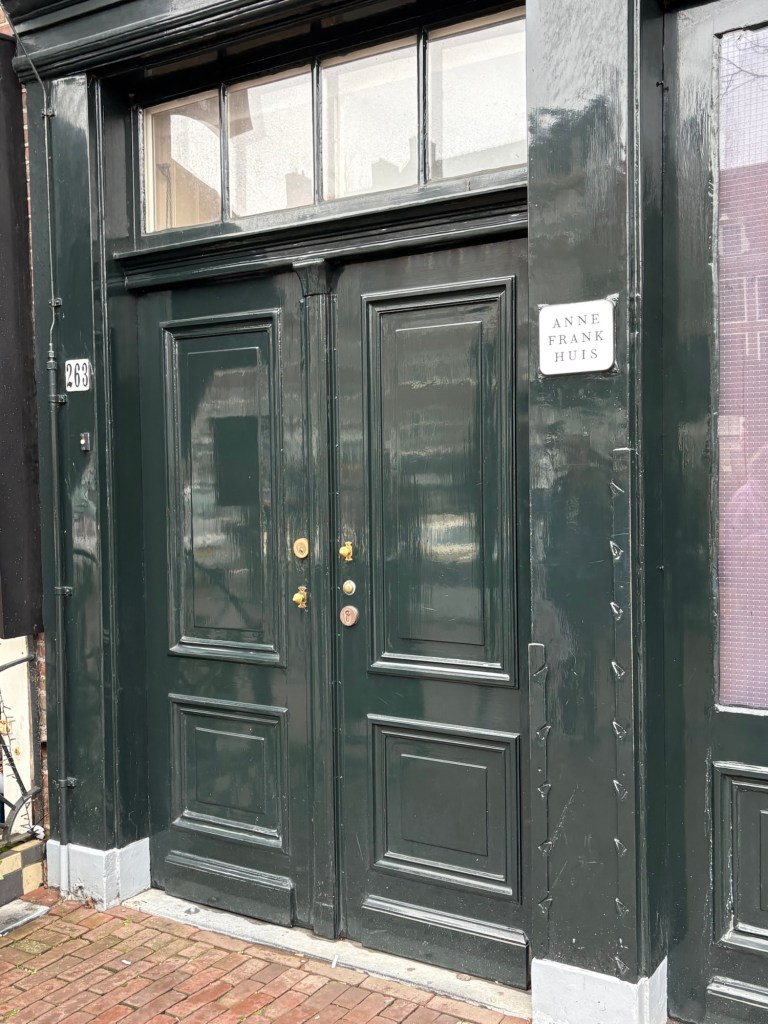
I had wanted to visit the Anne Frank House since we walked by it on our first trip to Amsterdam in 2024. I have an appreciation for the historic significance of the site as a reminder of the atrocities of World War II and the Nazi regime. Having visited several museums and monuments related to World War II in the United States as well as in the UK and EU, I felt it important to continue deepening my understanding of the realities of what people experienced.
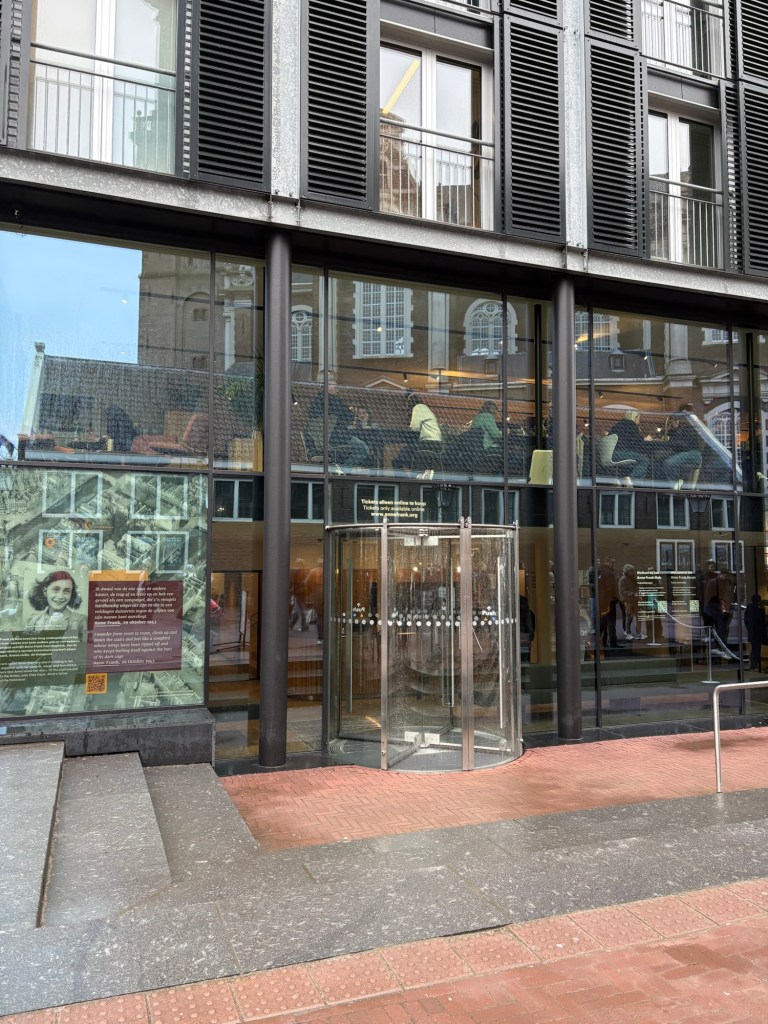
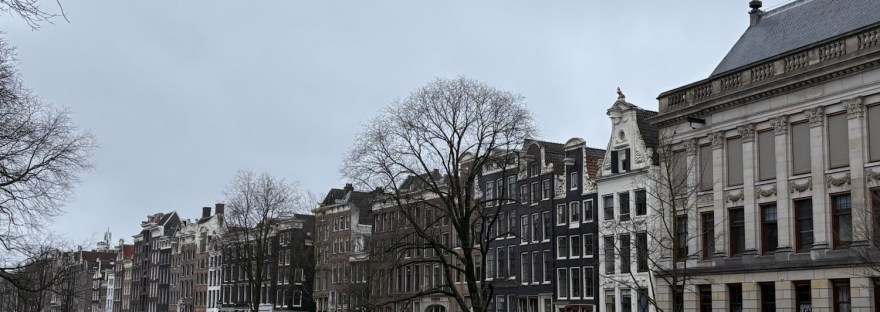
We had tickets for timed entry on the Sunday after our arrival in Amsterdam. The cloudy afternoon had a definite chill, fitting for our visit to a place so austere. We arrived about fifteen minutes before our entry time, thus we had to wait to enter. As the museum gets busy, the attendants were strict about observing entry times. We walked along the canal, taking photos against the backdrop of Amsterdam’s iconic canal houses to pass the time.
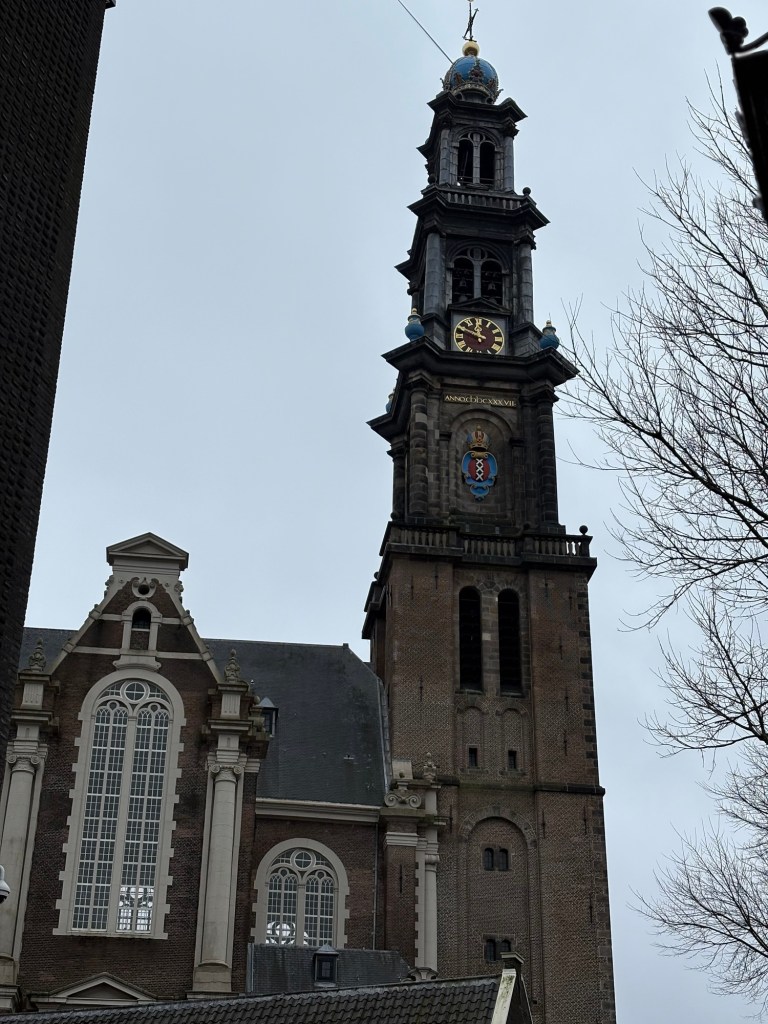
After about ten minutes, we figured we could return to the queue. This time, we were able to enter, and after dropping our coats at the coat check, we headed into the museum.
I did not take very many photos once past the lobby. We walked through sparse rooms with few artifacts, such as the notice that Margot received to report to labor camp along with a few other items. The house had been the warehouse for Otto Frank’s business, the Dutch branch of the German company Opekta, which specialized in pectins used in the making of jam. Otto Frank had also started a second business, Pectacon, which dealt in wholesale herbs and spices. There were photos depicting what the warehouses once looked like decades ago. The windows were painted over to protect the freshness of the spices; there was also the additional benefit of secrecy as the situation in the Netherlands worsened for Anne and her family. In July 1942, just a day after Margot received the summons, the family went into hiding in the Achterhuis, the secret annex. There the family, along with four others, hid under the cover of secrecy for the next two years.
We walked through the now-famous revolving bookcase separating the office from the annex. Once again, I did not take photos in the family’s hiding place. Photography is prohibited here, and to me, it felt intrusive. There is a thin plexiglass barrier covering posters and photos that still hang on the walls of what was once Anne’s room, reminders that she was indeed a living person, a young girl who had hopes and dreams and who loved pop culture. The living space in the annex was made up of two bedrooms, a bathroom, a kitchen/living room, and an attic that was used for storage. The area shared by eight people totaled only about 450 square feet, cramped but necessary the protection of its inhabitants. Anne would often go up to the attic to look out at the chestnut tree and write. She wrote prolifically- pouring out her experiences, the interactions in the house, fictional short stories and tales, her goals for her future- onto the pages of her diaries. She held hope for a bright future after the war, and dreamed of becoming a journalist or a writer.
But this would not be. In August 1944, the secret annex was discovered by the Gestapo and the inhabitants were arrested and sent to Camp Westerbork. From there, the family and their companions were all deported via train. The Frank family were sent to Auschwitz-Birkenau, the infamous German concentration camp that saw the murder of over one million Jewish people, as well as political prisoners and other victims targeted by the Nazi occupation. In November 1944, Anne and her sister were transferred to Bergen-Belsen. Conditions were deplorable, and somewhere around March 1945, Anne and her sister contracted typhus. Weakened and starved, they died just weeks before the camp was liberated by British forces in April 1945. Their mother Edith had passed away at Auschwitz in January. Of the eight people living in the secret annex, only Otto Frank survived to see liberation.
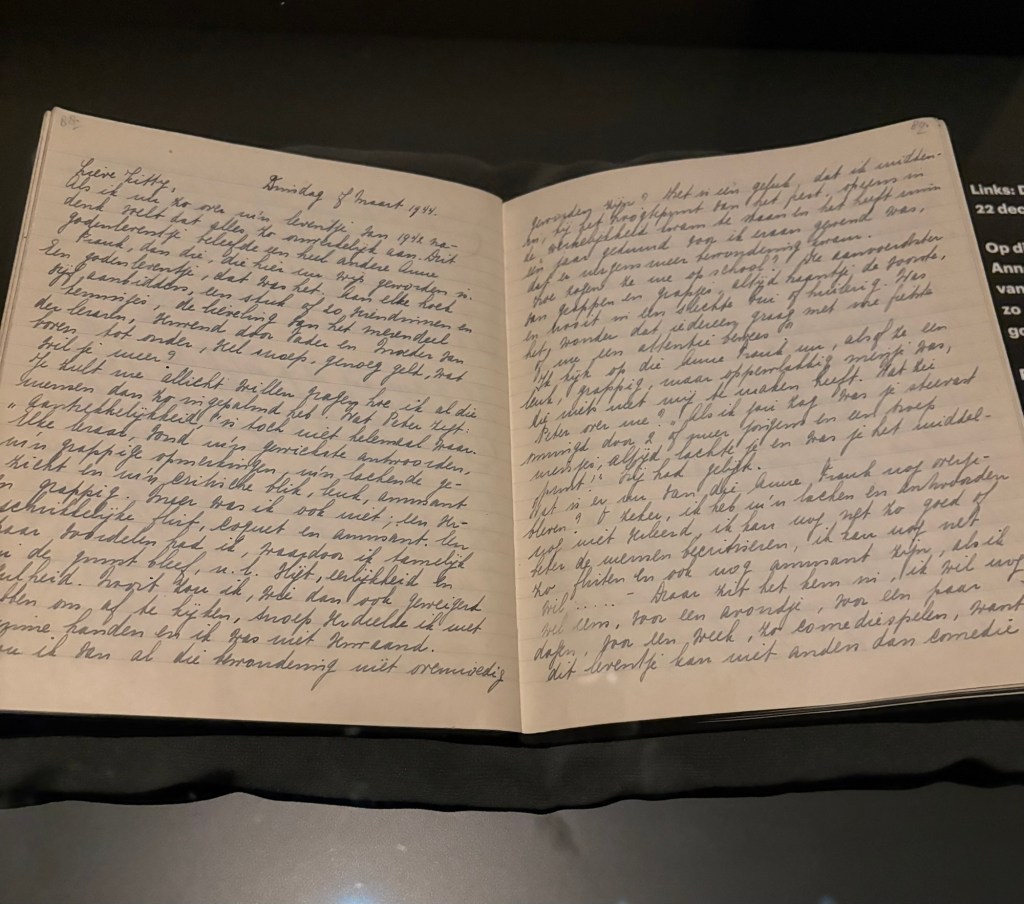
In 1947, Otto Frank published Anne’s diaries, honoring her fervent wish to become a writer. In a way, Anne did accomplish her dream of impacting the world through her writing. At time of posting, Anne’s diary has been translated into seventy-five languages and read by millions of people. It was required reading in the state of California when I was in middle school. Twelve-year-old me could relate to her experiences as a young teenager- hanging out with friends, becoming interested in boys while also thinking they were annoying, dreaming about what the future could offer. I remember feeling angry when I learned at the end that she did not survive the Holocaust, thinking it was so unfair. I would get a chance to grow up and live my adventure, but Anne would be forever fifteen.
And perhaps that is the point. It is unfair. It is horribly unjust when a people become targeted for their race, ethnicity, political or religious affiliations, or any othering that can be used to discriminate. Adolf Hitler made the Jewish people scapegoats for the economic troubles in Germany at the time, and the Nazis used propaganda, manipulation, and perhaps most of all, fear to keep people compliant. Through legal means, democratic processes were dismantled and political opposition abolished, stripping away civil liberties, and suppressing free speech. And without a free press and protection of civil liberties, human rights are so easily violated.
It is not known for definite who betrayed the Frank family and their companions or whether it was an unfortunate discovery. Maybe it is better not to know. But it is worth remembering that the people who helped to hide them were indeed the criminals, risking life and safety to break the law in order to protect others. Visiting the Anne Frank House was another reminder that there are laws where it is a moral imperative to disobey in order to do what is morally right. As Otto Frank said in 1970, “We cannot change what happened anymore. The only thing we can do is to learn from the past and to realize what discrimination and persecution of innocent people means.” We must remember. We must do our parts to strive for a better world, with liberty and justice for all.
To plan your visit, visit AnneFrank.org. Tickets sell quickly and there is no ticket sales at the door.
References:
United States Holocaust Memorial Museum. “Anne Frank: Biography. https://encyclopedia.ushmm.org/content/en/article/anne-frank-biography.
“The German Invasion of the Netherlands.” Anne Frank Website, http://www.annefrank.org/en/anne-frank/go-in-depth/german-invasion-netherlands/.
Biography: Anne Frank, http://www.womenshistory.org/education-resources/biographies/anne-frank.

 The Cranky Camper