

Nothing like hiking (juniper) pines and drinking wine

After over a week spent indoors with a day’s break in the rains, and a rather heavy week at work and life, heading out into nature was a much needed remedy for stir-crazy and mental fog. This past Saturday’s excursion saw us return to Agua Dulce, an unincorporated community in Los Angeles County, known primarily for Vasquez Rocks Natural Area.
We have hiked in Vasquez Rocks many times over the course of this year. Being about an hour from the San Gabriel Valley and with an other-worldly landscape formed from tectonic forces along the nearby San Andreas Fault system, it is an interesting and easily accessible hiking spot- and one that has been used as the backdrop for many films and television shows.

On our visit in mid-November after heavy rains, we saw the landscape transformed from dry chaparral to lush green. After a stop at the visitor center to inquire about camping in early 2026, we set off for a hike, starting first along the Nature Heritage Trail/ Apwinga Loop Trail to Famous Rocks. I took some photos on the iconic rock formations and had some fun climbing them. Many visitors climb higher, but as I’ve developed rather a fear of falling, I stayed well below the top of the rocks. It still was fun, though.
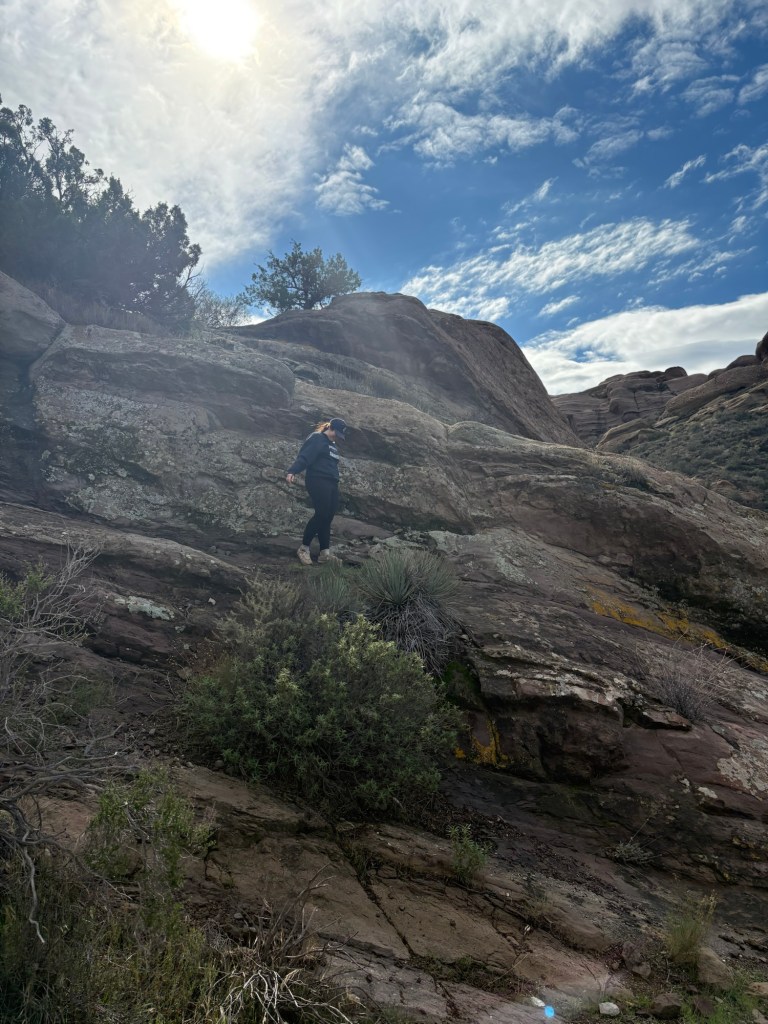
After I climbed back down, we continued on, following the Apwinga Trail to where it followed the Pacific Crest Trail.
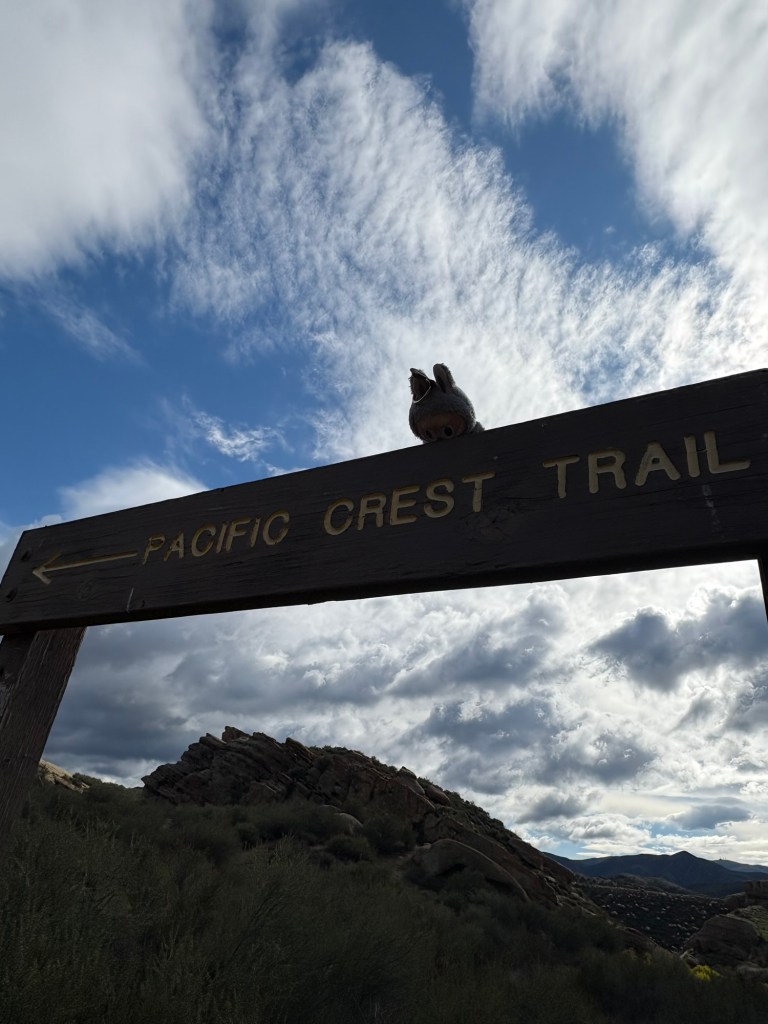
As mentioned in prior posts, the Pacific Crest Trail is a National Scenic Trail that stretches 2653 miles beginning at U.S. southern border with Mexico, through California, Oregon, and Washington, up to its northern terminus at the Canadian border. About two miles of this famed trail goes right through Vasquez Rocks, and I love taking every opportunity to hike along the PCT, regardless of where I find myself.
After following the PCT for about a half-mile or so, we came to a split. On this trek, we opted to continue along the Apwinga Loop Trail, rather than heading down into the canyon and to the tunnel. We were not sure how much water would be in the creek after the rains, and felt it better not to chance wet shoes. We also figured this was an opportunity to explore more of the natural area.
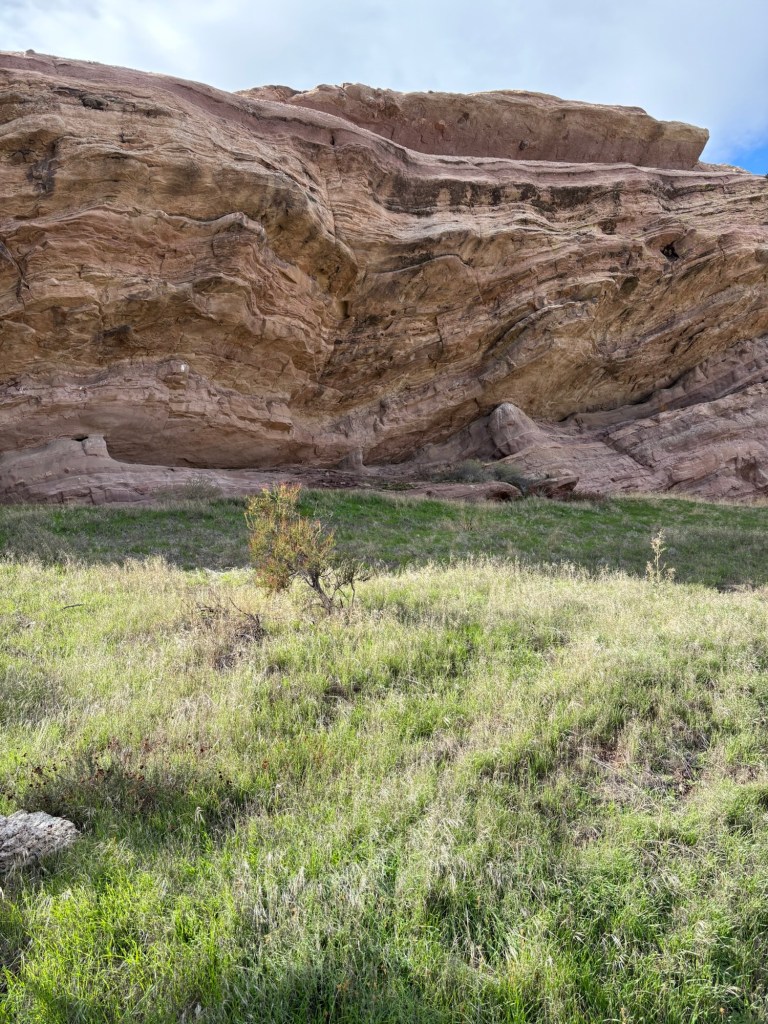

We found that the trail was mostly uphill after its split from the PCT. While Strava registered only about a 600-foot elevation gain, it felt more strenuous. Perhaps it was because it was a fairly rapid uphill. The more likely explanation is that after missing a weekend hike and spending most of my time cooped up indoors, I was a little out of shape. Nevertheless, it was not that difficult; the trail was wide and not technical at all. It also offered up some really pretty views of the Soledad Basin and more interesting rock formations within the park. The trail took us through areas that had become meadows with the sprouting of fast growing grasses. We even found a small waterfall tricking down the rock face.
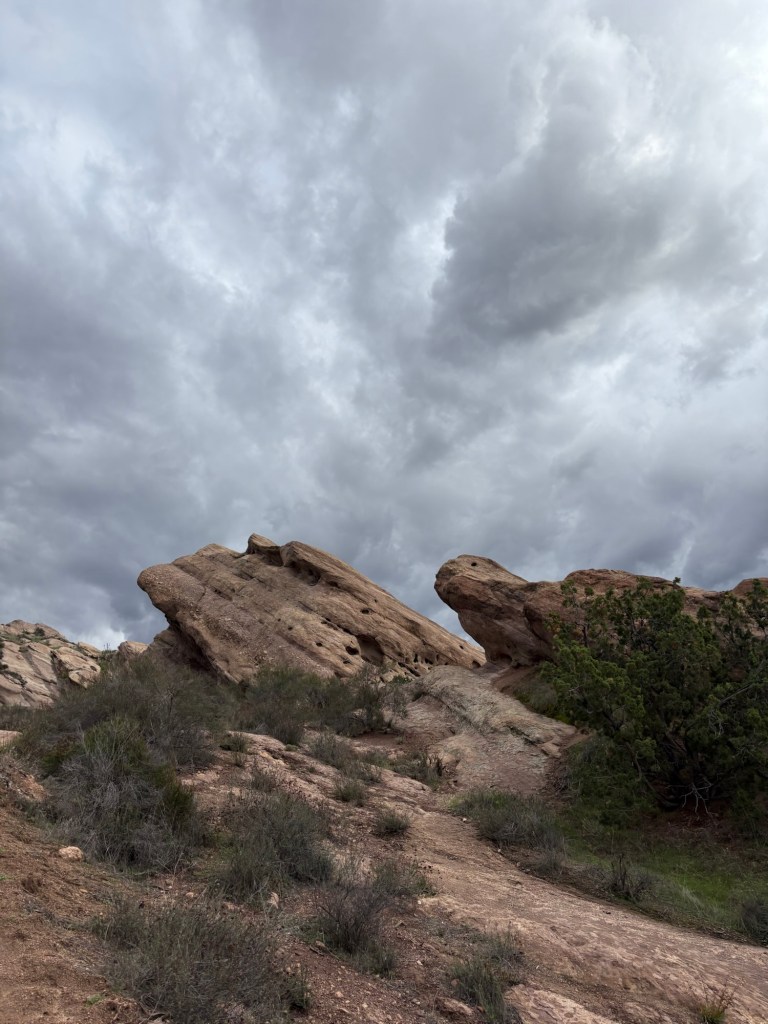
We followed the loop back toward the picnic area and visitor center. This was certainly an enjoyable visit, especially since the weather stayed cool and cloudy for most of the day. With the rains, the park looked quite different from my spring and summer treks when it was significantly more dry. In all, it was a pleasant adventure, but one that was not over yet.
Next stop, wine tasting!

There are two wineries in Agua Dulce, with several more in the Santa Clarita area. The emergence of the wine industry in Agua Dulce is relatively recent- only about 25 years old. In 2010, the Sierra Pelona Valley American Viticultural Area was established by the federal government. The mineral-rich, gravelly alluvial soil and mild climate make for ideal growing conditions for wine grapes. After looking up Agua Dulce Winery and Reyes Winery, both family owned, we opted to check out Reyes Winery, which just happened to be a tad closer.
The Reyes Winery tasting room, which opened in 2012, was simple and no-frills. That said, the sommelier was very friendly, and pretty straightforward with recommendations. At $18 per person for a flight of seven samples plus two complimentary samples, I thought it was a pretty good price for a relaxed experience. I must admit, some of the pours were not my taste preference. The Emmie’s blend, a blend of chardonnay, muscat, and albarino, was a little disappointing. I found the reds much more to my personal liking. As recommended, the Sangiovese was quite good. The favorite though, was the Les Deux Rois Renaissance Blend 2011. A combination of California cabernet sauvignon and merlot, the wine was rich yet light, and would pair nicely with favorite snacks to beef dishes. We ended up purchasing two bottles for the upcoming holidays. I was surprised to find that I enjoyed the White Delight dessert wine, which was a very sweet port and with 18.7 percent alcohol by volume, very alcoholic. I opted not to purchase a bottle; I’d probably be the only one drinking it, and as it is a wine that tasted more like juice, I figured that would be asking for trouble. This is not an extensive list. Though a small winery, there were more selections that could suit a wider preference.
A visit to a winery after a moderate hike was a perfect way to spend a cloudy Saturday in November. I would love to be able to go back to explore more of the trails in and around Agua Dulce, and perhaps check out the Agua Dulce Winery. Even in this quiet part of Los Angeles County, there are many opportunities for recreation and more. Cheers to adventures meant to be shared!

References:
Federal Register : 2010, http://www.federalregister.gov/documents/2009/07/20/E9-17179/proposed-establishment-of-the-sierra-pelona-valley-viticultural-area-2008r-176p.

 The Cranky Camper