
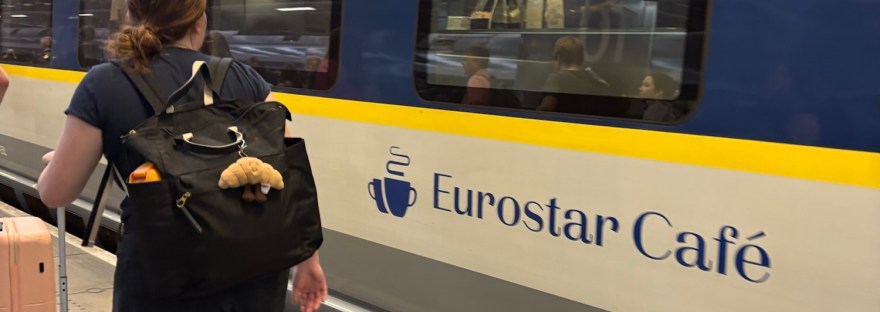
Speaking of trains, I don’t just love the history of rail in the United States and around the world. I have long enjoyed their utility in making travel easier- and in some ways, much more enjoyable. I have travelled by train on many occasions- when I was away at university, traversing California via the Amtrak, and even as an adult to get to conferences or an adventure with the kids. So when the opportunity arose this past summer to cross the English Channel by train to get from London to the Netherlands, I was a little more than excited to be making the trek. After all, I love trains!
The Eurostar is an international high-speed rail line that opened for passenger service in late 1994, following the completion of the English Channel tunnel in May 1994. Eurostar’s first passenger service departed the now-closed Waterloo International station in November 1994 headed for Paris Gare du Nord, Lille, and Brussels. Despite the excitement around this new connection, Eurostar, along with the Chunnel’s operator, Eurotunnel experienced less-than-ideal revenues due to a number of factors. It would become profitable as a standalone company nearly two decades later, with business continuing to grow. Travelers enjoy the convenience of high-speed travel to major destinations and more climate-friendly options for said travel. Eurostar bills itself as both.
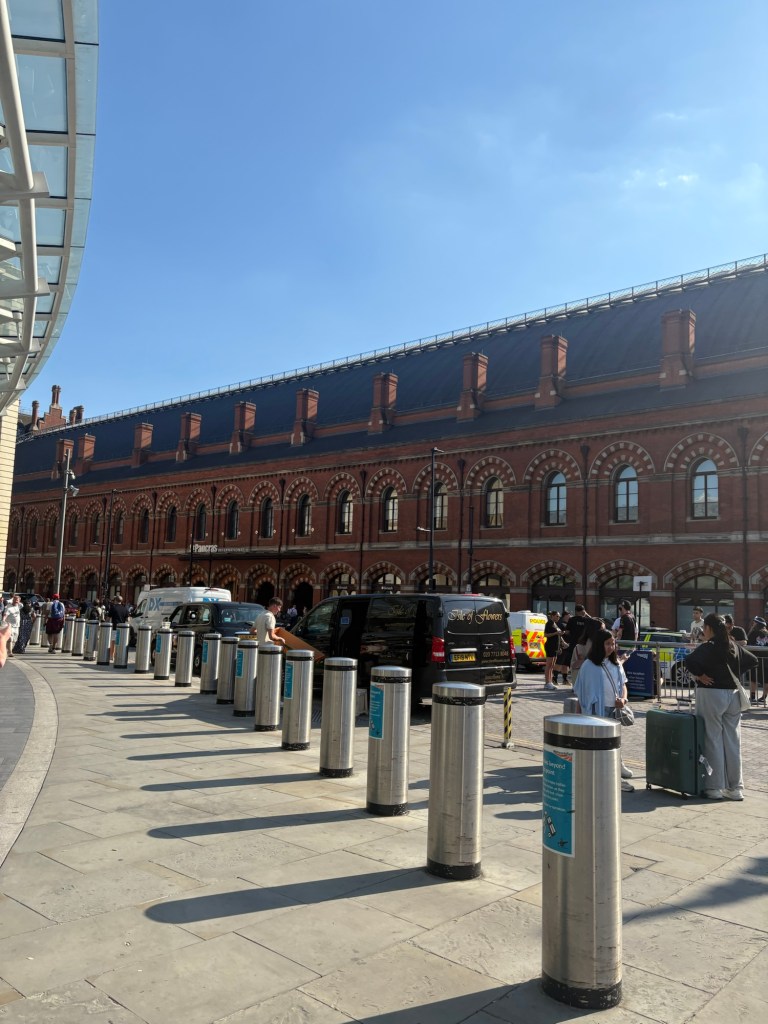
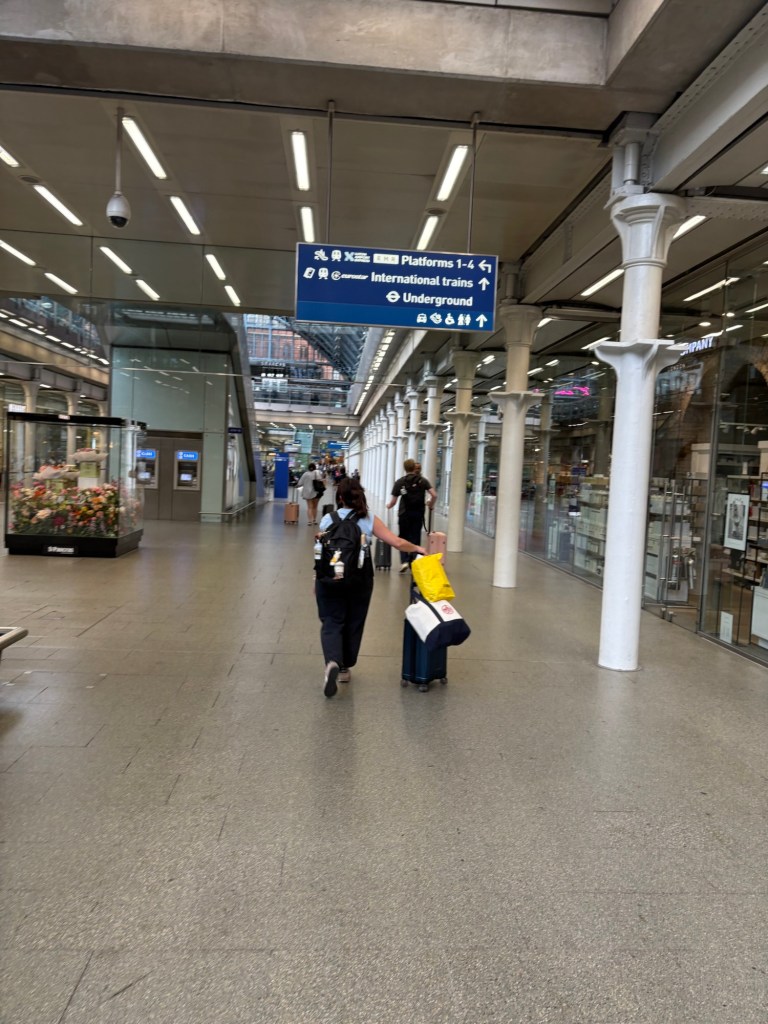
Today, Eurostar provides service connecting the United Kingdom, France, Belgium, Germany, and the Netherlands. Our journey aboard Eurostar started at St. Pancras International station in central London. We had spent five lovely days in London, staying in Greenwich and exploring London’s many landmarks. It was time to head to Den Haag for the rest of our trip to continue our visit with Emily and Mees. We took the national rail from Greenwich to King’s Cross/St.Pancras, then followed the signs to the international terminal.
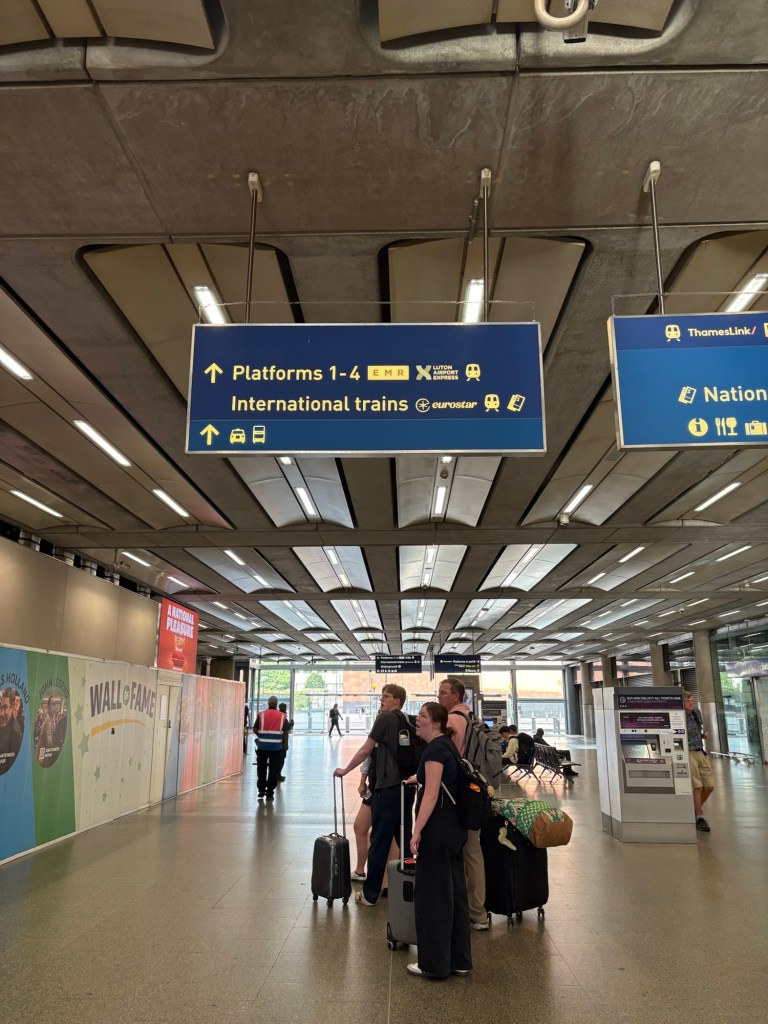
It was easy enough to follow the signs; the more challenging thing was figuring out breakfast. While there is a cafe aboard Eurostar trains, the girls preferred lattes and pastries. Fortunately there were several options even in the early morning. After picking up our coffees, we headed to the Eurostar check-in. We had to go through passport control and security checks prior to heading to the departure platform to board the train headed for Rotterdam via Brussels.
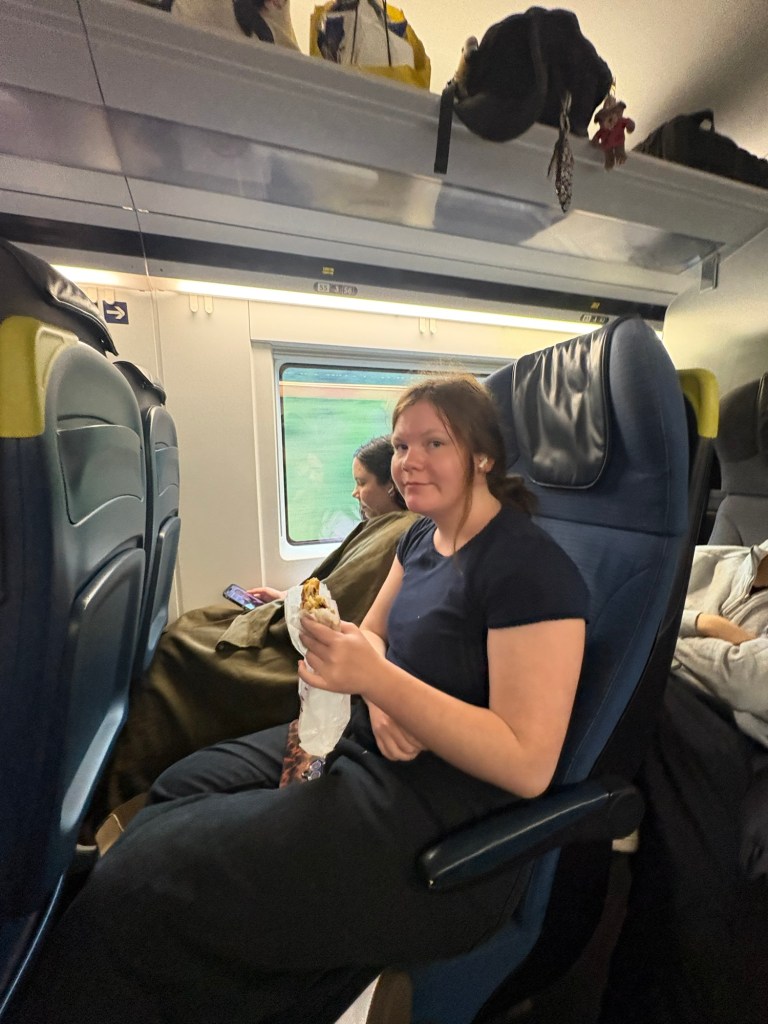
Once aboard the train, it was smooth riding. The high-speed trains reach speeds of up to 300 km/h (186 mph), fast enough that the GPS on my phone could not keep up, thus I could not catch any Pokemon on the ride. Life360 was also very confused as to where we were, with Sami showing a location in France, and Emily and myself being somewhere in the English Channel. The green landscapes of France and Belguim flew by, slowing down only to stop in Brussels.
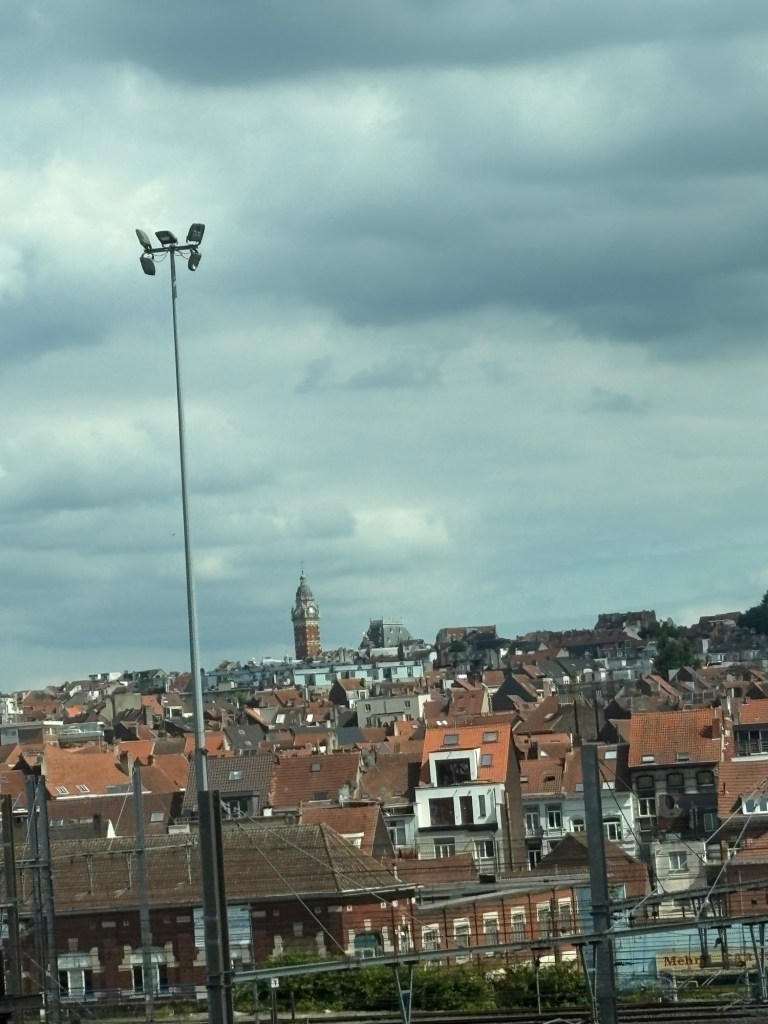
The journey to Rotterdam took just over three hours, and by then we were ready to catch the Intercity to Den Haag. Traveling by train was a fun and low-key way to travel across the Channel to the European continent, and it was fun to watch the scenery change as we crossed into different countries.
Some things to consider:
Direct rail service is currently offered to and from major cities such as London, Paris, Brussels, and Amsterdam. There are plans to open up new stops in Germany and Switzerland, however these are not anticipated to become available until the early 2030s. For now, connecting lines can be taken to reach destinations in Germany.
We booked our tickets for round trip travel from London to Rotterdam Centraal and back about three months in advance. Booking early ensures availability and lower prices. The internet recommends booking about six months in advance for direct services; we did not have an issue finding tickets for our party of six even in the popular summer months. It is good however to book as soon as your plans are finalized.
Tickets are generally refundable with or without a fee depending on the level of service. We found this out when we had to get a refund on Jacob’s tickets with he was unfortunately unable to go with us on account of his service duty. We cancelled his tickets seven days prior to travel for each leg of the trip.

Because the United Kingdom is no longer part of the European Union, we had to go through passport control and get our passports stamped when leaving London and when leaving from Rotterdam. Be prepared to show travel documents with applicable visas when requested by customs authorities.
Specific to the Rotterdam station: At time of writing, there is no food service once in the secure area past passport control. Apparently a small cafe or vending service was supposed to be put in but at the time of our departure had not yet. Be sure to get food before going through security.
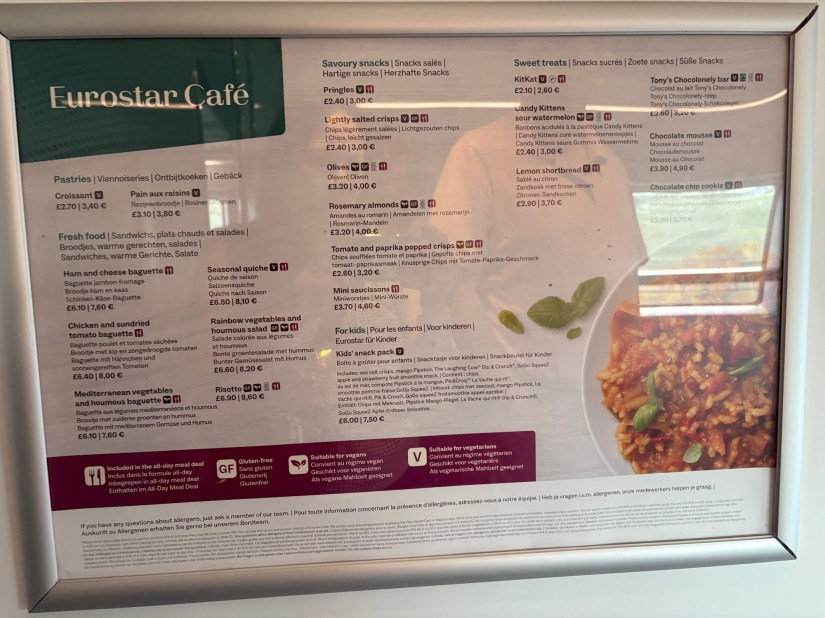
But if you, like us, fail to get something to eat and end up with a cranky camper on board, there is a cafe car aboard the train. The selection is limited, but it was enough to tide us over until we arrived back in London and picked up McDonalds.

I truly enjoyed every part of our summer trip- from exploring London to trekking familiar haunts in Holland and even our various modes of transportation to get there. It was definitely an adventure to remember- and share. All aboard!
References:
“About Us: Introducing Eurostar.” Eurostar, 2025, http://www.eurostar.com/rw-en/about-eurostar/our-company.
Berti, Adele. “Timeline: The Eurostar Turns 25.” Railway Technology, 13 Dec. 2019, http://www.railway-technology.com/features/eurostar-25-years/?cf-view.

 The Cranky Camper