

Warning: Not safe for work plant names
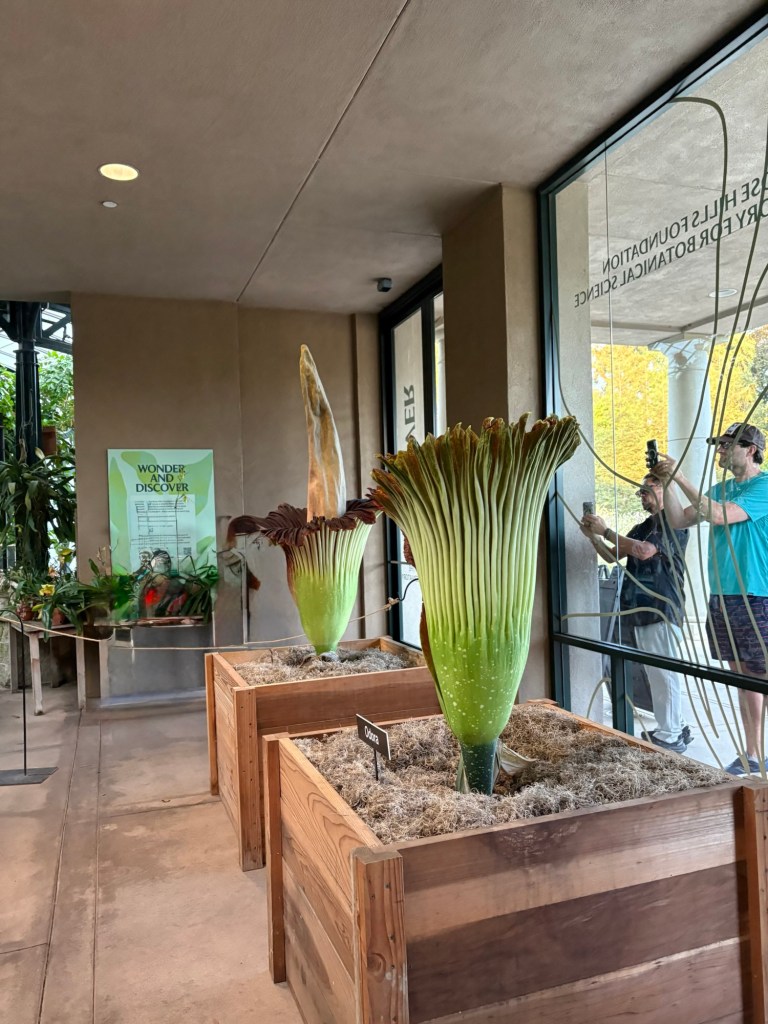
Amorphophallus titanum, also known in the US as the corpse flower, is a rare species belonging to the botanic family that includes arums such as monstera, philodendron, and peace lilies. Endemic to Sumatra, Indonesia, corpse flower is listed as endangered due to habitat loss. The plant itself is slow-growing and can take up to seven to ten years before it blooms for the first time. Subsequent blooms are also slow; on average the plant will bloom about every three to five years or so. The blooming period itself is also short: only about 24 to 72 hours. Which makes its blooming extra special.
I remember when the Huntington Library in San Marino, California made headlines back in 1999 on account of the first Amorphopallus bloom in the state. While I did not see the flower, I recall walking by the area and being able to take a whiff of the putrid stench. Since then, the conservancy has been able to cultivate new plants, an important part of conserving and protecting the species.
I am lucky to live so close to the library and botanical gardens. I’ve appreciated being able to visit the Huntington and learn more about not just ‘the stinky flower’ but about other botanical species, as well as art and culture. This year, we got tickets for the July 12 Sunday evening Twilight Stroll. Apparently, many in So Cal had the same idea; the line to see the affectionately named Odorysseus and Odora, went all the way to the Chinese garden.

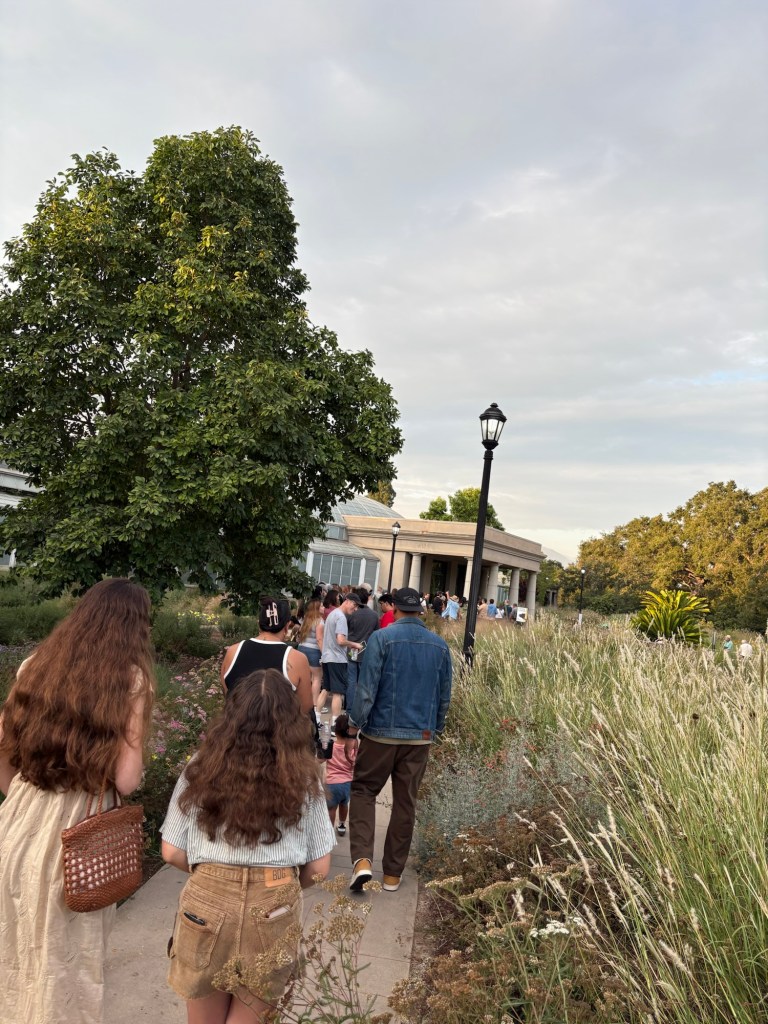
Fortunately the line went quickly, and after a leisurely, forty minute ‘stroll’ we were in the hot, tropical conservatory.
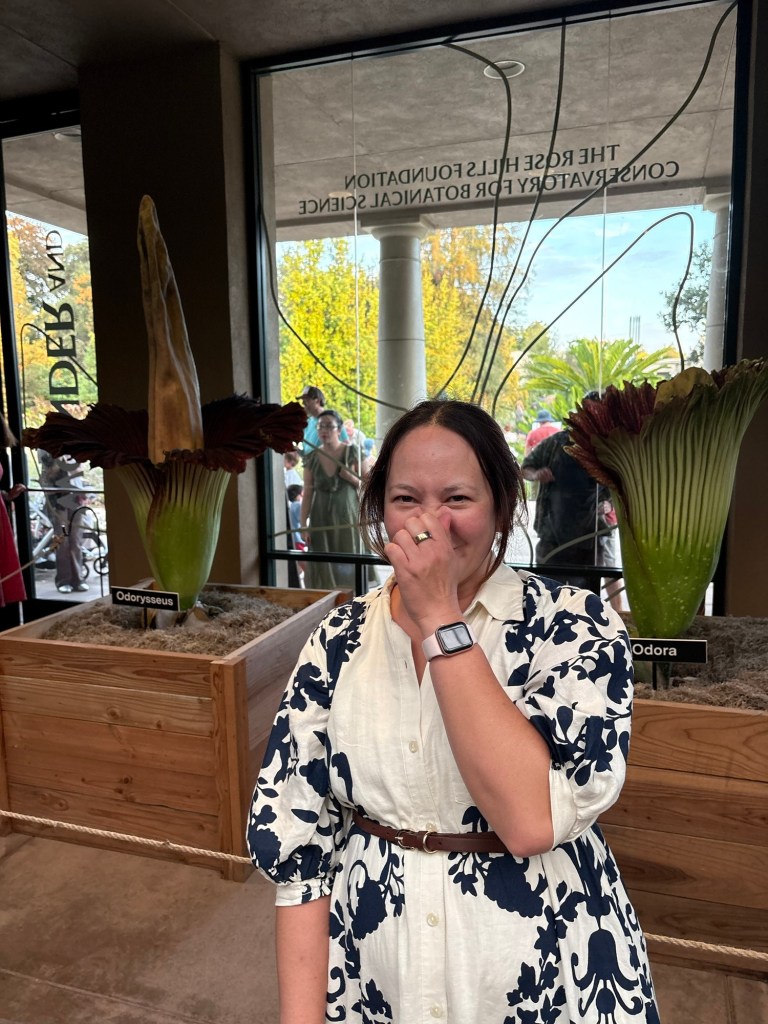
Amorphophallus titanum isn’t called ‘corpse flower’ for nothing. The stench was certainly something. It was far more overpowering to my olfactory than I remember it being when we visited back in 2023. The stank brought to mind a blend of garbage and middle school PE clothes that hadn’t been washed in six months. And the heat of the building made the stink that much more heavy.

That said, the plants themselves were a sight to behold. A. titanum boasts the largest unbranched inflorescence, a structure that holds many little flowers. The tall, central spike is the spadix, with thousands of little flowers at its base. These are hidden by the frilly spathe, the burgundy and green leaf that wraps around the spadix. The stink is helpful for attracting pollinators who love the smell of smelly things.
The corpse flower bloom was announced this Sunday, July 12 after a couple weeks of bloom watch. For the next day or two, Odorysseus will likely be on display, with Odora following. Tickets are available at Huntington.org. If you are too far from San Marino, there is a livestream to join in on the fun.
Interestingly enough, the A. titanum was also in bloom this week at the Diergaarde Blijdorp in Rotterdam, Netherlands. There the flower is called the ‘reuzenpenisplant’ which is not too far off from its scientific name. Still, we did get a good laugh while waiting in the line to see it here in the States.
So, whether it is learning more about rare plants, conservation, or just appreciating the beautiful oddity of nature, I hope you get a chance to visit- in person or online. Here’s to blooming this summer- literally and metaphorically. Cheers!


