
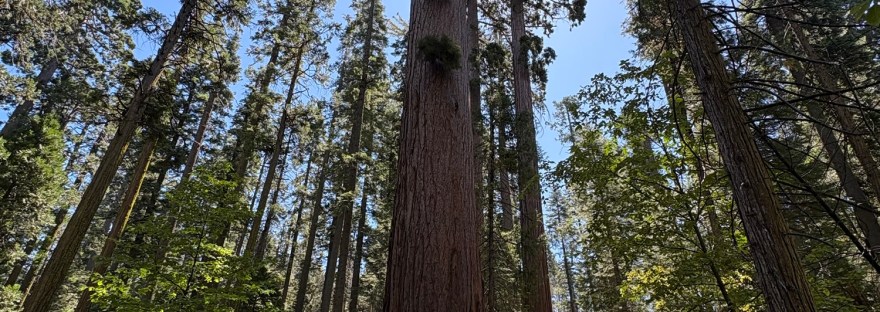
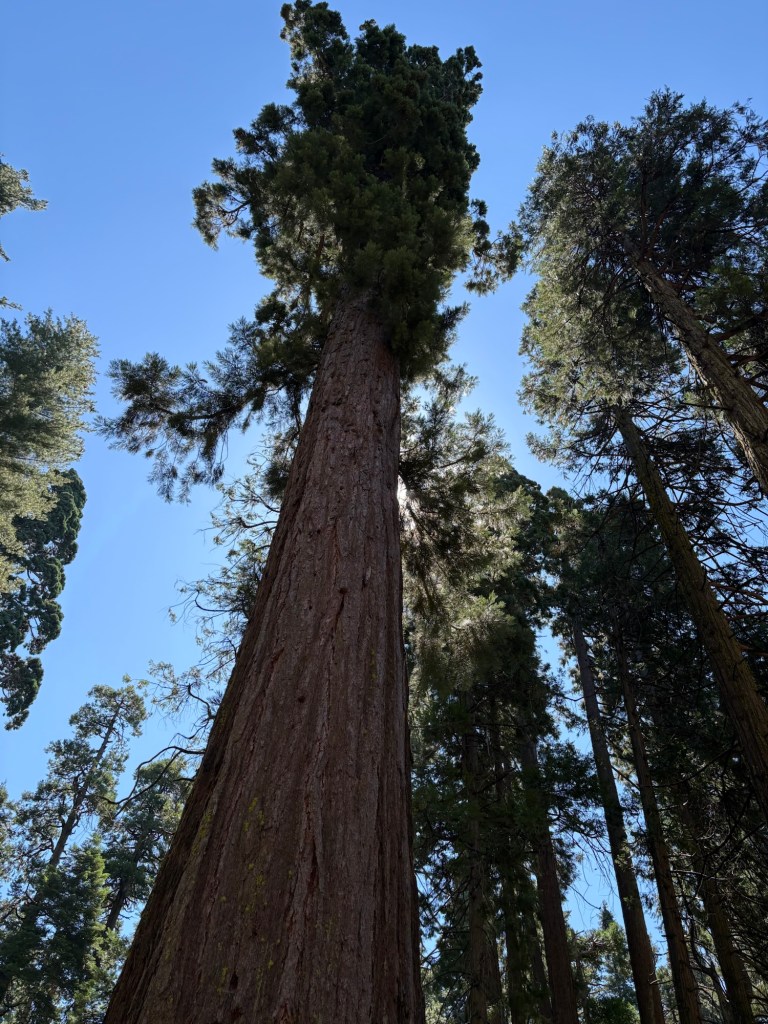
Ebbetts Pass Scenic Byway is both a California scenic route and national byway flanked by historic state parks on either end. After two failed tries on account of weather conditions along Ebbetts Pass Scenic Byway, at long last, we broke the curse of Haas trips to see giant sequoias and finally made it to Calaveras Big Trees State Park toward its western terminus in Arnold to celebrate the first of August.
Sequoiadendron giganteum, the giant sequoia, is native to California and is considered endangered. These massive trees, the largest on earth, have a very limited growing range. They can be found in groves in the Western Sierra Nevada Mountains at elevations between about 5000-7000 feet in elevation. There are approximately 75 groves remaining, according to the National Park Service. Today, the giant sequoia faces threats from the effects of climate change, including wildfires and drought, as well as fire suppression practices that paradoxically had stunted healthy germination and increased the risks for more severe fires.
Calaveras Big Trees State Park is one such place that works to preserve over 1100 giant sequoias, along with other conifers, across 6500 acres of land. There are two main groves: the North Grove features as well-marked, gentle trail meandering through a grove of over 100 mature sequoias. The South Grove is typically less frequented and is home to over 1000 ancient trees.
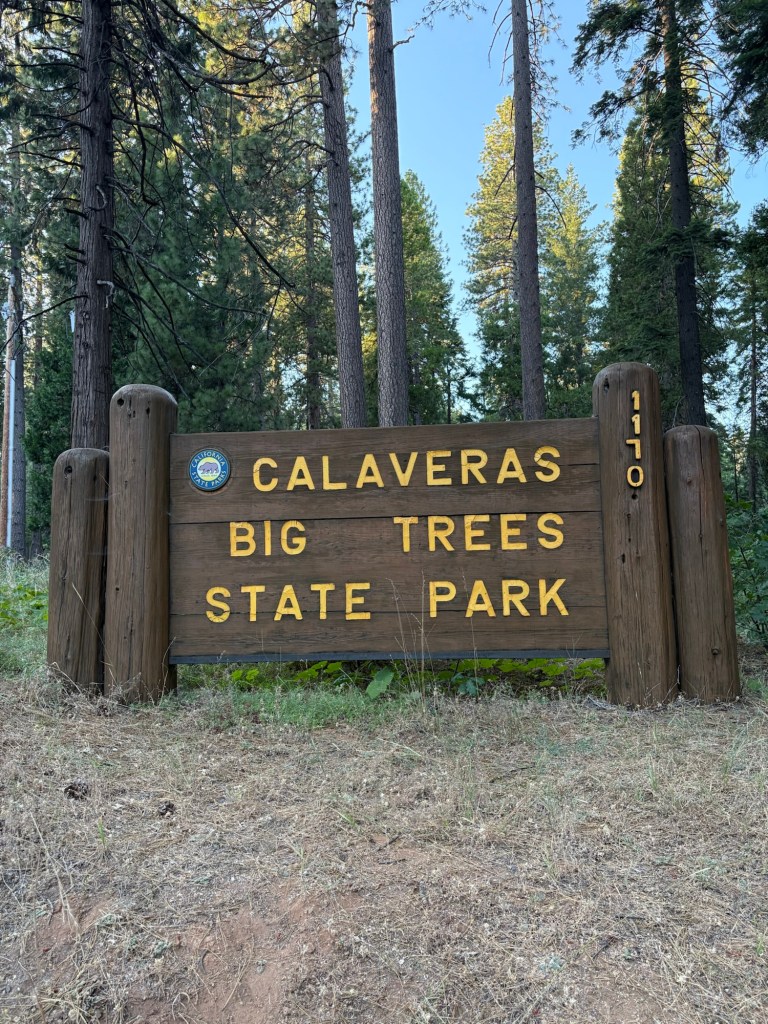
We visited Calaveras Big Trees State Park on our first full day of an extended weekend trip to Angels Camp. The weather was fine; while hot in Angels Camp, there was about a 10-degree difference with the higher elevation along Ebbetts Pass. There was a nice breeze blowing through the trees and while the park was busy, it did not feel overcrowded, even in the more populated North Grove.

Our first stop was the Visitor Center. The center itself felt cosy, like a cabin full of books, knuffles, and other souvenirs. The interpretive park ranger was knowledgeable and energetic, and she provided us with our books for the junior ranger program. I appreciated the exhibits, which highlighted the community’s history of conservation efforts over the past 150 years as well as the native peoples who inhabited the area and stewarded the land prior to Western influences and, sadly, destructive practices. It was also pleasantly air conditioned.
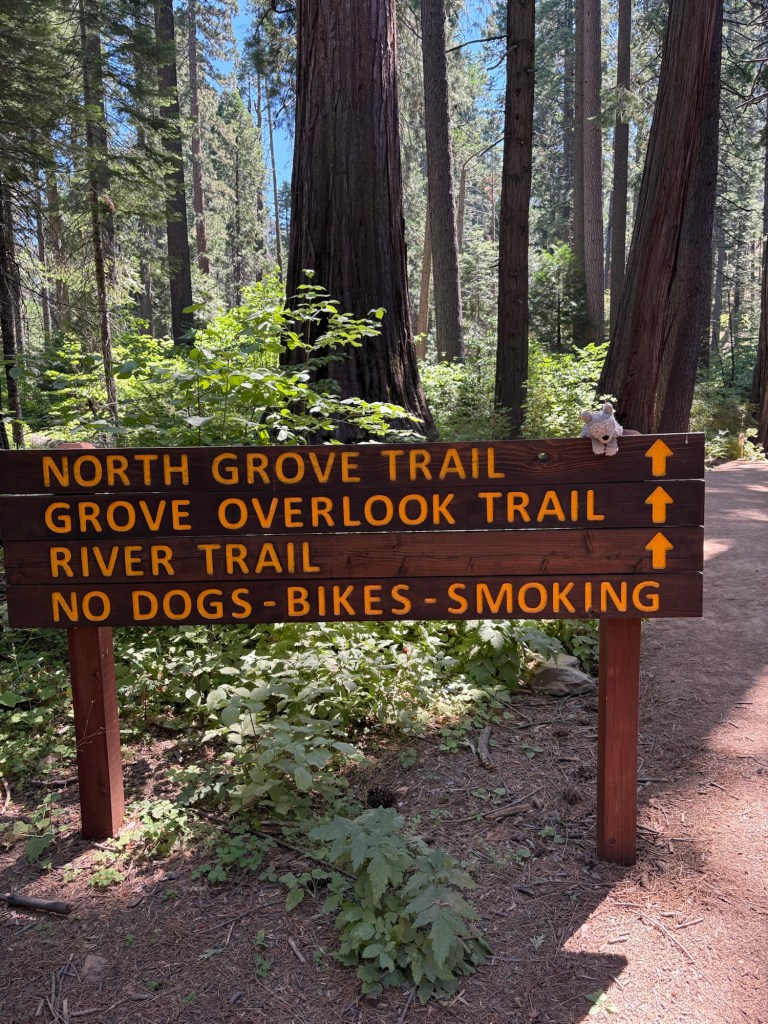
After starting our junior ranger books and purchasing some stickers, we headed toward the trailhead for the North Grove trail. This easy trail is about a 1.7 mile loop, with numbers denoting points of interest for a self-guided tour. There are booklets with plenty of information at the start of the trail to help guide visitors for an enriching experience.
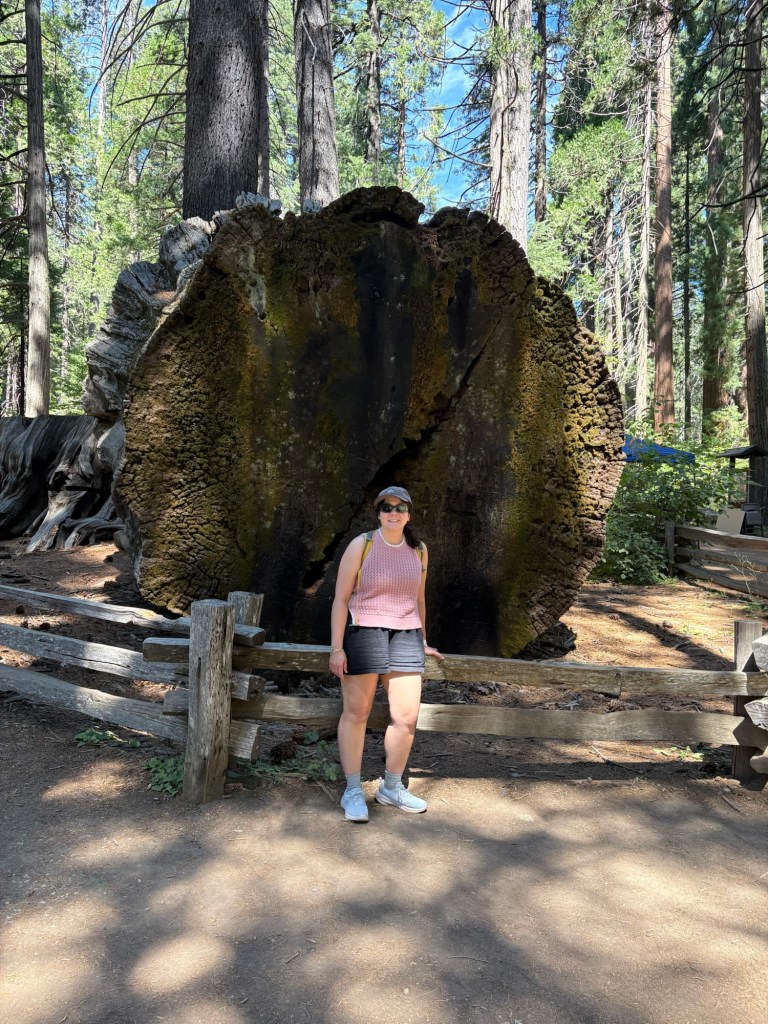
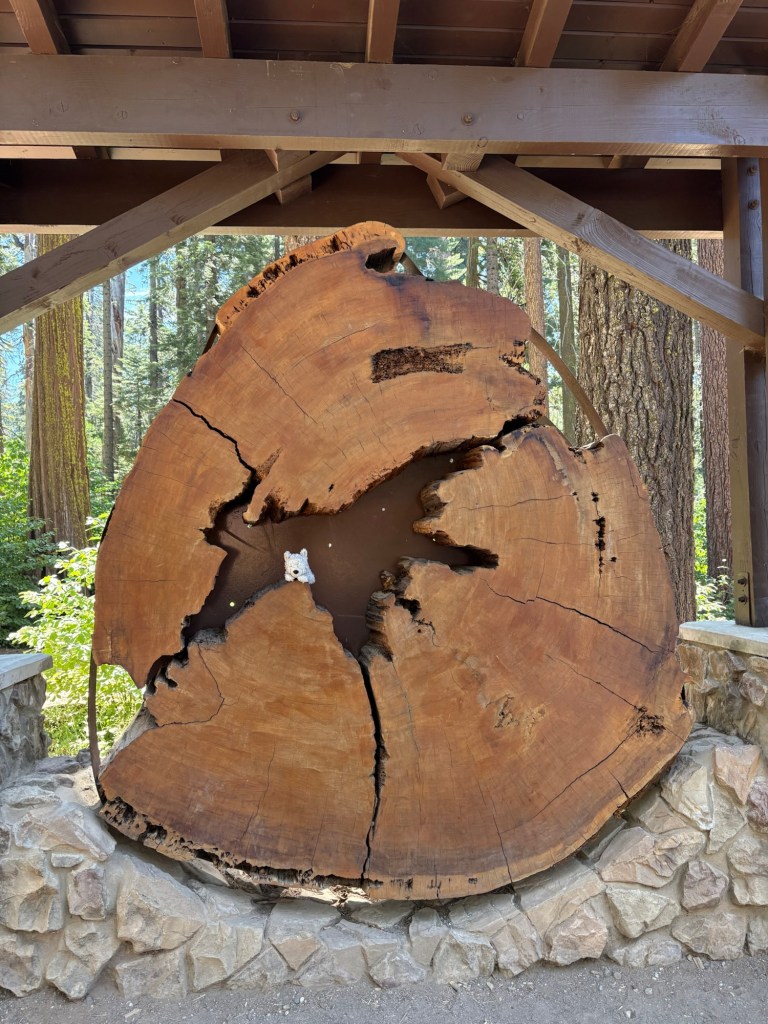
We began our journey through natural history at the Big Stump. Which is literally just that- a big stump. This tree is known as the Discovery Tree, the tree that Augustus Dowd discovered in 1852 when hunting a grizzly bear. Shocked by the sight of the massive, ancient tree, he explored the area further, eventually bringing skeptical men with him to behold a sight unlike any living organism they had ever seen. Sadly, a year later, this 1244-year-old tree had been stripped and felled by greedy speculators. There were no tools adequate to easily fell the tree; augers were used to basically drill holes into the tree to get it to fall. Dowd, along with others, including John Muir, protested the destruction of the tree.
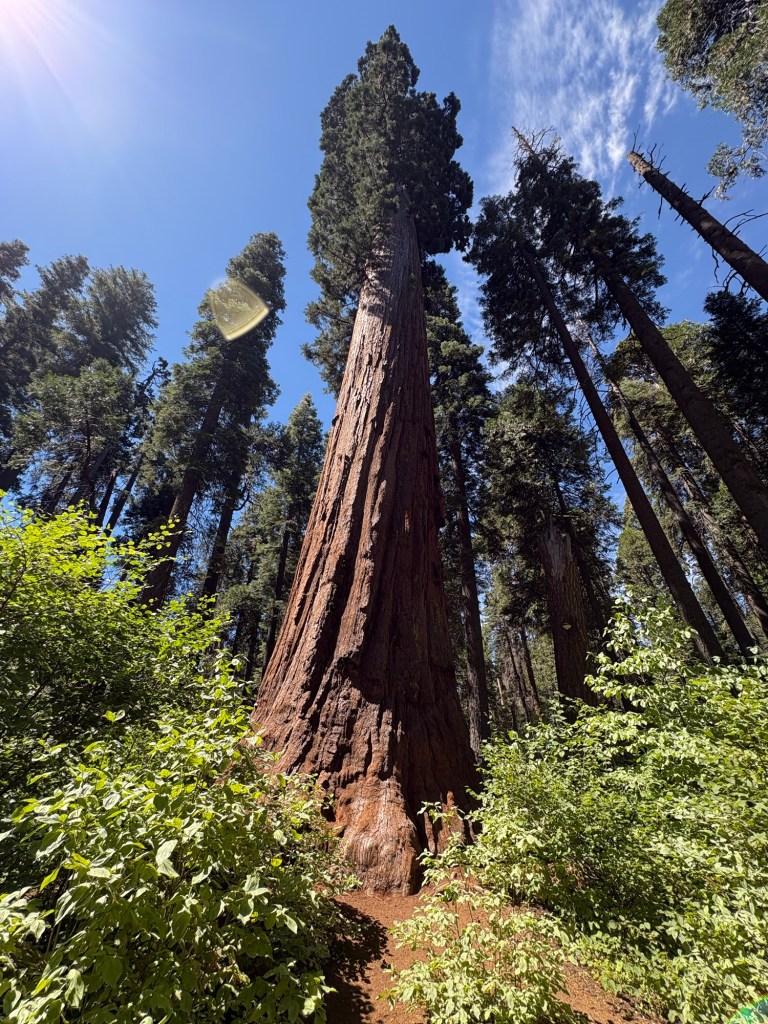
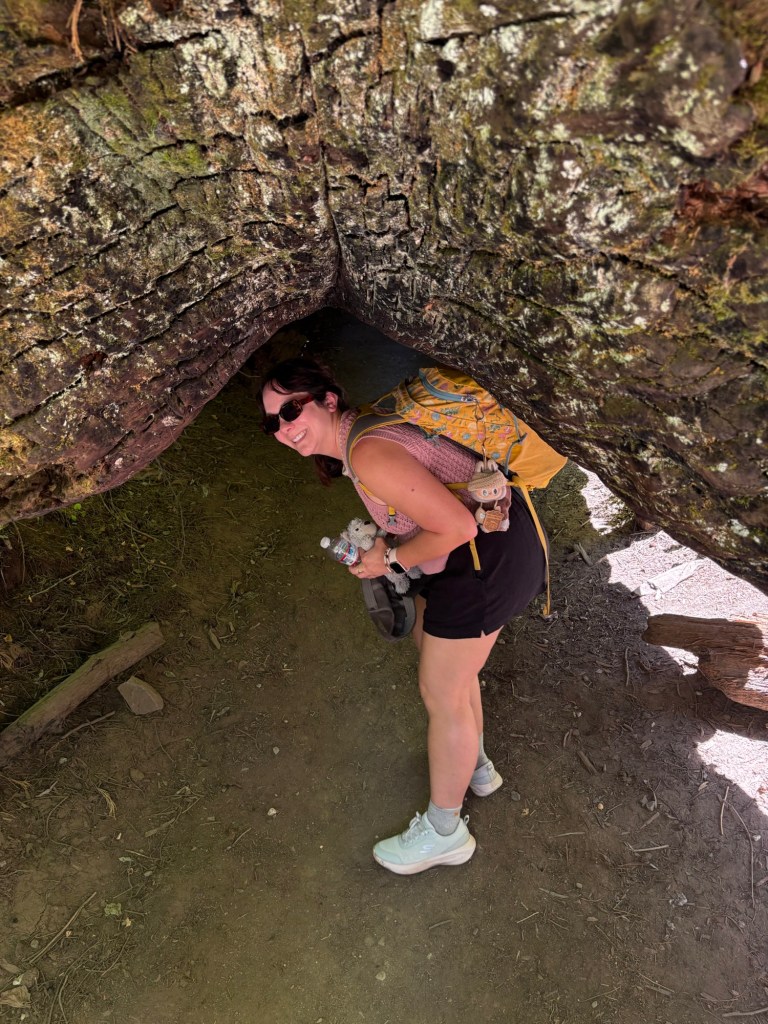
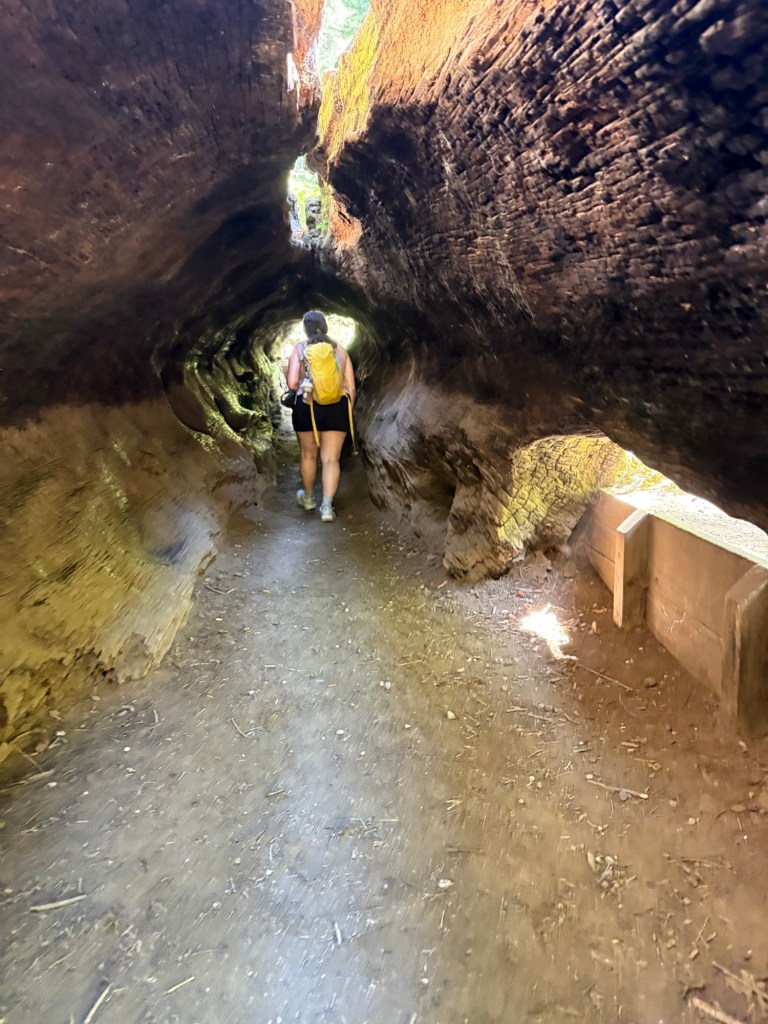
We walked along, taking the sights and sounds of the majestic forest. We came along the many points of interest, using the state parks guide to inform what we were seeing. One fun point was number 13 on the trail, the Father of the Forest. This tree fell long ago due to natural causes, and has been decomposing slowly over the centuries. Besides being ginormous, sequoias also have tannins in their heartwood, which slows decay. We were able to walk through the tunnel created by the hollow center of the tree.
Emerging from Father of the Forest, we soon came to the Mother of the Forest. Her story is much more tragic. Unlike the Father of the Forest, this tree is still standing- sort of. Her bark had been stripped by speculators, and she essentially starved as her phloem ceased flowing through her massive trunk. She also lost her resistance to fire; sequoia bark is naturally fire resistant, as fire is necessary component of the sequoia’s reproductive cycle. Without her protective layers of bark, she endured further damage from fire. She stands today as a reminder of the importance of protecting the natural environment and wisely stewarding its resources.
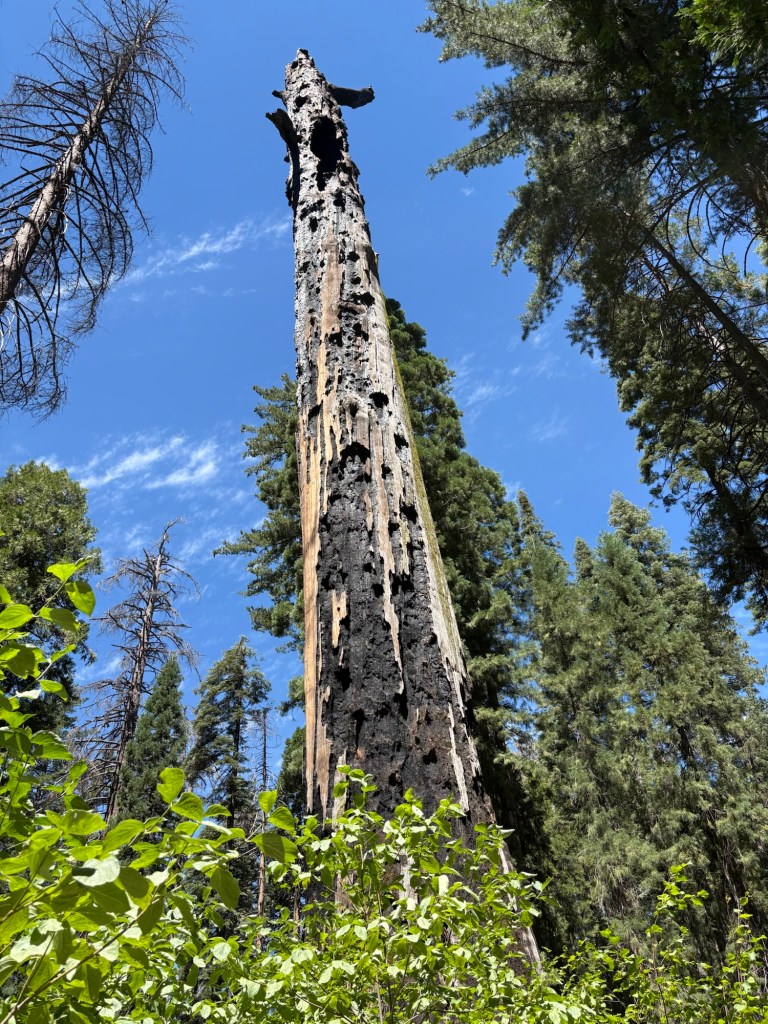
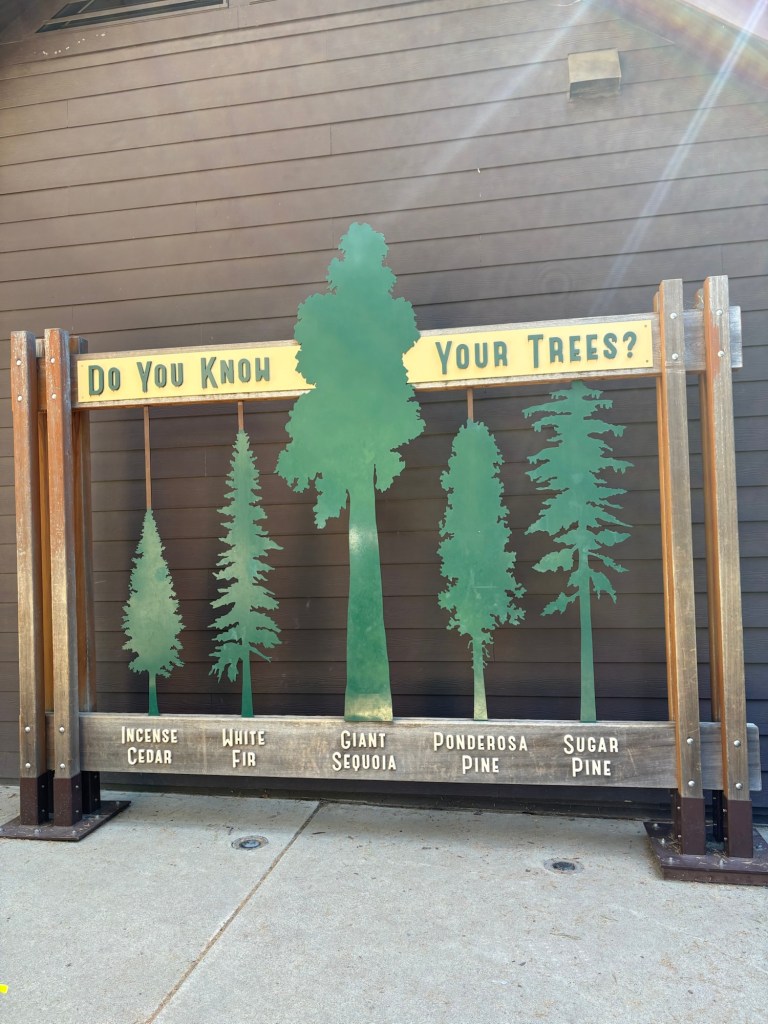
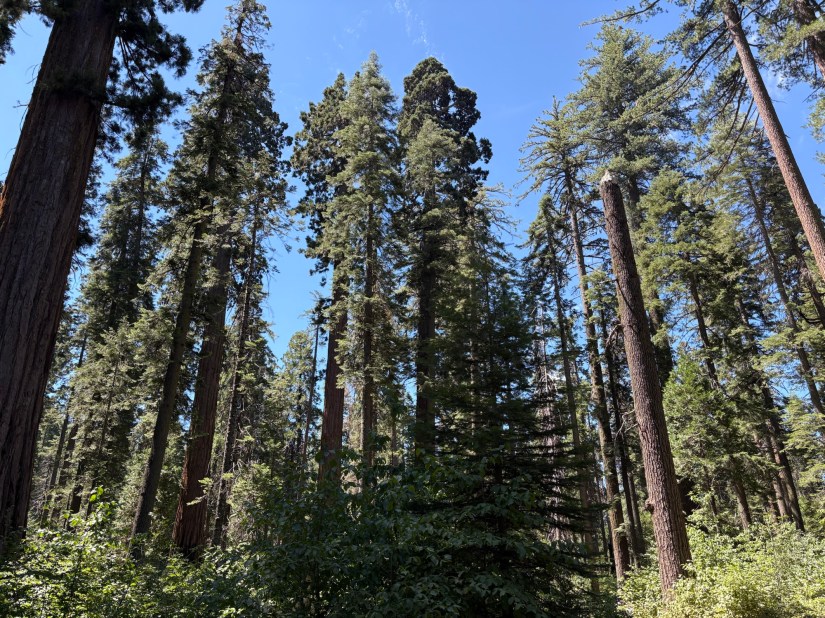
After taking in the sadness of times gone by, as well as pondering both the bleakness and hope of future changes, we continued on our loop. We were able to observe that giant sequoias do not grow by themselves as a species. They are part of the larger Sierra mixed-conifer forest, sharing space and resources with stately incense cedars, ponderosas, sugar pines, and white firs. I opined that if the largest trees on earth could share their space and resources, could we not do the same?
We trekked back to the visitor center, where we finished the last few activities in our junior ranger books. We earned our badges, then went outside. There was a sign for the Sequoia Snack Shack, run by the Calaveras Big Trees Association. The fresh food concessioner was located closer to the campground, whereas we thought it was in the area of the visitor center. The signs along the trail guided us to the smell of hot food. We had brought our lunches- lunch cheeses with fresh sourdough from the farmers market in Utica Park the evening before. But on the menu were garlic fries, and I can’t say no to a nice little side of fries.
I was pleasantly surprised. I had been expecting a small serving at ‘Disneyland prices,’ but the portions were generous. We also got a shaved ice, which was a good idea with the day warming up. We took our time to enjoy lunch and recharge before driving toward the South Grove.
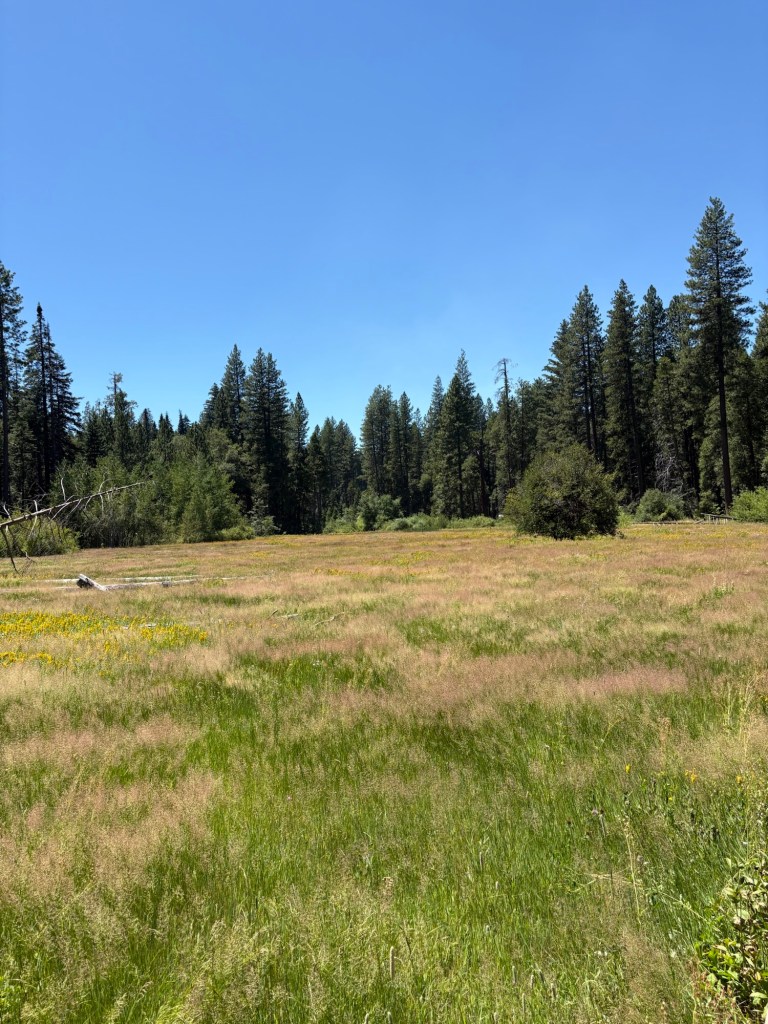
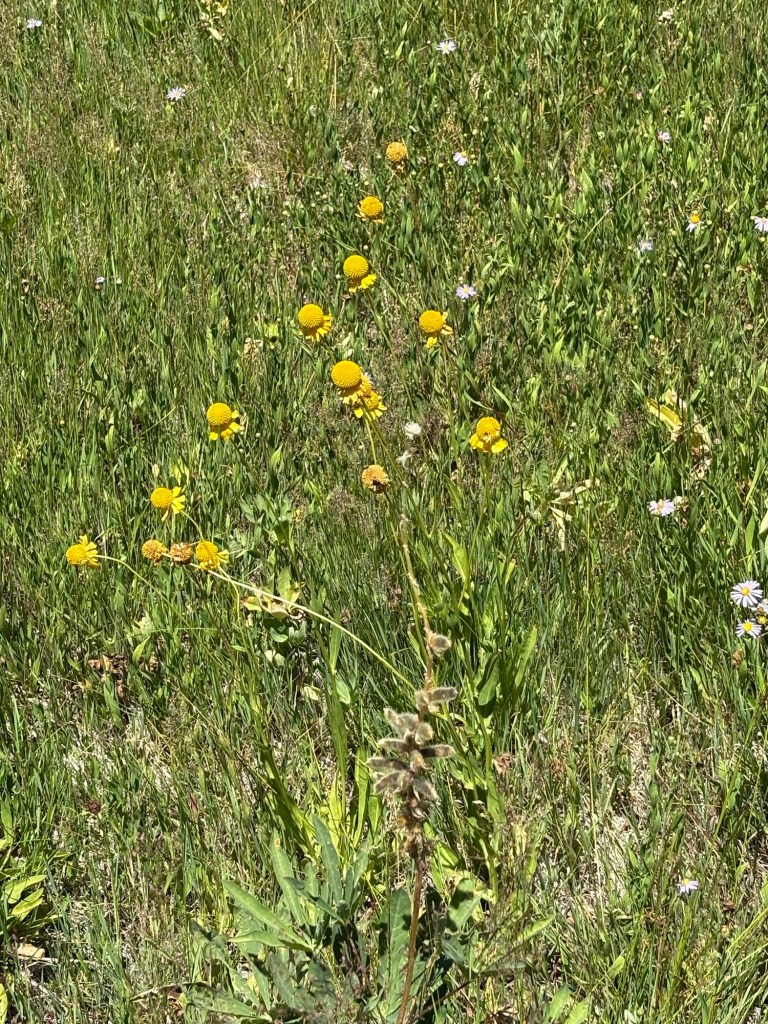
On the way, we stopped at the meadow near the North Campground. We hiked the flat boardwalk trail and could see that there were a number of wildflowers in bloom even in early August. There was no one on the sunny trail at the time of our visit, and the setting was quiet and peaceful in the afternoon. After taking in the views- and taking photos of the pretty flora- we hiked back to the car to head to our next stop.


We parked at the trailhead and took about a 15-minute car nap. We were both feeling pretty peaked with the heat and elevation, so we figured the nap would help. We did not plan on hiking the five-mile South Grove Trail, but we would do the shorter Bradley Grove. With a short burst of energy, we hit the trail, heading toward the creek.

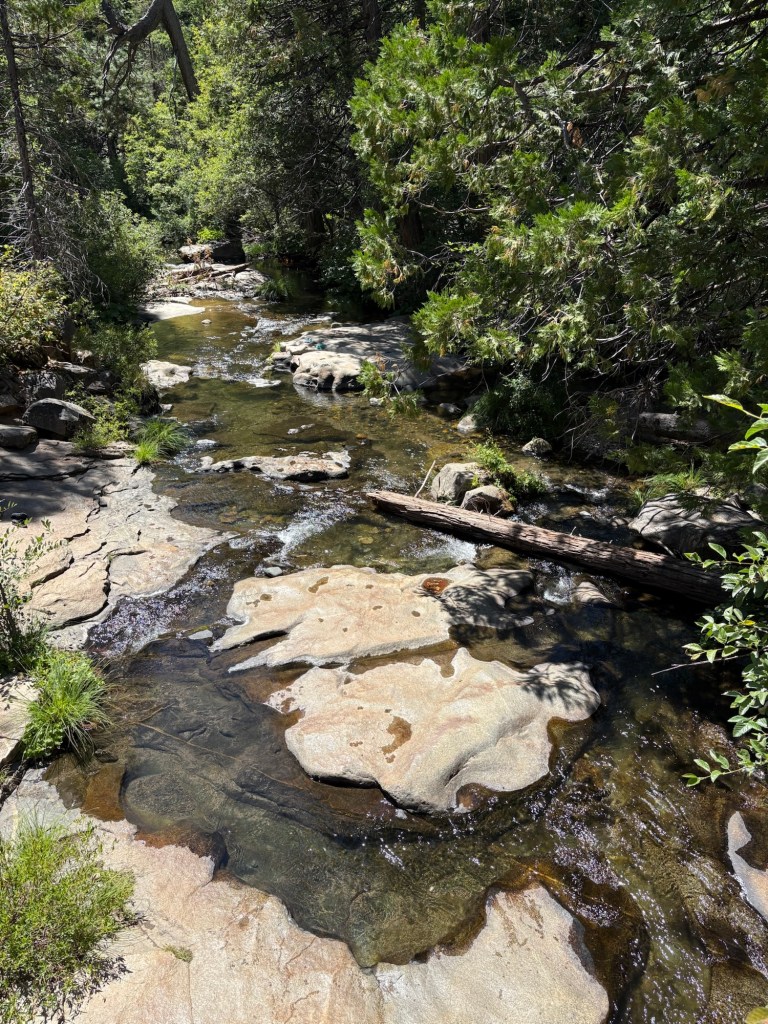
We followed the trail as well as the sound of a family playing in the creek. The sound of the water was calming, but our burst of energy was indeed short, and the heat of the day was starting to take its toll on us. We went past the creek, but after a short discussion, we decided it was time to head back to the room. We had plans to return later in the evening for a night sky event, and we figured it would be best to return to Angels Camp for rest, air conditioning, and dinner. While we were able to see many beautiful trees and amazing scenery, there was much that we were not able to get to in one trip. We would have to return on another day to hike the South Grove, as well as the other hikes in the park.
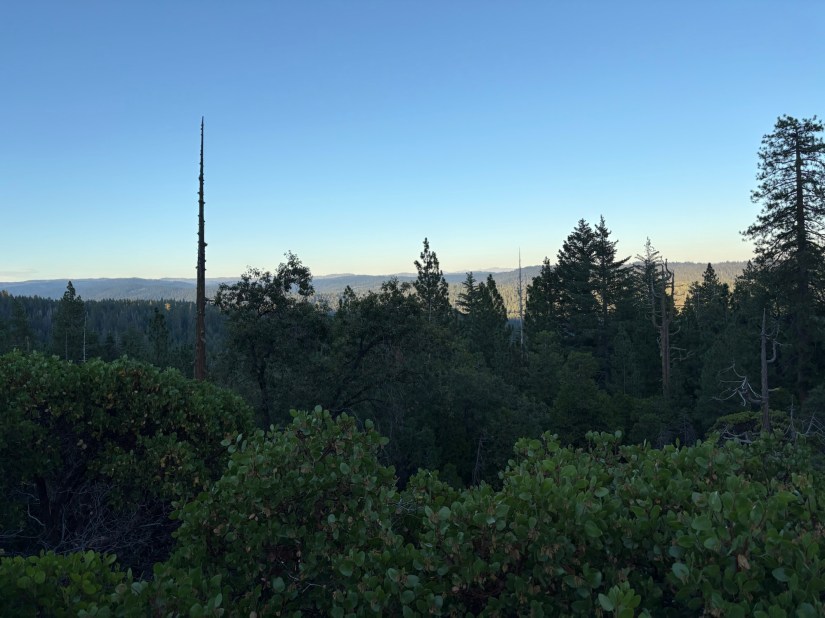
But the fun was not over yet. After a nice rest back in Angels Camp, we drove back to the state park. We were excited to attend a night sky presentation with Doc Nancy, a popular PhD scientist who had worked for the National Park Service. We parked at the Scenic Overlook along the Big Trees Parkway, a few miles past the visitor center. We didn’t have chairs or blankets as we hadn’t packed them from home; fortunately we had a few large reusable bags in the trunk of the Subie which would suffice for seating in the large parking area.
We arrived early, and good thing, too. Doc Nancy’s presentations are very popular, weaving science, mythology, and history as she guides participants through the constellations. As Calaveras Big Trees State Park is a protected space, the skies go very dark after the sun goes down. And then the stars in their glorious multitude come out.
I have attended a number of star-gazing presentations both for fun and while up at science camps. But this was the most engaging presentation I have ever heard. Doc Nancy had a way of story-telling, making both folklore and scientific facts easy to access for science nerds and casual sky-watchers alike. Unfortunately, I don’t have any photos of the evening; we turned off our white and blue lights so as to not distract from our observations.
The evening was perfect. The weather had nicely cooled, and the crowd was friendly and respectful. Doc Nancy was masterful in her presentation, and there wasn’t a point that was boring, even while we waited for the sunset. She engaged the crowd, and it seems that she has visited almost every region of California, even ‘random’ cities- even our own San Gabriel. I’ve decided I would like to be like her when I grow up- living a life of adventure, hiking much of the PCT, sharing knowledge with others, and constantly learning. And while I may still not be the best at identifying constellations, I definitely learned a few new things.
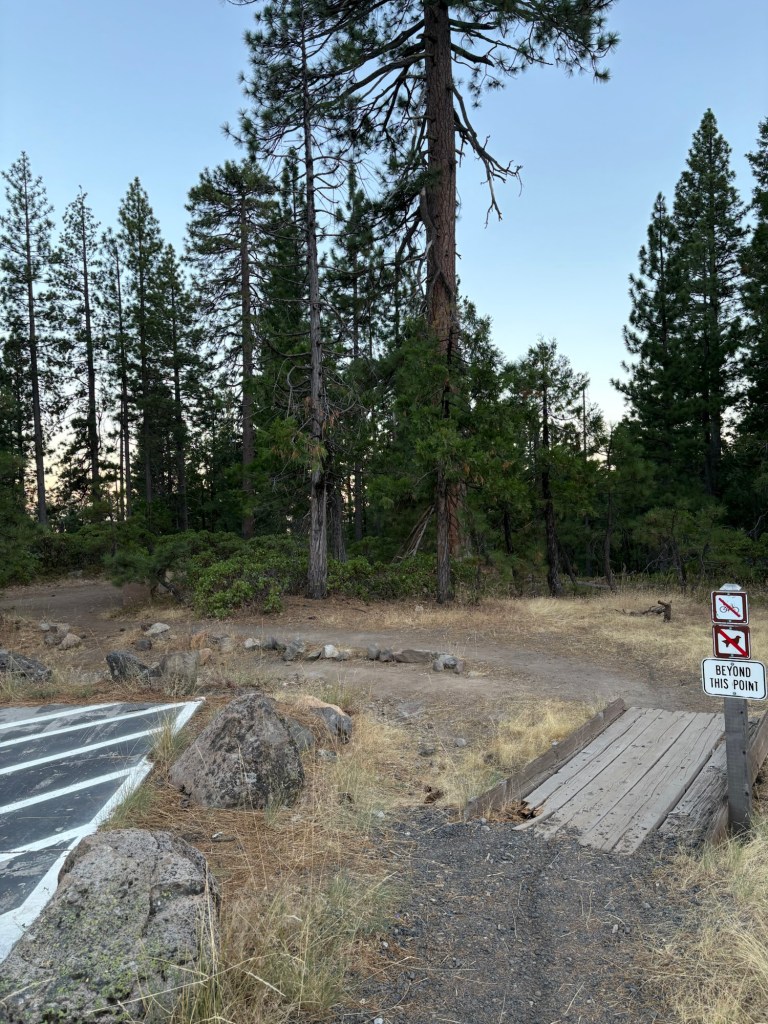
Some things to consider:
Being along the Ebbetts Pass Scenic Byway, Calaveras Big Trees State Park has an elevation of over 4500 feet. Weather can be changeful, as we had learned the hard way the last time we attempted a visit. That said, the temps were about ten degrees cooler than in Angels Camp, which was good for our first hike. Unfortunately, the day warmed up quite a bit even with the elevation.
Water and sun protection are a must. We were in the shade of the big trees for much of the day, but there are some exposed areas in the park, especially on certain trails. There are water fountains near the visitor center to refill water bottles. The snack shack also offered free water to help ensure patrons stayed hydrated.
The Sequoia Snack Shack is open on weekends (Friday through Sunday) during the summer season, which runs from Memorial Day through Labor Day. There is a nice menu of hot foods, cool drinks, and simple snacks. Proceeds from concessions benefit the state park.

Beware of the pretty, bright red baneberries along the North Grove Trail. All parts of the plant are toxic to humans, dog, and other mammals. The berries are important, however, to many birds who call Calaveras Big Trees home and those who migrate via the Pacific Flyway.
At time of writing, it is $10 per passenger vehicle for day use. We were able to enter and exit with our same-day receipt. There is camping available for $35 per night. Reservations can be made on the California State Parks website.
Optical astronomy nights as well as Doc Nancy’s night sky events are scheduled during the summer. Specific dates can be found on the Big Trees State Park website. There are still a few dates left for the 2026 season. I would definitely recommend an evening visit under the stars if scheduling allows.
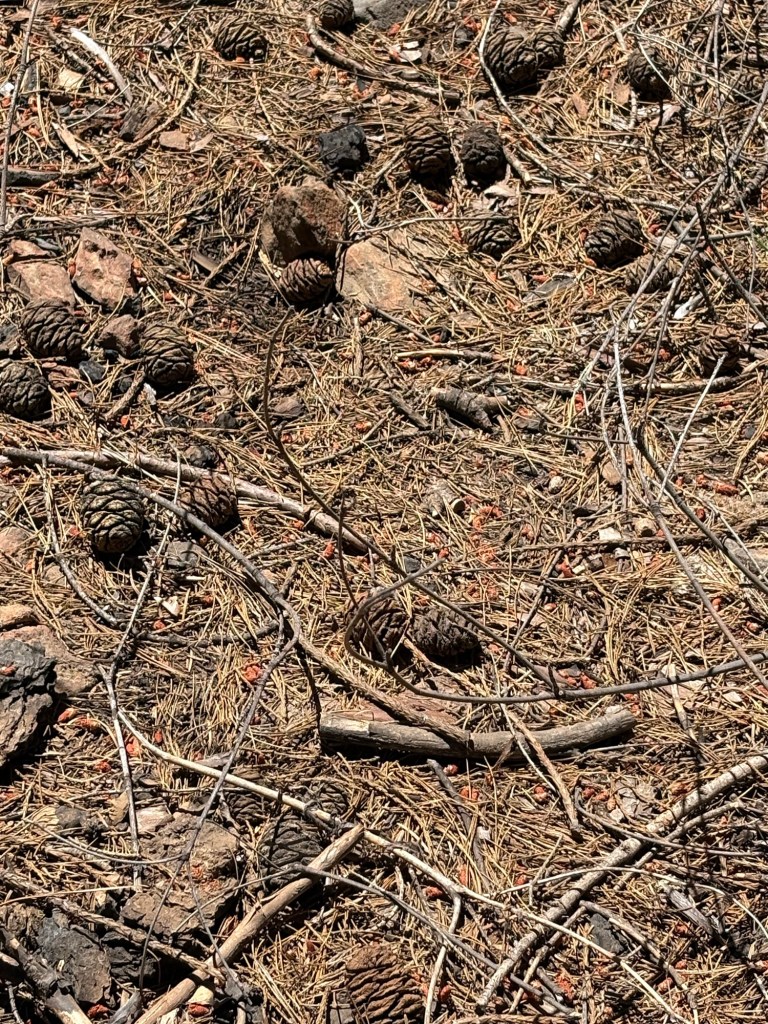
As Calaveras Big Trees State Park is a protected space, be sure to follow Leave No Trace principles. The big trees have stood for millennia, but as the marks of history have shown, it only takes a few to destroy what nature took time to create.
Dogs are allowed in the park in campgrounds and paved roads, and the guidelines are similar to the national parks BARK Ranger program: Bag your pet’s waste, Always leash your pet, Respect wildlife, Know where you can go. General guidelines can be found here. We didn’t take Benny on this trip, as he’s still getting used to adventuring with us, but hopefully he’ll accompany us on future trips.
I am so glad we were finally able to get past the visitor kiosk at Calaveras Big Trees State Park. Though we spent most of the day- and evening- at the park, there is so much more to explore among the giant sequoias. I hope to be able to return and traipse among some of the oldest and largest living things on our amazing planet. There are many happy trails on which to share many adventures. Cheers!
References:
Most of the information in this post are from Calaveras Big Trees State parks trail guides, ranger presentations, and signage. The state park is well-marked and has very good interpretive programs.


2 thoughts on “Calaveras Big Trees State Park”